As an Amazon Associate, we earn from qualifying purchases. Some links on this site are affiliate links at no extra cost to you. Our recommendations are based on thorough research and editorial judgment.


Understanding Proprioception in Baby’s First Steps

Proprioception helps your precious nugget know where their body parts are, guiding those first wobbly steps. This sense begins developing in the womb, growing stronger as your baby explores through crawling and tummy time. It supports balance, coordination, and smooth movements. Signs of challenges include clumsiness or hesitance. Simple activities like push toys and gentle climbing boost awareness. Understanding this hidden sense explains much about your baby’s motor skills and when to contemplate extra support.
Key Takeaways
- Proprioception helps babies sense their body position, crucial for balance and coordination in their first steps.
- Early movement like crawling develops proprioceptive feedback needed for smooth walking.
- Babies with proprioceptive challenges may show clumsiness or difficulty standing and walking.
- Activities such as push-pull toys and tummy time promote proprioceptive growth before walking.
- Proper footwear with flexible, non-slip soles supports proprioceptive input during first steps.
What Is Proprioception?
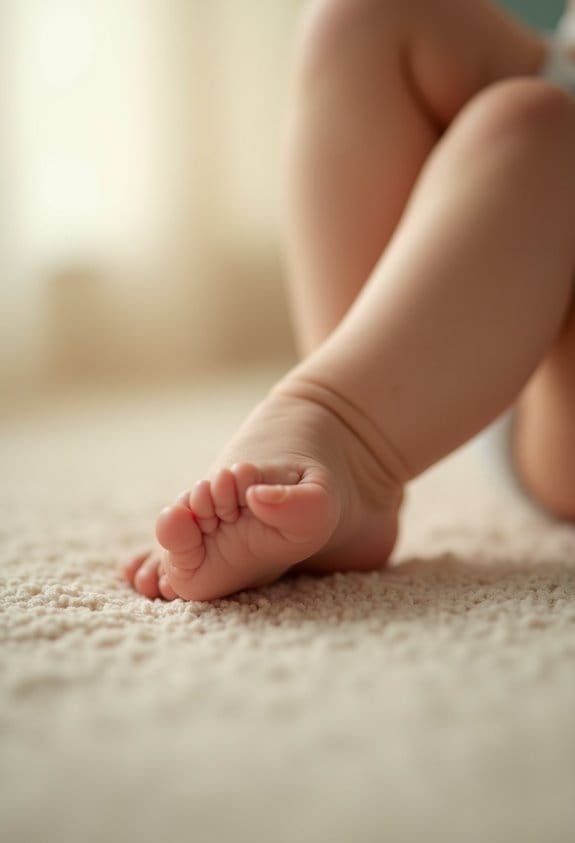
Proprioception is a special sense that helps your baby know where their body is without looking. It gives your precious nugget unconscious feedback from muscles and joints, allowing them to feel their position and movement in space. This sixth sense is essential for body awareness, helping babies coordinate movements smoothly. With good proprioception, your baby can crawl, reach, or walk confidently, even without relying on sight. It lets them explore your world with a natural sense of balance and control. When proprioception works well, toddlers move more gracefully and use the right amount of force during play. Monitoring your child’s body awareness helps you notice if they seem clumsy, off-balance, or heavy-handed, which could signal a need to support this vital sense. Supporting proprioception development can be enhanced by providing toddlers with proper footwear that offers balance and sensory feedback to their growing feet.
How Proprioception Develops in Infants

From the earliest weeks of pregnancy, a baby’s muscles and joints start sending signals to the brain. By 7 to 8 weeks gestation, tiny movements offer important feedback that helps build proprioception, the sense of body position. Around 9 weeks, whole-body motions help shape brain areas essential for coordinating movement. After birth, physical activity like tummy time and crawling acts like practice for this precious nugget, refining its body awareness and motor skills. These activities encourage exploration and strengthen the developing nervous system. For babies born early, limited movement can slow proprioceptive development, so gentle encouragement is key. Through these early signals and physical play, your little one gradually learns how to move with confidence and grace, forming the foundation for all the first steps to come. Using non-slip baby shoes can further support safe exploration during this critical developmental stage.
Signs of Proprioceptive Challenges in Babies

How can you tell if a baby might have trouble with body awareness? Babies facing proprioceptive challenges often struggle with balance and coordination. Your precious nugget may find sitting up or crawling tough. They might also show a craving for rough play or be unusually active, seeking stronger sensory input to help their body awareness. Look for signs like using too much force when handling objects or closing doors. Clumsiness, bumping into things, and hesitation with climbing or walking on uneven ground are also common. These behaviors suggest difficulties in understanding their body in space. Noticing these signs early can help you understand your baby’s unique needs better while supporting their growth with care and patience. Choosing shoes with non-slip soles can also help enhance balance and stability during early walking stages.
Activities to Enhance Proprioceptive Awareness
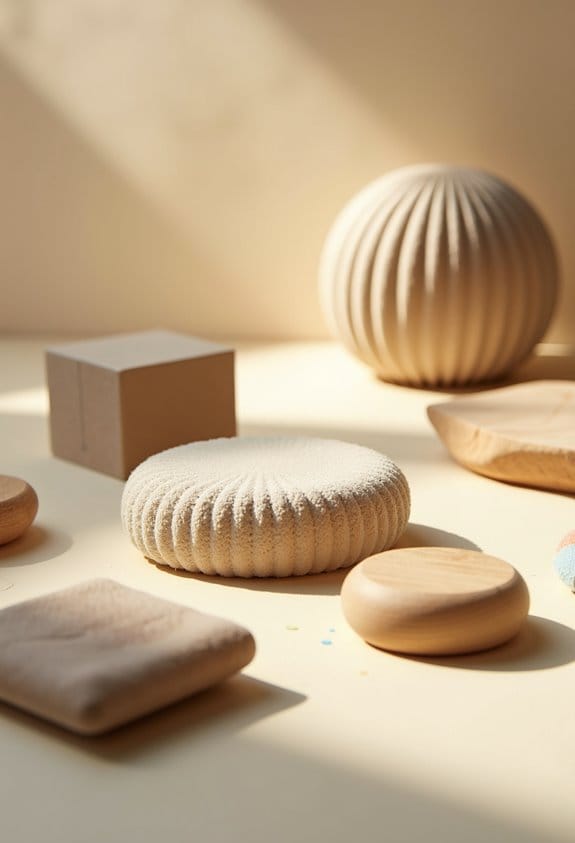
Helping a baby build strong body awareness can start with simple, fun activities that engage their muscles and senses. You can encourage your precious nugget to push and pull toys, adding gentle resistance for valuable proprioception input. Active play like crawling, climbing, or bouncing also helps hone motor skills while strengthening awareness of body position. Sensory games such as pulling tissues from a box or passing balls challenge your baby to control force without relying on sight. It’s important to limit time spent in strollers or car seats, giving your little one more chances to move freely. Wall push-ups and activities that require shifting body positions promote muscle engagement and improve coordination. These delightful moments of movement build a solid base for developing proprioception and motor skills together. Choosing toddler shoes with a wide toe box can further support natural foot development and balance during these activities.
The Role of Proprioception in Motor Skill Development

Although it may seem small, a baby’s developing sense of proprioception plays a big role in learning to move confidently. Proprioception helps your little one understand where their body is and how it moves without always needing to see it. This sense supports motor skills by letting babies balance and adjust posture as they take those first precious steps. Activities like tummy time and crawling build this body awareness, making it easier to control movements. Proprioceptive signals from muscles and joints guide your baby to apply the right force for walking, reducing stumbles. Strong proprioception is key for gross motor skills, which set the stage for all future physical activities your precious nugget will enjoy as they grow and explore. Providing your baby with lightweight, flexible shoes helps encourage natural foot movement and supports healthy development during this critical phase.
The Impact of Premature Birth on Proprioceptive Growth
When a baby arrives earlier than expected, their developing sense of proprioception may face unique challenges. Premature infants often miss out on natural movement in the womb due to less amniotic fluid, which limits their early proprioceptive experiences. Gravity also affects these precious nuggets more, making it harder for them to move and gain essential body awareness. This reduced tactile and proprioceptive feedback can slow brain areas critical for coordination, like the cerebellum. As a result, premature babies might face lasting difficulties with balance and motor skills. While this can feel worrying, creating a supportive environment rich in movement opportunities helps nurture their proprioception. Occupational specialists recognize these needs and often suggest targeted activities to boost growth as your little one learns to move and explore confidently. Choosing shoes with proper fit can further support healthy walking habits by providing comfort and stability during these early developmental stages.
When to Seek Occupational Therapy Support
If a precious nugget is showing signs of trouble with balance or coordination, it might be time to contemplate occupational therapy support. Occupational therapists are trained to assess and assist children struggling with proprioception—the body’s sense of position and movement. Watch for signs like clumsiness, difficulty with daily routines, or avoidance of physical activities. If your child uses too much force when writing, craves rough play, or reacts strongly to sensory experiences, these may also point to proprioceptive challenges. Frequent emotional meltdowns linked to sensory overload deserve attention. When such patterns appear, occupational therapists can provide strategies to improve coordination and sensory processing. Seeking their help early can make a meaningful difference in your little one’s development and confidence in their first steps. Choosing supportive footwear with flexible non-slip soles can also aid proprioceptive awareness during early walking stages.
Frequently Asked Questions
How Do Babies Develop Proprioception?
Babies develop proprioception through sensory integration, enhancing body awareness via movements like crawling, tummy time, and play. These activities provide essential feedback that strengthens coordination, balance, and motor skills by refining neural connections within their nervous system.
At What Age Does Proprioception Develop?
Proprioception milestones emerge early, akin to a fledgling learning flight. By 7-8 weeks gestation, sensory integration begins, with significant advancements throughout infancy, culminating near 12 months as babies refine spatial awareness and motor coordination through exploration.
How to Tell if a Child Needs Proprioceptive Input?
Signs of need for proprioceptive input include poor balance, impulsiveness, difficulty with body awareness tasks, and excessive force during activities. Engaging in proprioception activities such as rough play and weighted tasks can help address these issues effectively.
What Are the Three Key Areas of Proprioception?
Static proprioception, dynamic proprioception, and kinesthetic awareness form the triumphant trio of proprioception. Mastery through proprioceptive exercises enhances sensory integration, turning chaos into coordinated movement, balance, and strength, forging the body’s internal GPS with unrivaled precision.


