As an Amazon Associate, we earn from qualifying purchases. Some links on this site are affiliate links at no extra cost to you. Our recommendations are based on thorough research and editorial judgment.


The Science Behind Baby Foot Development in the First Year

A baby’s feet start soft with flexible tissues and thick pads, making them look flat at birth. In the first year, muscles strengthen as your precious nugget moves—rolling, crawling, pulling up, and sometimes taking first steps. Barefoot time helps develop natural strength and balance. Around one year, foot arches begin forming, supporting stable walking. Choosing wide toe shoes aids healthy growth. Keep an eye on comfort and foot shape, and you’ll discover more about nurturing their strong, confident steps ahead.
Key Takeaways
- Newborn feet consist mainly of flexible tissue and cartilage, with flat arches due to thick fat pads at birth.
- Major foot development occurs in the first year, supporting milestones like crawling, standing, and walking.
- Barefoot movement strengthens foot muscles, tendons, and ligaments, promoting natural arch formation and balance.
- Early lower limb milestones include muscle strengthening by 4 months and weight bearing by 6 months.
- Proper footwear with wide toe boxes and soft soles supports healthy foot growth and stability during walking transitions.
Anatomy of Newborn Feet

Newborn feet are fascinating structures made mostly of soft, flexible tissue. Baby’s feet contain a high amount of spongy cartilage, which gradually hardens into bone as they grow. At birth, the Child’s Feet appear flat because of thick fat pads in the arch area. This padding cushions and protects their delicate feet but means foot arches aren’t visible yet. Each foot has 26 bones, about one-quarter of all bones in the body, but these bones take nearly 18 years to fully develop. Major foot development happens in the first year, laying a strong foundation for future walking. Understanding this anatomy helps you appreciate your precious nugget’s growing feet, gently supporting them as their arches and strength slowly begin to form. Choosing shoes with a wide toe box supports natural toe splay crucial for healthy foot development.
Milestones in Lower Limb Development

As your precious nugget grows, their lower limbs go through exciting changes that help them move better each month. By 2 months, leg movements become smoother, showing early motor skills and improved control. At 4 months, babies press their legs against surfaces, signaling growing strength in their lower limb muscles. By 6 months, they begin to put weight on their legs, bounce, and show early crawling motions, key milestones in foot development. Around 9 months, most infants crawl, sit without support, and stand while holding objects. By 1 year, your child often pulls up, cruises along furniture, and takes first steps on their own. These milestones mark important progress in the lower limb’s ability to support movement and help your little one explore their world more confidently. Choosing soft sole shoes during these stages can promote healthy foot development and enhance comfort.
Role of Barefoot Movement in Foot Strengthening
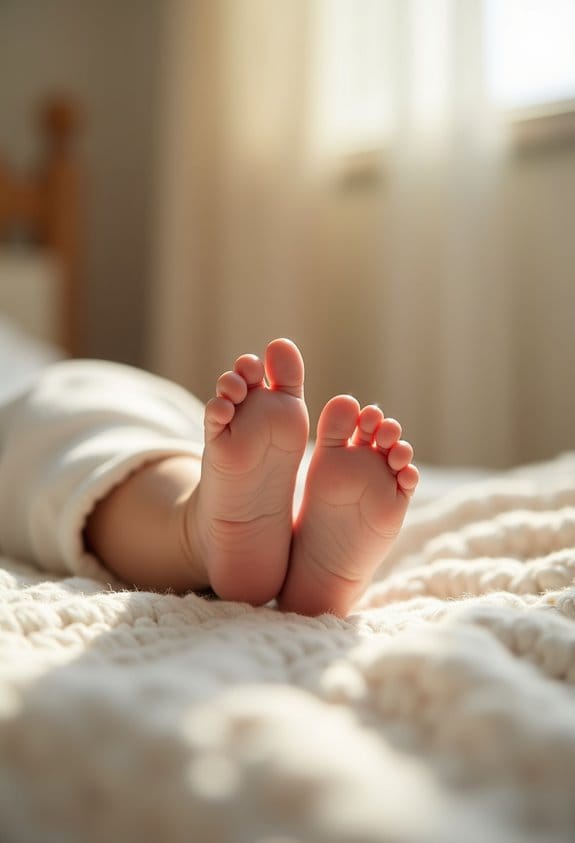
Encouraging your precious nugget to move barefoot supports natural foot development in many helpful ways. Barefoot movement allows the muscles, tendons, and ligaments in tiny feet to strengthen naturally without the limits of shoes. When babies explore different surfaces barefoot, they improve balance and coordination, which helps their gross motor skills grow. This movement also activates sensory receptors in the feet, building proprioception—key for knowing where their body is in space. Early barefoot experiences link to stronger foot muscles and healthier arches, which play an important role in arch support. While flat feet are common at first, moving barefoot can reduce their prevalence by encouraging proper muscle and arch formation. Supporting your baby’s barefoot adventures gently fosters a strong foundation for confident walking and running ahead. When shoes are introduced, choosing ones with a wide toe box can further support natural foot growth and comfort.
Transition From Flat Feet to Arches
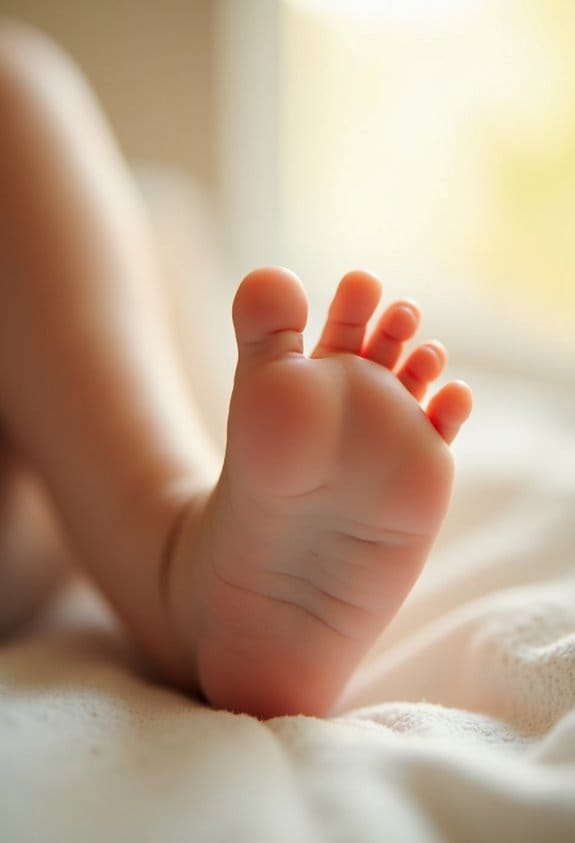
When do those soft, flat feet start shaping into arches? Most infants are born with flat feet because of fat pads in the arch area. As your precious nugget grows, arches generally begin to form around age 2. This change happens as early walking starts and your child gains mobility. Foot growth during this time is essential for healthy foot development. Walking on different surfaces, especially barefoot, helps strengthen the foot muscles needed for arch formation. Between ages 2 and 6, you’ll often notice the gradual appearance of arches. By age 8, arches usually fully develop. Remember, flat feet in early childhood are normal and often resolve naturally. Regularly checking your child’s foot development gives you peace of mind during this exciting stage. Choosing shoes with a wide toe box can support natural toe movement and healthy foot growth as arches develop.
Common Foot Issues in Infants
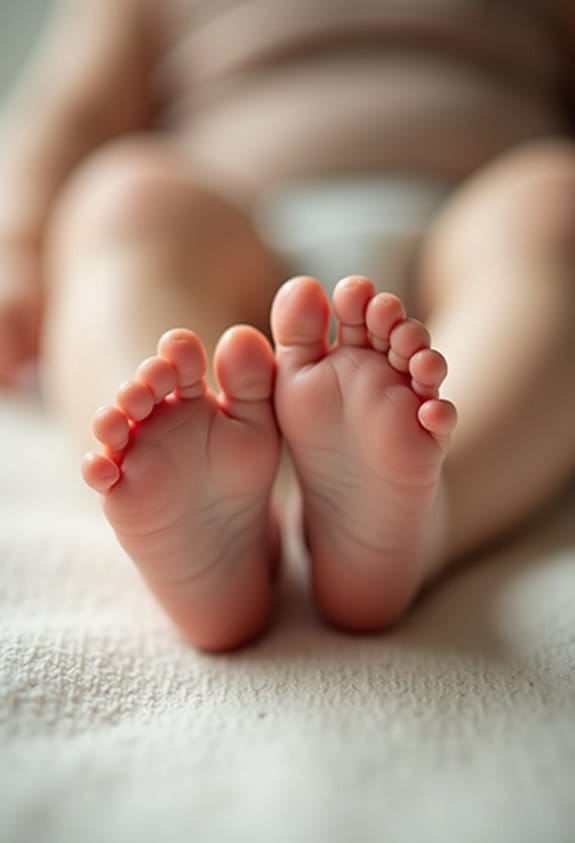
Although many infants experience natural changes in their feet as they grow, some common foot issues may arise that need careful attention. Flat feet, where the arches haven’t formed yet, are typical and often improve by age two as your precious nugget starts walking more. Clubfoot, a condition where one or both feet turn inward or downward, might not hurt but can affect walking if untreated. Another concern is metatarsus adductus, where the front of the foot turns inward, usually resolving on its own unless severe. Overlapping toes generally aren’t painful but can sometimes require surgery. Regular pediatric consultations play a key role in monitoring these issues. These check-ups guarantee any persistent foot irregularities are addressed, supporting healthy child development and keeping your little one’s feet on the right path. It is also important to select soft, flexible soles in infant footwear to promote natural foot development and provide comfort during early walking stages.
Choosing Appropriate Footwear for Babies
Choosing the right footwear for a precious nugget in their first year is important for their foot health and comfort. When choosing appropriate footwear, soft-soled shoes are best since they allow natural movement and support healthy development. As your baby starts crawling and pulling up to stand, pick shoes with non-skid soles and wide toe boxes to give stability and room for growing feet. Shoes should be lightweight and made from breathable materials to keep little feet cool and flexible. It’s essential to check for a proper fit often, as babies can grow up to three shoe sizes in their first year. Ill-fitting shoes may cause foot issues later on. Remember, barefoot time on safe surfaces also helps strengthen tiny muscles naturally. Many shoes also feature flexible soles that promote natural foot movement while providing necessary protection.
Recommended Products

Breathable & Comfortable:These unisex baby socks shoes with non slip rubber soft Sole, knitted with soft breathable combed cotton. The insole is a memory insole, which fits the shape of the baby's feet, fit snugly and comfortably, adapting to your toddler’s natural foot movements. Super flexible , lightweight and comfortable fit all seasons.

MATERIAL: Genuine suede leather, soft and lightweight with a durable sole so walking feel natural

Breathable & Comfortable:These unisex baby socks shoes with non slip rubber soft Sole, knitted with soft breathable combed cotton. The insole is a memory insole, which fits the shape of the baby's feet, fit snugly and comfortably, adapting to your toddler’s natural foot movements. Super flexible , lightweight and comfortable fit all seasons.
Impact of Foot Development on Gross Motor Skills
Feet serve as the sturdy base for many of your precious nugget’s first big movements like standing, walking, and eventually running. In the first year, foot development strongly influences gross motor skills by providing balance and strength needed for these milestones. As your baby crawls and cruises, foot bones strengthen, helping them shift from wide, cautious walking patterns to confident strides around 10 to 16 months. Encouraging barefoot exploration supports foot stability and muscle growth, which are essential for coordination and balance. Poorly fitting shoes or lack of support during this period can affect your child’s walking patterns and overall physical development. By supporting healthy foot development early on, you help your precious nugget build a solid foundation for all their exciting gross motor adventures. Choosing the right infant shoes with ankle support can further ensure stability and reduce the risk of falls during early walking.
Importance of Toe Functionality
Toes play a surprisingly significant role in your precious nugget’s early movements and balance. Toe functionality supports their arches and helps stabilize the body during activities like crawling, standing, and eventually walking. These 14 small bones work together to give your baby better balance and coordination. As toe strength develops, your little one can achieve crucial gross motor milestones, such as standing on one foot or taking confident steps. Proper toe engagement is essential for smooth changes between crawling and walking, and helps babies navigate uneven surfaces safely. Supporting your child’s toe development encourages strong arches and improves overall stability. This foundation enhances their ability to push off with each step, making gross motor skill growth smoother and setting them up for active, confident movement. Choosing wide round toes and soft rubber soles in walking shoes can further support natural toe movement and healthy foot development.
Recognizing Signs That Need Pediatric Evaluation
As your precious nugget explores new ways to move, it’s important to keep an eye out for signs that might require a pediatric check-up. Persistent pain, swelling, or redness in the feet or ankles that doesn’t improve with rest is a clear warning sign. Watch for gait irregularities, such as limping or unusual walking patterns. These changes can signal problems as your child’s feet grow and develop. Thick calluses, weakness, or instability in the ankles, like frequent rolling, also merit attention. Noticeable bone alignment issues—like shins or thighs turning inward—should prompt a pediatric evaluation. Early assessment guarantees that any underlying conditions are treated promptly, supporting healthy foot development and helping your precious nugget walk confidently and comfortably. Choosing footwear made of soft, breathable materials can also promote healthy growth and reduce irritation during this critical period.
Recommended Products

Wide Round Toe: The unique design of the toe can make the baby's feet free movement, body balance is not afraid of falling, anti-collision to help crawling

[Breathable & Soft Cotton]:These toddler socks shoes are crafted with soft, breathable cotton, offering all-day comfort for your little one’s delicate feet. Perfect for all seasons, these infant non-slip breathable slippers keep feet cool in the summer and warm in the winter. Whether your child is indoors or outdoors, the breathable fabric ensures there’s no moisture buildup, keeping feet dry and cozy all day long.
Breathable & Comfortable:These unisex baby socks shoes with non slip rubber soft Sole, knitted with soft breathable combed cotton. The insole is a memory insole, which fits the shape of the baby's feet, fit snugly and comfortably, adapting to your toddler’s natural foot movements. Super flexible , lightweight and comfortable fit all seasons.
Frequently Asked Questions
How Fast Do Babies’ Feet Grow in Their First Year?
Babies’ feet grow approximately three sizes in the first year, about 1.5mm monthly. Pediatric advice emphasizes monitoring growth patterns using accurate measuring techniques to guide footwear choices during developmental stages, ensuring proper fit and healthy foot development.
Is Baby Discovering Feet a Milestone?
Yes, baby foot discovery is a developmental milestone. It enhances foot awareness and sensory exploration, which contribute to cognitive development and motor skills, marking critical progress in early physical and neurological growth during infancy.
Do Kids’ Feet Grow Before a Growth Spurt?
Foot growth often precedes overall growth spurts during developmental stages, influencing baby posture and toe length. Proper footwear impact is essential, as ill-fitting shoes can hinder foot development and disrupt posture during these critical early phases.
Do Big Feet on a Baby Mean They Will Be Tall?
Like cartoon giants with oversized shoes, big feet predictors in babies often mislead. Genetic influences and height correlation remain tenuous; foot size myths persist despite evidence, showing developmental indicators trump mere foot dimensions in forecasting adult stature.


