As an Amazon Associate, we earn from qualifying purchases. Some links on this site are affiliate links at no extra cost to you. Our recommendations are based on thorough research and editorial judgment.


Storing Baby Shoes for Future Siblings: Best Practices

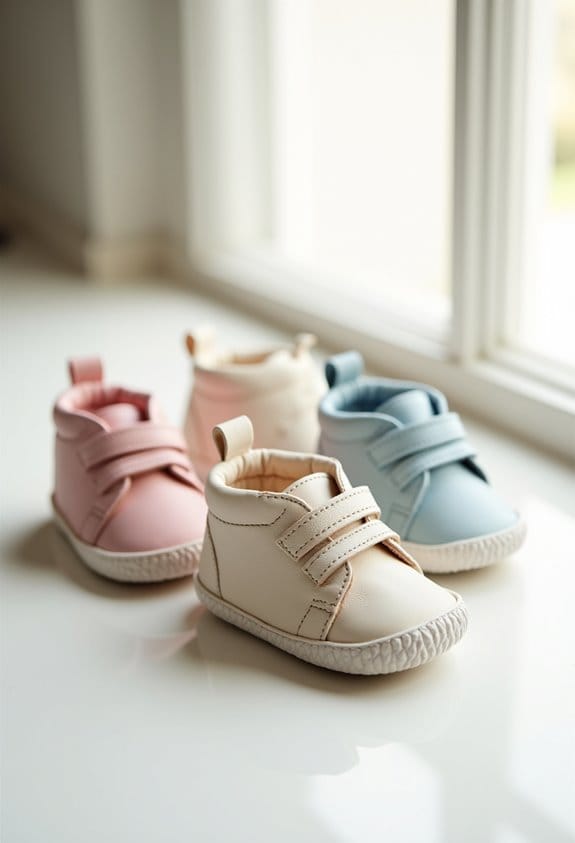
Keeping baby shoes for future siblings saves money and preserves memories of your precious nugget. Clean and dry shoes thoroughly before storage to avoid mold. Sort them by size and season, then secure pairs with clips or organizers in breathable containers like cotton bags or clear bins. Store in a cool, well-ventilated spot away from heat and sunlight. Check shoes every six months for damage. Following these steps guarantees shoes stay fresh and ready for the next little one’s feet. More tips can guide you in organizing and caring for them.
Key Takeaways
- Clean and completely dry baby shoes before storage to prevent mold and maintain quality for future siblings.
- Store shoes in breathable cotton bags or clear plastic bins with labels for size and type for easy organization and protection.
- Keep stored shoes in a cool, well-ventilated place away from direct sunlight and heat sources to avoid damage and discoloration.
- Regularly inspect shoes every six months for damage, pests, and cleanliness to ensure durability and safety for reuse.
- Sort and secure shoe pairs using clothespins or compartments to avoid mix-ups and maintain shoe condition during storage.
Importance of Keeping Baby Shoes for Future Siblings

Often, keeping baby shoes for future siblings saves both money and the planet. Baby shoes are worn only a few times before your little one outgrows them, so storing shoes carefully makes perfect sense. When you organize and store shoes by size—especially the next size up—you avoid buying new pairs too soon. This approach reduces waste and helps the earth, turning your child’s tiny footwear into a precious nugget of family history. Passing down baby shoes also strengthens bonds between siblings. Proper storage keeps shoes in good shape, ready for the next little feet to fill them. Watching your child’s growth lets you pick the right moment to bring out stored shoes, making sure hand-me-downs fit comfortably and sparing you extra expenses. Choosing shoes with wide toe boxes promotes healthy foot development for each growing child.
Cleaning and Preparing Shoes Before Storage

Begin by gently cleaning baby shoes before storing them. Use a gentle detergent to protect delicate fabrics and a mild stain remover if needed for tougher spots. This careful cleaning guarantees shoes look fresh when your next precious nugget wears them. After washing, make certain the shoes are completely dry to avoid mold or mildew, which can damage them. When putting away baby shoes, choose breathable containers like cotton garment bags or plastic bins with ventilation. This helps protect the shoes from insects and moisture while allowing air circulation. Store them correctly by checking on the shoes now and then for damage or pests. If necessary, re-clean and repack the shoes to keep them in the best shape for future siblings to enjoy. It’s also important to avoid stiff fabrics that can cause discomfort or damage during storage.
Recommended Products

Perfect Fit: Sized 14"x12"x4", the shoe bags is deal size for women and men; Great for packing sneakers, high heels, slippers, leather shoes, boots and more

Package Included:You can get a full 50 pcs transparent shoe bags for travel in this kit.Each shoe bags measures about 11.8×15.7 in / 30×40 cm.These shoe bags of this size are large enough to hold various types of shoes or other items.

More durable. The travel shoe bags adopt waterproof nylon fabric with double stitching and two-way zippers, which is more durable to use.
Sorting Shoes by Size and Season
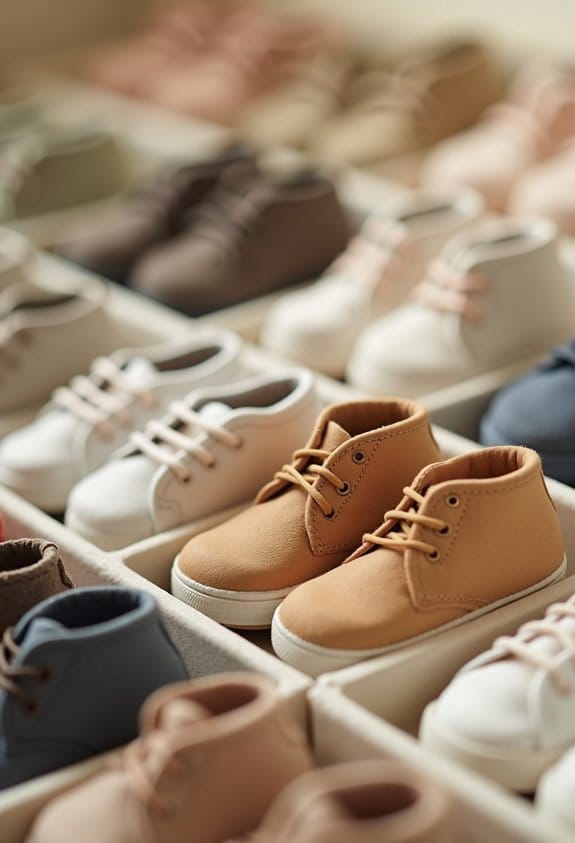
Once baby shoes are clean and ready for storage, sorting them by size and season can help you find the right pair easily when the next little one arrives. Organizing shoes by sizes makes it simple to identify which fits your precious nugget as they grow. Label containers clearly to keep things neat and accessible. Sorting by season is just as important; summer sandals and winter booties stored separately save time and prevent clutter. Use clear bins to create a visual inventory that shows sizes and seasons at a glance. Regularly check stored shoes to verify they’re still in good shape and suitable for reuse. Keeping an organized, consistent routine after each growth phase will make the next round of sorting much easier for you and your little one. Additionally, be mindful of the shoe’s proper fit importance to ensure they continue to support healthy foot development when reused.
Methods to Keep Shoe Pairs Together
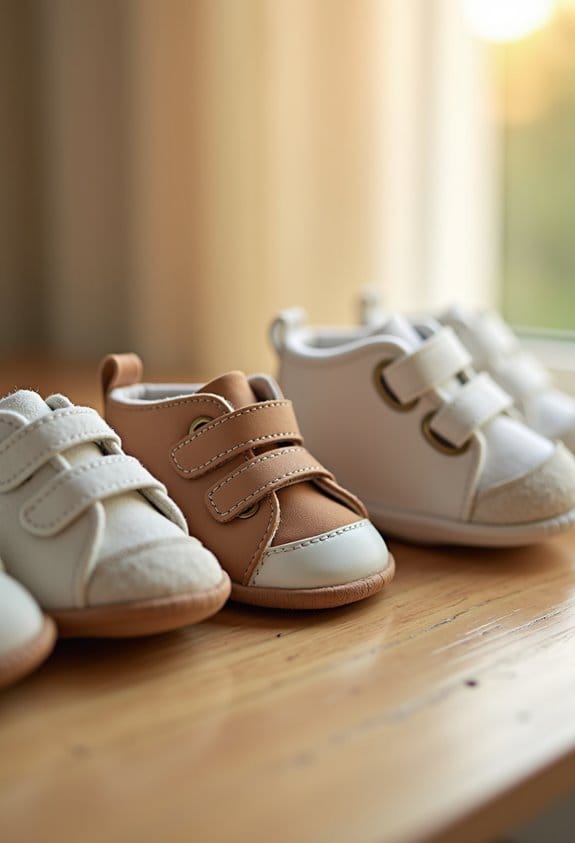
Keeping baby shoe pairs together helps save time and frustration when pulling shoes for your next little one. One effective way is using clothespins or bag clips to attach each shoe, making putting them away simpler and keeping baby shoes organized. A shoe organizer with small compartments works well to separate pairs and avoid mix-ups. You can also set up a dedicated basket near the entryway to quickly stash shoes after use, maintaining order. Drawer dividers are another handy option, as they keep pairs snug in their own spots. For longer storage, shallow clear bins allow you to see each pair clearly while ensuring they stay together. These methods protect those tiny treasures and make life easier when your precious nugget needs them again. Ensure that stored shoes retain their breathability and comfort features by allowing adequate air circulation during storage.
Recommended Products

Spacious Kids Shoe Organizer: 12.6 in×5.67 in×5.20in (L*W*H). The distance between dividers is 2.95 inches. Designed for growing collections, this kids shoe rack holds up to 8 pairs of toddler shoes or baby boots. Compact yet roomy, it fits perfectly in closets, nurseries, or entryways—keeping tiny sneakers, sandals, and rain boots neatly stored and easy to grab.

【Item Dimension】: Overall Assembled Size: 13.1(L) x 9.8(W) x 7.5(H) inches/34(L) x 25(W) x 19(H)cm, suitable for men's shoes in size 12 and women's shoes in size 13. Facing the messy shoe storage space, this stackable plastic shoe box can be the best choice.

DETACHABLE DIVIDER - The toy box have a removable divider board. You can attach it by velcro, which is great for organizing different items separately, you can detach the divider for store bigger things, like blankets, large toys, etc
Choosing Appropriate Storage Containers

When storing baby shoes for future siblings, choosing the right containers can make all the difference. Clear plastic bins are ideal because you can see the precious nuggets inside without opening each one. They also protect shoes from dust and moisture better than cardboard boxes, which attract pests and dampness. For delicate shoes, breathable cotton bags are a gentle choice—they keep dust away while letting air circulate to prevent mildew. Don’t forget labeling each container by size and type, like “size 0-3 months sneakers,” so you can quickly find what you need when the time comes. Vacuum-sealed bags save space but use them sparingly, as squashing soft shoes too long might change their shape. Choosing wisely keeps baby shoes safe and ready for their next tiny footsteps. Additionally, ensuring shoes are clean and dry before storage helps maintain the shoe material quality, preserving their condition and longevity.
Maximizing Space With Creative Storage Solutions
Several smart storage options help you save space while keeping baby shoes organized and easy to find. Using shoe racks or over-the-door shoe storage maximizes vertical closet space, perfect for small areas. Shallow clear plastic bins hold shoes in single layers, making it simple to spot each pair. Drawer dividers or sock organizers create neat sections for baby shoes inside existing drawers, keeping them separate from other Baby Clothes. Labeling containers by size or age range streamlines finding the right shoes later for your precious nugget or future siblings. For special occasion shoes, cotton garment bags protect them while taking up little closet space. These creative solutions balance practical storage with gentle care for tiny shoes, ensuring your family’s keepsakes remain organized and ready when your next little one arrives. Additionally, it’s important to store shoes in a way that preserves their breathability and safety features to maintain their quality and protective benefits.
Recommended Products

【Large Capacity Storage】Holds 16-24 Pairs of Shoes: This shoe storage organizer features a large capacity design (17"L x 17"W x 12.99"H), holding 16-24 pairs of shoes vertically—perfect for shoe collectors, large families, or seasonal storage. Unlike bulky shoe racks, this fabric shoe organizer box maximizes space efficiency while keeping shoes dust-free. Ideal as dorm room essentials or closet organizers and storage, it fits entryways, bedrooms, and closets without clutter.
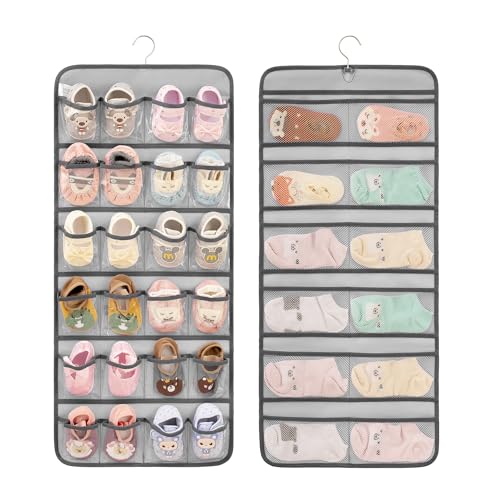
Double sided hanging infant shoe organizer with 31.9" height and 14.4" width. Front side has 24 clear pockets with 3.6" D x 3.5" W inch, design to hold 6-12 months toddlers' shoes, up to 12 pairs. Back side has 12 mesh pockets with 3.9" D x 7.2" W inch, design to hold kids socks, up to 12 pairs. Please be aware that the pocket size is only suitable for baby shoes, not avaiable for adults' shoes.

【Dual sides roomy pockets】: This hanging shoe rack has 30 pockets in total, can holds kinds of shoes like sandals slippers, tennis shoes, sneakers, it is the great item to transform your closet into an amazing storage area for your shoes
Protecting Shoes From Damage and Discoloration
A baby’s shoes need careful care to stay looking sweet for future siblings or keepsakes. Before storing, shoes should be cleaned thoroughly and dried completely to prevent mold or mildew. Keeping shoes organized in breathable containers like cotton bags helps protect them from dust while allowing airflow. You’ll want to avoid direct sunlight and heat sources, as these can cause fading and material damage. Stuffing each shoe gently with acid-free tissue paper preserves its shape, preventing creases or collapse. Checking on your precious nugget’s shoes now and then lets you spot any damage or pests early. Taking these steps guarantees the baby shoes stay fresh and charming, ready for the next little feet to fill them someday. Additionally, maintaining the shape with a wide toe box design is essential for preserving the natural structure of the shoe.
Recommended Products

Easy to Fold and Store: This range of acid-free paper for storing is crafted from premium quality material with meticulous attention to detail. It is effortless to shape, fold, and cut, whilst remaining lightweight and dependable. The texture is comfortable, and it is both portable and suitable for compact storage

Large White Tissue Paper: 500 sheets 15x20 inches acid-free tissue paper, large enough for your daily use and storage, gift bags, textiles, photos, and clothing, premium quality with maximum protection needs.

Simple to Shape and Fold: these sheets of tissue paper adopt quality paper as material, go through exquisite workmanship, easy for you to shape, fold and cut, lightweight and reliable, comfortable to touch, hard to tear or fade, convenient for your flower making projects and more, giving you a nice using experience
Organizing for Easy Access and Rotation
An effective system for organizing baby shoes makes it easy to find the right pair as your little ones grow. Using a dedicated shoe rack or clear, labeled storage bins helps keep pairs sorted by size and season. This way, you can quickly spot shoes ready for the next precious nugget, especially the smallest sizes stored within easy reach. Organizing shoes in a specific nursery or closet area also saves time hunting through clutter. Keeping a checklist of stored shoes supports a smooth rotation, showing which pairs might soon be outgrown or ready to reuse. This thoughtful approach helps you stay prepared, ensuring baby shoes stay neat and accessible without stress. With these simple steps, your baby shoe collection stays well-kept and ready for sibling adventures ahead. Additionally, storing shoes made from non-toxic, durable materials ensures they remain safe and ready for future use.
Regular Maintenance and Inspection of Stored Shoes
Keeping baby shoes organized is only part of the story. Regular maintenance is important to make certain they stay ready for that precious nugget down the line. Every six months, take time to inspect stored baby shoes carefully. Look for signs of damage, pests, or any deterioration that might affect their condition. Always verify they’re clean before putting them away; dampness can lead to mold and mildew, which spells trouble. Using clear storage bins helps you easily spot their condition without opening every box. Also, keep shoes out of direct sunlight and away from heat sources to prevent discoloration. Adding natural cedar blocks or lavender sachets can keep storage fresh and pest-free without harming sensitive skin. This simple routine helps protect those tiny treasures for siblings yet to come. Additionally, considering the use of breathable materials for baby shoes can further ensure they remain in good condition and ready for use.
Frequently Asked Questions
How to Store Baby Shoes for Next Baby?
Amid playful chaos, proper cleaning guarantees baby shoes remain pristine. Sizing considerations organize pairs by age, while sentimental value shapes careful storage. Clear containers protect cherished footwear, preserving memories for next siblings with attentive maintenance.
How to Store Shoes Without Getting Moldy?
Mold prevention tips include thorough shoe cleaning methods and ensuring shoes are completely dry before storage. Preferred storage container options are breathable fabric bags or ventilated bins with silica gel packs to reduce moisture and inhibit mold growth.
How to Store Children’s Shoes?
Studies show 30% of children outgrow shoes before proper use ends; shoe organization tips, seasonal storage solutions, and kids footwear preservation methods like breathable bins and labeled storage optimize space and maintain shoe quality efficiently.
What Is the Most Space Efficient Way to Store Shoes?
The most space-efficient method involves minimalist storage solutions like over-the-door racks and drawer dividers, combined with creative box alternatives such as clear bins. These shoe organization techniques maximize vertical space while maintaining accessibility and protection.