As an Amazon Associate, we earn from qualifying purchases. Some links on this site are affiliate links at no extra cost to you. Our recommendations are based on thorough research and editorial judgment.


Understanding Overpronation in Baby Walkers

Overpronation in baby walkers happens when your precious nugget’s feet roll inward too much while standing or moving. Walkers may encourage this, as they support the feet in a way that stops natural balance skills from developing. Overpronation often shows up as flat feet or wobbly steps in toddlers learning to walk, usually resolving by age six. Using walkers less and promoting floor play helps healthy foot growth. Keep an eye out, and you’ll find helpful ways to support your little one’s steps.
Key Takeaways
- Baby walkers restrict natural foot movement, potentially encouraging excessive inward rolling (overpronation) in infants’ feet.
- Support from baby walkers can reduce balance practice, hindering healthy foot and walking development.
- Prolonged walker use is linked to delayed walking milestones and increased risk of overpronation.
- Overpronation in infants using walkers may lead to flat feet and wobbly steps due to weak arches.
- Pediatricians recommend minimizing walker use and promoting floor play to support proper foot posture and development.
What Is Overpronation in Infants
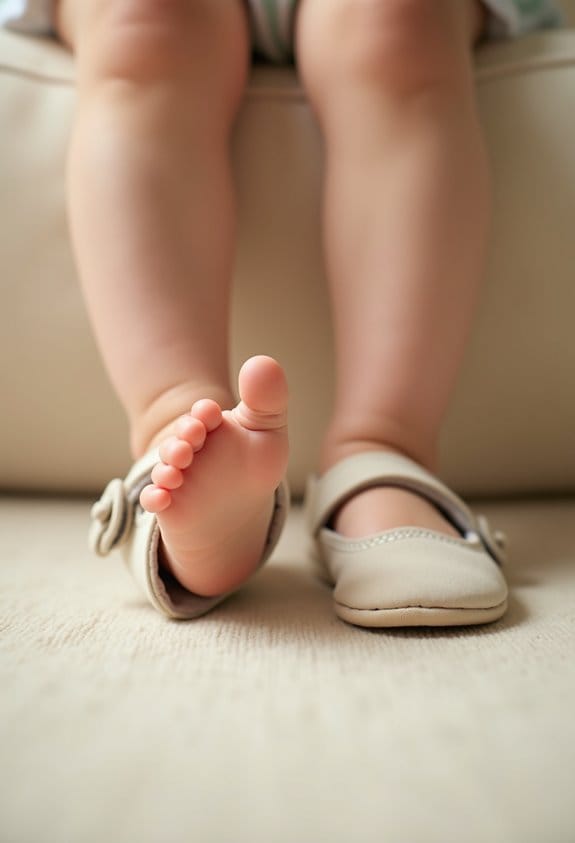
Overpronation in infants is when their little feet roll inward too much while walking or standing. This often happens because their arches aren’t fully developed yet. You might notice your precious nugget has flat feet or wobbly steps, which are common signs of this child’s condition. Many infants show overpronation as they take their first steps, especially those with flexible joints. Pediatricians often examine foot posture and walking patterns to decide if foot treatment or medical care is needed. Usually, this condition resolves itself by age six as the feet strengthen and arches form. However, if overpronation lasts longer, it may cause discomfort or alignment problems. Early check-ups help guarantee your child’s tiny feet grow strong and healthy. Choosing baby shoes with proper foot support can help encourage healthy foot alignment and reduce the effects of overpronation.
The Role of Baby Walkers in Foot Development
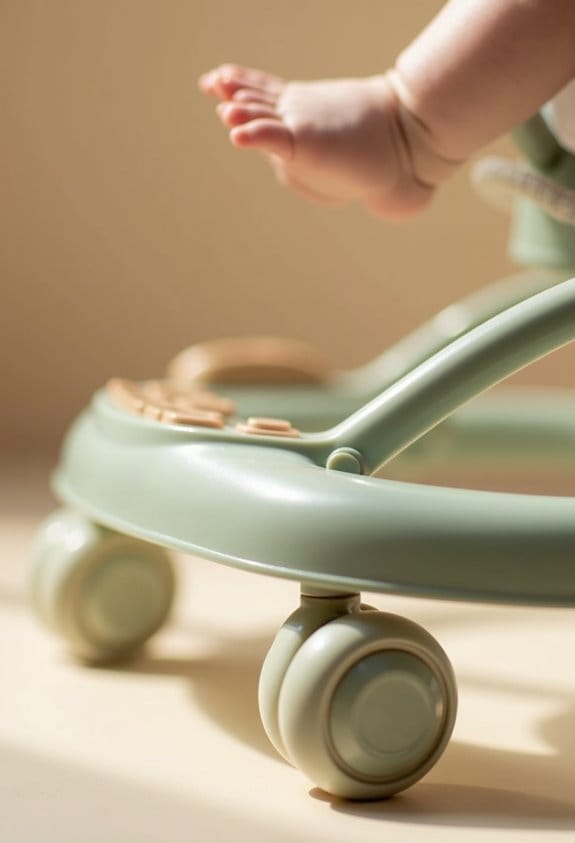
How does using baby walkers affect your precious nugget’s foot development? Baby walkers can interfere with proper pediatric foot growth by limiting natural foot movement. They often encourage excessive pronation, which means the foot rolls inward more than it should. This happens because walkers provide support before your little one’s muscles and ligaments are ready. Over time, this may lead to flat feet or other alignment issues. Baby walkers also reduce opportunities for balance and coordination practice, essential for healthy walking skills. Research shows prolonged use can delay milestones and impact foot development negatively. Pediatric experts suggest minimizing walker time and favoring natural floor play instead. This approach helps your child strengthen their foot muscles and develop proper walking patterns, supporting healthy, confident steps for your precious nugget. Additionally, choosing walkers with proper safety features can help mitigate some risks associated with early mobility aids.
Identifying Signs of Overpronation Early
Often, early signs of excessive inward foot rolling show up when your precious nugget starts standing or taking steps. You might notice the foot rolls inward more than usual, causing flat feet or a low arch. Checking your child’s shoe wear can help—extra wear on the inner edges may signal overpronation. Your little one might also complain of foot pain, discomfort, or tire quickly. These signs mean it’s time to seek medical advice. A pediatric podiatrist can carefully assess your child’s foot posture while standing and walking. Early identification is important, as treatment options work best before age six, helping prevent future issues and promoting healthy foot development. Taking action early supports your child’s active life and growing independence. Ensuring your baby wears properly fitted shoes with flexible soles is crucial to support natural foot movement and aid in correcting overpronation.
Causes and Risk Factors for Overpronation in Toddlers
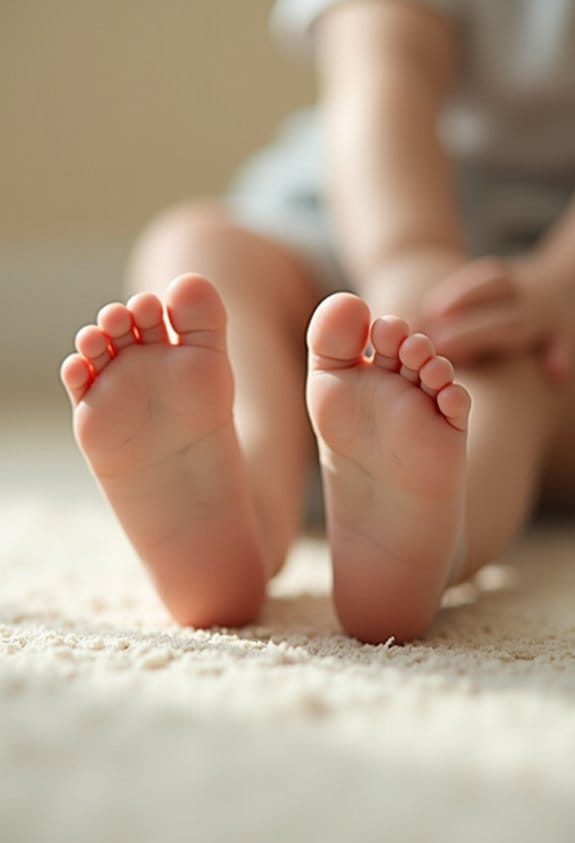
Understanding the factors that influence your precious nugget’s foot development can help you spot potential issues early. Overpronation often happens when toddlers have flat feet or flexible arches that roll inward too much as they start walking. Some children inherit flat feet, which raises the chance of overpronation because their arches don’t form the usual way. Obesity adds extra pressure on little feet, making overpronation more likely or severe. Growth spurts can cause temporary overpronation as muscles and ligaments adjust during rapid development. Active toddlers who often run and jump without supportive shoes might also strain their feet, increasing risk. By knowing these causes and risk factors, you can keep a close watch and seek guidance if your child’s foot alignment seems off during these early years. Choosing shoes with non-slip outsoles and proper support can help reduce the risk of overpronation-related injuries.
Impact of Overpronation on Walking Patterns
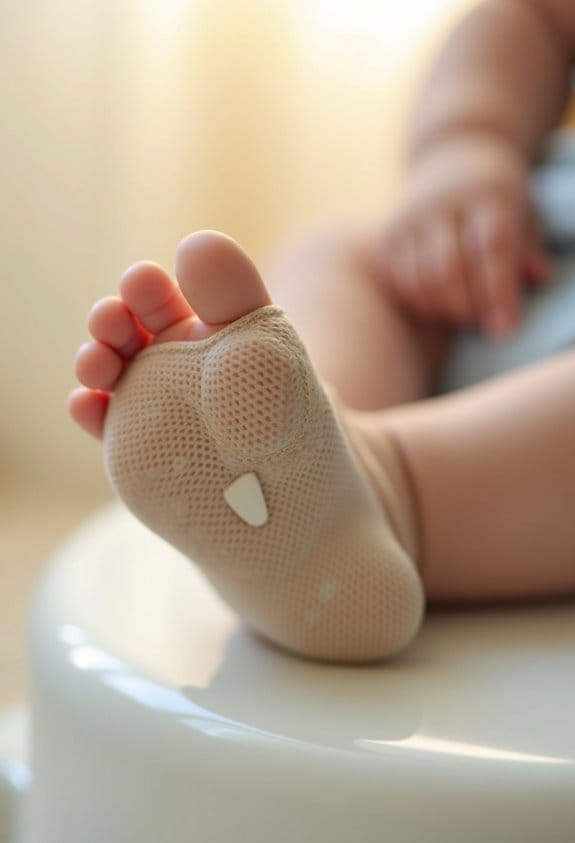
Why does overpronation matter for your little one’s walking? Overpronation, or the excessive inward rolling of your baby’s foot, can change their walking patterns in important ways. It often affects foot mechanics, making each step less stable. This can impact your precious nugget’s balance, increasing the risk of falls as they learn to walk. You might notice their shoes wearing out more on the inner soles—this is a sign of altered foot movement. Overpronation can also lead to a different stride, which might make coordination harder for toddlers. Understanding these effects helps you support healthier walking patterns. Early attention to stability and balance encourages stronger motor skills and reduces future issues linked to poor foot mechanics in your child’s growing journey. Choosing arch support shoes with firm arch support and deep heel cups can help promote stability and proper foot alignment during this critical stage.
Choosing Proper Footwear for Babies Using Walkers
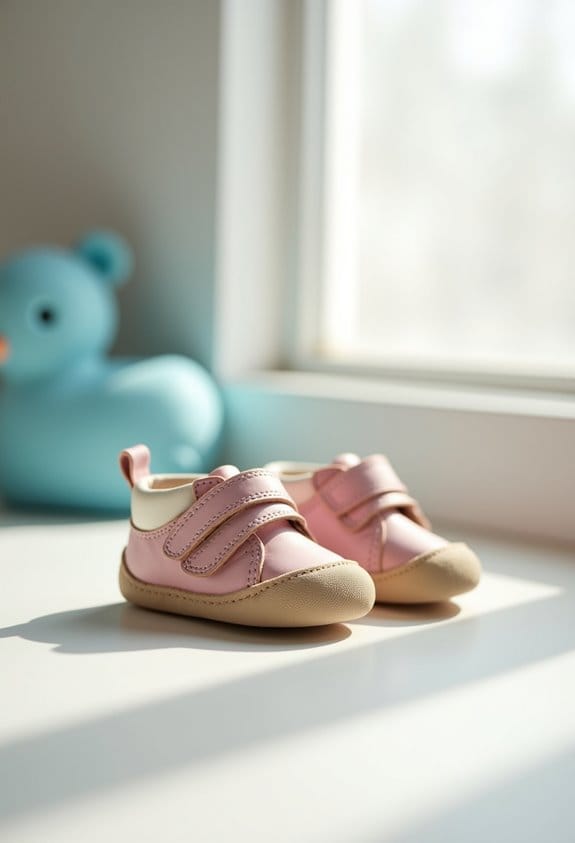
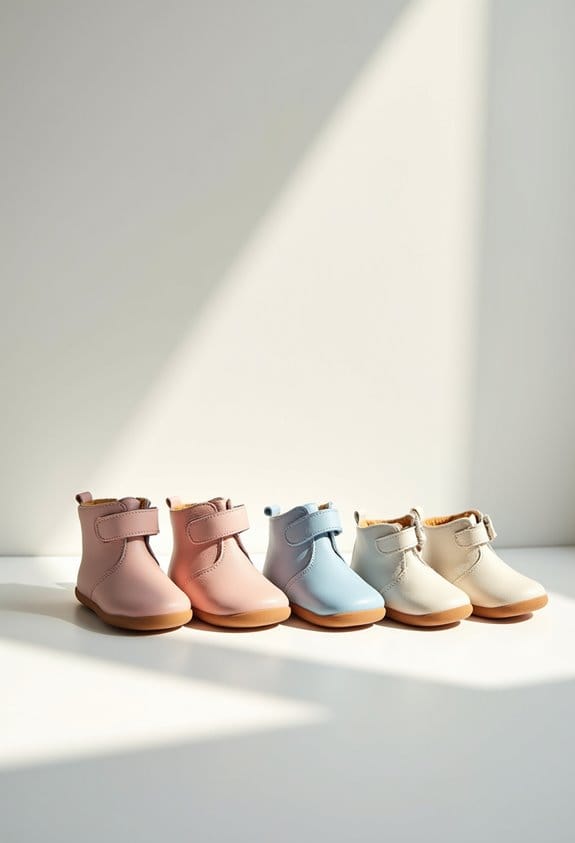
Choosing the right footwear for babies using walkers can support healthier foot development and better walking habits. When selecting shoes for your precious nugget, look for footwear with good arch support to help prevent overpronation as they learn to walk. Flexible shoes that are lightweight allow natural movement, which is essential for early foot growth. Make sure the shoes offer a proper fit, giving enough space for tiny toes to wiggle comfortably without being too loose. Stability is also key—non-slip soles provide traction, helping reduce falls while your baby gains confidence in their walker. Avoid stiff soles or high-top shoes, as they can limit foot motion and hinder healthy development. The right footwear encourages safe, happy steps for your little one. Additionally, choosing shoes made from breathable natural materials promotes healthy foot development and prevents irritation during this critical growth stage.
Exercises to Strengthen Infant Foot Muscles
Encourage your precious nugget to try simple movements like toe raises and foot flexes to build foot muscle strength. These exercises help develop the small muscles inside the feet, supporting better arch formation and stability. You can also place soft toys on the floor to motivate your baby to reach, grasp, and practice standing. This activity naturally strengthens foot muscles while improving balance and coordination. Gentle foot and ankle massages can aid flexibility and circulation, promoting muscle growth. Offering varied textures like grass or sand to walk on stimulates sensory feedback, which enhances proprioception and muscle control during standing and walking. Practicing these exercises regularly provides a solid foundation for your little one’s healthy foot development and helps manage overpronation concerns. Choosing shoes with ankle support can further stabilize your baby’s feet and promote proper alignment during walking.
Benefits of Orthotics for Pediatric Overpronation
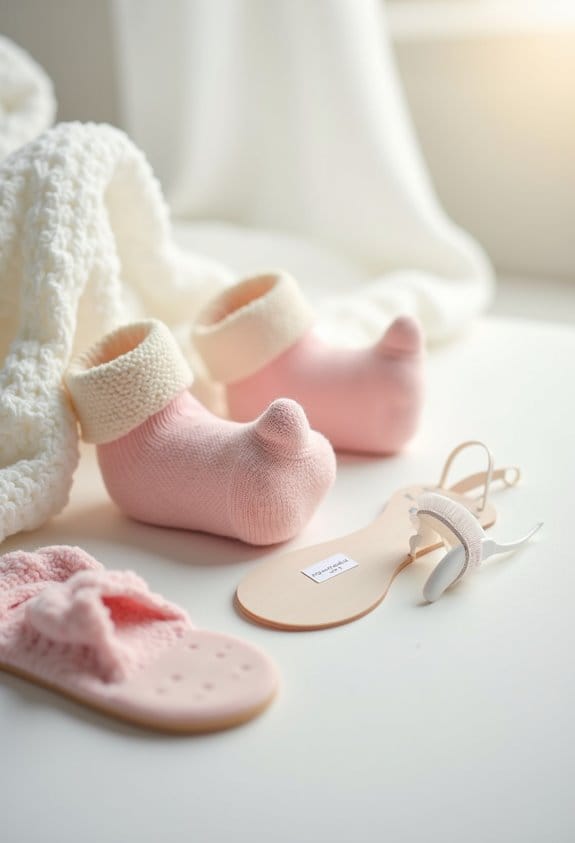
After strengthening foot muscles with simple exercises, some little ones may still benefit from extra support. Custom orthotics provide that important arch support, guiding your precious nugget’s feet toward better alignment. In many cases of flat feet in children, orthotics serve as an effective treatment for flat feet, reducing pain and discomfort. These devices help spread pressure evenly, easing strain on muscles and joints and lowering risks like shin splints. Early use of orthotics can improve muscle balance and stability, helping avoid future posture problems as your child grows. Plus, orthotics are designed to adapt to growing feet, ensuring continued support. With professional guidance, you can help your child walk comfortably and confidently, making the journey smoother and less painful for both of you. Choosing footwear with non-slip soles can further enhance walking safety during early mobility stages.
How to Monitor Your Child’s Progress With Walkers
Several key steps can help you keep track of your precious nugget’s progress while using a walker. First, closely monitor your child’s foot position to guarantee their feet rest flat and avoid excessive inward rolling, which signals overpronation. Check the shoe soles regularly for uneven wear, especially on the inner edges, as this can hint at improper foot support. Encourage your little one to play outside the walker to build balance and strengthen muscles that promote proper alignment. Keep an eye on how they walk independently, looking for changes in foot placement and comfort. While these steps guide your care, work with a pediatric podiatrist for expert advice, especially if overpronation signs persist or your child shows discomfort. Early support helps set your precious one on a healthy walking path. Choosing shoes with good material and flexibility can also aid in promoting healthy foot development during early walking stages.
When to Seek Professional Evaluation for Overpronation
How do you know when it’s time to seek professional help for your precious nugget’s overpronation? If you notice excessive inward rolling of the feet or flat arches while your child walks or runs, a professional evaluation can clarify the issue’s severity. Persistent foot pain, trouble with proper alignment, or instability during walking are signs you should consult a pediatric podiatrist. Also, watch for limping, uneven shoe wear, or withdrawal from play—these may indicate discomfort linked to overpronation. Early visits are important, especially within the first few years of walking, to prevent long-term problems. If your child shows delays in motor skills related to foot alignment, seek guidance without hesitation. A timely professional evaluation helps guarantee your child’s feet stay healthy and comfortable. Choosing shoes with a wide toe box can also support natural foot posture and reduce strain associated with overpronation.
Frequently Asked Questions
Should Babies’ Feet Be Flat in a Walker?
Approximately 30% of infants using baby walkers develop flat feet due to improper walker design. Flat feet in walkers may hinder foot development and proper posture, emphasizing the importance of cautious baby walker use and monitoring foot health.
What Does Overpronation Look Like When Walking?
Overpronation during walking presents as altered gait patterns with excessive inward foot rolling, compromised foot mechanics, poor walking posture, and balance issues. These signs influence shoe selection, often requiring supportive footwear to correct alignment and stability.
When to Worry About Pronation in Toddlers?
Like a river carving its path, pronation demands attention if walking patterns lag developmental milestones, toddler footwear shows uneven wear, or parental concerns arise. Early physical therapy may be essential for lasting gait correction and comfort.
Can Overpronation in Kids Be Corrected?
Overpronation in kids can often be corrected through corrective shoes and arch support combined with therapy programs. Engaging in physical activities under pediatric advice enhances muscle strength, preventing progression and promoting proper foot alignment over time.