As an Amazon Associate, we earn from qualifying purchases. Some links on this site are affiliate links at no extra cost to you. Our recommendations are based on thorough research and editorial judgment.


Breaking in New Baby Shoes: Is It Necessary?

Breaking in new baby shoes is generally unnecessary since comfort and flexibility matter most for your precious nugget’s developing feet. Babies typically only need shoes after they start walking around 12-14 months, with soft, non-slip soles for safety. Instead of stiff shoes needing break-in, choose breathable, flexible footwear that fits well and supports natural movement. Gradually introducing shoes indoors can help your little one adjust gently. Understanding these basics guarantees their tiny feet grow strong and happy.
Key Takeaways
- Gradually introducing new baby shoes for short periods helps babies adjust comfortably and reduces potential foot discomfort.
- Flex and bend shoes gently before first wear to ensure softness and easy foot movement.
- Starting shoe wear indoors creates a safe environment for babies to get used to new footwear.
- Monitoring for red spots or signs of discomfort during initial wear prevents irritation or blisters.
- Breaking in baby shoes is beneficial, but prioritizing soft, flexible soles is more important for foot development.
When Do Babies Start Needing Shoes
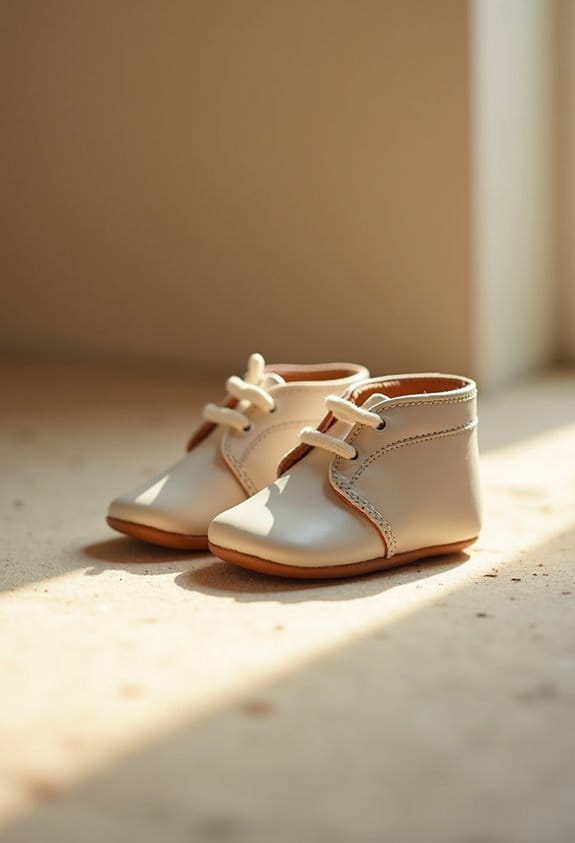
When do babies actually need their first pair of shoes? Most experts agree that shoes aren’t necessary until your precious nugget starts walking, usually between 12 to 14 months. Before walking, a baby’s feet benefit from being barefoot, which helps develop muscles and coordination naturally. Crawling, which starts around 6 to 13 months, doesn’t require shoes unless your little one is on a rough surface where protection is needed. Once walking begins, choosing shoes that support the feet without limiting movement is important. The American Academy of Pediatrics advises against putting shoes on before walking because barefoot time allows feet to grow stronger. So, for those early months, it’s best to let the baby enjoy barefoot freedom until those first steps begin. When selecting baby shoes, it’s essential to prioritize non-slip soles to ensure safety and promote natural foot development during early walking stages.
Benefits of Barefoot Walking for Infants
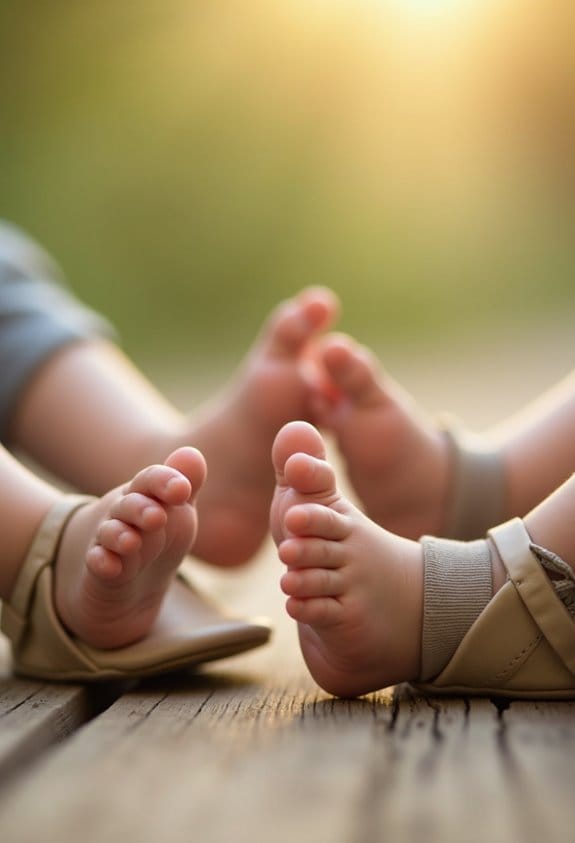
Allowing your precious nugget to walk barefoot offers important benefits for their growing feet. Experts agree barefoot is best during early walking stages because it strengthens foot muscles and tendons naturally. Walking without shoes in safe environments helps your little one build better balance and coordination. This boosts developing motor skills by improving proprioception, or the sense of body position and movement. Pediatricians recommend plenty of barefoot time on soft, clean floors or grassy areas to encourage normal foot growth and sensory awareness. When you let your baby explore without shoes, their feet learn to adapt and move freely, leading to healthier development. Remember, walking barefoot works best in safe spaces where your child can explore comfortably, protecting those precious feet while supporting overall growth and confidence. Choosing shoes with a wide toe box when it’s time to start wearing footwear helps maintain these benefits by allowing natural foot movement.
Risks of Wearing Shoes Too Early
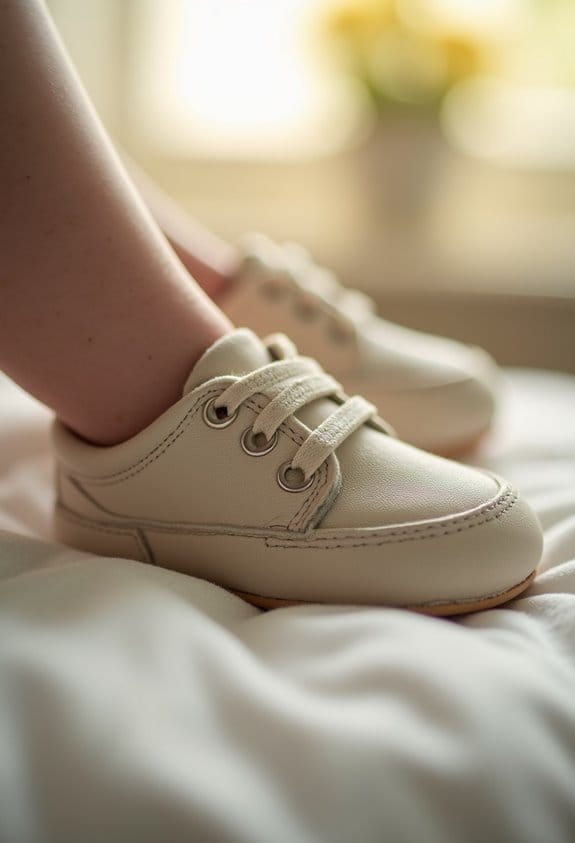
Even though walking barefoot is best for your precious nugget’s foot growth, many parents naturally wonder about the safety of baby shoes. Wearing shoes too early can cause discomfort because most infant shoes have stiff soles that limit natural foot movement. This restriction can lead to blisters and even interfere with how your baby’s feet develop. Shoes that don’t fit well might cause misalignment and other developmental issues. Pediatricians recommend mostly barefoot walking in safe spaces until your baby shows signs of readiness to walk. This allows their muscles and tendons to strengthen and improves balance. While shoes protect outdoors, wearing shoes before your little one starts walking could hold back their natural progress and create avoidable problems with their delicate feet. Choosing shoes with flexible soles can help support natural foot movement during early walking stages.
Choosing the Right Shoes for Pre-Walkers

Selecting shoes for a precious nugget who is just beginning to explore requires care and attention. For pre-walkers, baby shoes should be soft-soled shoes that feel almost like going barefoot. These allow natural foot movement and comfort without restricting tiny feet. When your little one starts to crawl outdoors or on rough surfaces, it’s important they wear shoes to protect their feet from sharp objects and cold ground. Indoors, socks or booties usually work fine to keep feet cozy without interference. It’s also essential to check the shoe size often since babies’ feet grow quickly. Wearing shoes that fit well encourages healthy foot development. Choosing soft, bendable soles with good traction helps your precious nugget explore safely while supporting their early stages of walking. Additionally, shoes with flexible, non-slip soles provide added safety and promote balance during initial walking attempts.
Recommended Products

Breathable & Comfortable:These unisex baby socks shoes with non slip rubber soft Sole, knitted with soft breathable combed cotton. The insole is a memory insole, which fits the shape of the baby's feet, fit snugly and comfortably, adapting to your toddler’s natural foot movements. Super flexible , lightweight and comfortable fit all seasons.

MATERIAL: Genuine suede leather, soft and lightweight with a durable sole so walking feel natural

Lace-Free Design:The baby shoes have convenient elastic lace-free design for easy on and off,fits snugly on baby's feet.Suit for crawling,walking,running,playing and won't fall off
Essential Features of Baby Shoes
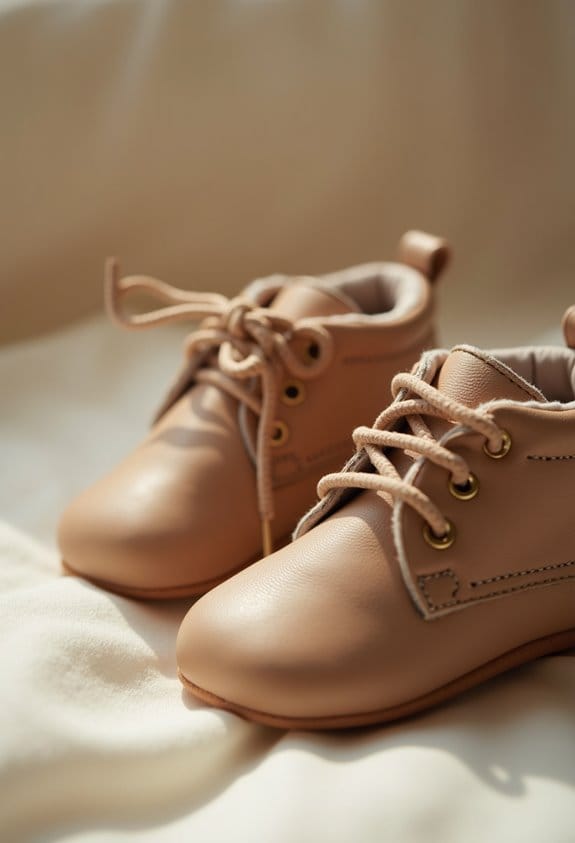
When your precious nugget starts wearing shoes more regularly, it’s good to know what features to look for. Baby shoes should have non-skid soles to prevent slips, yet remain flexible to support natural foot movement. Breathable materials like canvas keep little feet dry and comfy throughout the day. It’s important to focus on functionality over fashion. Proper fit matters most—shoes shouldn’t be too tight or loose, allowing room for growing feet without pinching. Fastenings like Velcro make putting shoes on and taking them off easier for you and your child. Overall, shoes that balance a proper fit, breathability, non-skid grip, and flexibility help guarantee healthy foot development while supporting your baby’s early steps safely and comfortably. Choosing shoes made from soft, breathable fabrics such as leather or suede can further promote natural foot movement and comfort.
How to Properly Measure Baby’s Feet at Home
How can you be certain your baby’s shoes fit just right? To properly measure your precious nugget’s baby’s feet at home, have them stand on a piece of paper and trace both feet carefully, marking heel and longest toe. Since feet can differ slightly, use the larger measurement to compare with shoe size charts. Remember to leave about a thumb’s width of space between the longest toe and the shoe’s front. This extra space allows for a comfortable fit and natural growth. Because baby’s feet grow fast during infancy and toddlerhood, measure them every one to two months. Regularly checking guarantees shoes stay comfortable and support healthy development. Measuring properly helps you pick shoes that protect tiny feet without causing discomfort or restricting growth. It’s also important to consider wide toe boxes in shoes to promote healthy foot development and comfort.
Recommended Products

【Foot Measurement Devices】The foot measurement device for kids and adults is applicable to Man Woman and Youth, Kids, Baby, buying your child’s shoes online from the comfort of your own home.

The foot measurement device Applicable to Man Woman and Youth,US Size,and accurate way to keep track of your child's foot size.

Children grow incredibly fast, making it a constant struggle to keep up with their changing shoe sizes. Squatchi is a versatile, at-home children's shoe sizer that ensures an accurate measurement every single time, eliminating the guesswork from shoe shopping.
Different Types of Baby Shoes and Their Uses
Choosing the right type of baby shoes is important for supporting your precious nugget’s growing feet. Soft-soled shoes work great for pre-walkers, giving them a barefoot feel to aid natural foot development. When your little one takes those first steps, first walking shoes should be flexible with strong traction to help balance. In warm weather, closed-toe sandals provide breathability while protecting tiny toes from outdoor dangers. Boots are perfect for chilly or wet days, offering warmth and slip-resistant soles for outdoor play. Baby sneakers suit both new and steady walkers, focusing on durability, comfort, and roomy toe boxes to encourage healthy foot growth. Additionally, choosing shoes with flexible soles supports natural foot movement and balance during early walking stages.
Recommended Products

Wide Round Toe: The unique design of the toe can make the baby's feet free movement, body balance is not afraid of falling, anti-collision to help crawling

Breathable & Comfortable:These unisex baby socks shoes with non slip rubber soft Sole, knitted with soft breathable combed cotton. The insole is a memory insole, which fits the shape of the baby's feet, fit snugly and comfortably, adapting to your toddler’s natural foot movements. Super flexible , lightweight and comfortable fit all seasons.

FEETCITY Baby First Walking Shoes Boys Girls Toddler Sneakers Anti-Slip Newborn Crib Shoes Dark Grey
Upper:Knitted Mesh Upper offers comfort and air permeability,has excellent breathability,moisture wicking function,and keep baby's feet dry and odorless.Super Soft,Breathable and Comfortable fit all the year
Why Flexibility and Comfort Matter More Than Breaking In
Because a baby’s feet are still growing and developing, flexibility and comfort are far more important than breaking in new shoes. Flexible baby shoes with soft, bendable soles let your precious nugget move naturally, helping muscle strength and healthy foot growth. When shoes are comfortable from the start, there’s no need for a breaking-in period that can cause blisters or irritate tender feet. Well-designed shoes provide support and traction for little walkers to explore safely and confidently. Choosing flexible, cushioned shoes means your baby won’t resist those first steps. So, rather than worrying about breaking in stiff shoes, focus on finding pairs that fit well and feel good. This simple choice promotes comfort, encourages movement, and supports your toddler’s early walking adventures. Prioritizing shoes with a wide toe box and zero drop sole supports natural foot development and enhances balance during early walking stages.
Tips for Helping Your Baby Adjust to New Shoes
A handful of simple steps can help your precious nugget adjust smoothly to new shoes. To break in new shoes, begin by having your child wear their new footwear for short periods of 15-30 minutes. This helps monitor comfort and prevents irritation. Encourage your child to wear the same socks they will use daily, which softens the material and guarantees a good fit. Before wearing, flex and bend the shoes gently to help soften the material. Starting indoors is best; it lets your child get used to the feel of the shoes in a safe space. Always watch for signs of discomfort or red spots and act quickly to protect your child’s tender feet. These tips help your child enjoy wearing new shoes with ease and confidence. Additionally, ensuring the shoes have a non-slip rubber sole can provide extra safety as your baby learns to walk.
Recommended Products

[Breathable & Soft Cotton]:These toddler socks shoes are crafted with soft, breathable cotton, offering all-day comfort for your little one’s delicate feet. Perfect for all seasons, these infant non-slip breathable slippers keep feet cool in the summer and warm in the winter. Whether your child is indoors or outdoors, the breathable fabric ensures there’s no moisture buildup, keeping feet dry and cozy all day long.

Non-slip Soles:Preventing your baby from slipping,soft, lightweight sole,a safe and cute sock sneakers for baby boys baby girls.

Encourage style and comfort for your little one wearing the faux-leather Stride Rite SR-Taye 2.0 hook-and-loop sneaker.
How to Care for and Maintain Baby Shoes
Once your precious nugget is comfortable in their new shoes, keeping those tiny feet happy means caring for the footwear properly. You should clean baby shoes regularly with a damp cloth to wipe away dirt and stains. For leather shoes, apply a leather conditioner occasionally to keep the material soft and prevent cracking. Always check for wear and proper fit, as babies grow quickly and need room for their toes to move freely. Store baby shoes in a cool, dry place to maintain their shape and avoid damage. If shoes get wet, let them air dry at room temperature—never near heaters or direct sunlight. Choosing shoes with machine-washable materials can simplify the cleaning process and extend their lifespan. These simple steps help keep your baby’s shoes comfortable and durable through all their tiny adventures.
Expert Advice on Selecting and Using Baby Footwear
Many parents find choosing the right baby shoes a bit overwhelming at first. Experts advise prioritizing shoes that support healthy development over fashion. It’s important to measure your baby’s feet regularly, leaving a thumb’s width of space for growth. Look for soft, breathable fabrics—shoes that soften the material enhance comfort and prevent irritation. Flexible soles with non-skid features allow natural movement, helping your precious nugget explore safely. Start with short indoor wear periods to let your baby adjust to the fit and feel gradually. Check the shoe fit every one to two months since little feet grow fast. These steps guarantee the baby shoe supports healthy foot development and coordination during those exciting early walking days.
Frequently Asked Questions
How to Break in Baby Shoes?
To break in baby shoes, gently flex shoe materials, guarantee a proper fit, and gradually increase wear time. Prioritize shoe features supporting walking development and monitor baby foot health to prevent discomfort or irritation during adjustment.
When Should a Baby Get Their First Shoes?
A baby should get their first shoes during the first walking stages, prioritizing baby foot development. Barefoot benefits are essential initially, but shoe fit importance arises when choosing materials that offer flexibility, support, and protection for safe walking.
Do New Shoes Have to Be Broken In?
Like molding clay, new shoes often require breaking in to enhance shoe comfort and material flexibility. This process supports proper foot development, alleviates sizing concerns, and accommodates a baby’s unique walking style for safer, happier steps.
Why Can’t Babies Wear Shoes Before 1 Year?
Babies can’t wear shoes before one year because tiny toes require freedom for proper foot development. Barefoot walking enhances sensory experience, balance improvement, and natural walking patterns, all essential for healthy muscle strength and coordination during early growth.


