As an Amazon Associate, we earn from qualifying purchases. Some links on this site are affiliate links at no extra cost to you. Our recommendations are based on thorough research and editorial judgment.

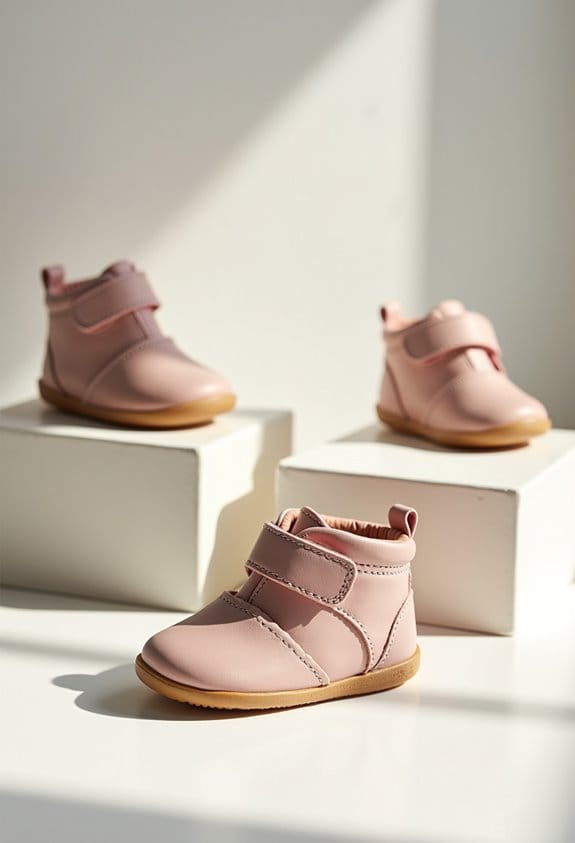
How Walking Shoes Affect Baby’s Posture Development

Walking shoes help your precious nugget’s posture by supporting natural foot development during early walking, usually around 9 to 18 months. Shoes should be flexible with a wide toe box to allow toe movement and muscle growth. Avoid rigid or tight shoes, as they can harm arch formation and balance. Proper footwear encourages safe, confident steps and good posture habits. Exploring how shoe choices shape your toddler’s walking journey reveals valuable insights for healthy growth.
Key Takeaways
- Flexible walking shoes promote natural foot movement and muscle growth, supporting healthy posture development in babies.
- Shoes with a wide toe box allow proper toe splay, enhancing balance and stability for early walkers.
- Rigid, tight shoes restrict foot flexibility, potentially causing poor posture and altered gait over time.
- Properly fitting shoes with about a thumb’s width of toe space prevent discomfort and support arch formation.
- Lightweight, breathable shoes with non-slip soles improve safety while encouraging natural, confident walking habits.
The Role of Foot Development in Early Posture

When your precious nugget starts taking those first steps, the way their feet develop plays a big role in how well they stand and move. Healthy foot development sets the foundation for strong posture as toddlers learn to walk. Feet alignment influences the alignment of the whole body, so it’s important to support this early on. Studies show babies who walk barefoot or wear flexible shoes have better arch development and a natural gait. Choosing a proper shoe means picking ones that allow foot muscles to move freely without being rigid or tight. This encourages muscle growth essential for maintaining an upright, stable posture. Sensory feedback from shoes that fit well also helps improve balance. Supporting foot development with the right shoes helps your little one move confidently and comfortably. Shoes featuring a wide toe box promote natural toe movement and contribute significantly to healthy foot growth.
Impact of Footwear on Balance and Stability

Footwear plays a big part in how well your precious nugget balances and moves through those early walking stages. Shoes that support natural foot movement help improve balance and stability, making it easier for toddlers to coordinate their steps. Footwear with rigid soles can limit this, causing your little one to struggle with posture and balance. Studies show toddlers wearing flexible, barefoot-style shoes often have better balance and coordination than those in stiff, conventional shoes. Footwear allowing toes to spread naturally provides a better grip, reducing falls and supporting healthy development. By choosing the right shoes, you help your baby’s feet gain strength and stability, paving the way for confident, safe walking and proper posture growth during these exciting first steps. Additionally, features like wide toe boxes allow for natural toe splaying, which enhances balance and prevents foot deformities.
Understanding Natural Foot Movement in Babies

Because your precious nugget’s feet start mostly as soft cartilage, natural movement is key for healthy growth. This natural foot movement helps those soft parts slowly turn into strong bones. When a baby moves freely, it encourages proper foot mechanics, which supports arch formation and overall balance. Walking barefoot or in minimalist shoes allows the feet to feel the ground, boosting coordination and posture development. Studies show children who move naturally develop stronger foot structures than those in stiff shoes. This natural motion teaches the muscles and bones how to work together for stability and healthy posture. So, giving your little one the chance to explore with unrestricted foot movement is important for their long-term foot health and confident steps ahead. Selecting walking shoes with flexible soles can further promote this essential natural foot movement.
How Rigid Shoes Affect Muscle and Arch Growth

Rigid shoes, often designed with stiff soles and firm uppers, can limit your precious nugget’s natural foot movements. This restriction affects muscle development, as the foot muscles need freedom to flex and strengthen. Without this, important muscles that support arch development may remain weak or underused. Studies link rigid shoes to flatter feet in children because stiff soles prevent normal foot bending and spreading. This altered movement can also change how your little one walks, affecting balance and coordination. Over time, using rigid shoes often can lead to reduced foot flexibility and might cause discomfort or mobility issues later on. Allowing your child’s feet to move naturally supports healthy muscle and arch growth, setting a solid foundation for good posture as they grow. Choosing shoes with flexible soles provides the balance of protection and natural foot movement essential for proper development.
Benefits of Flexible and Well-Fitting Walking Shoes
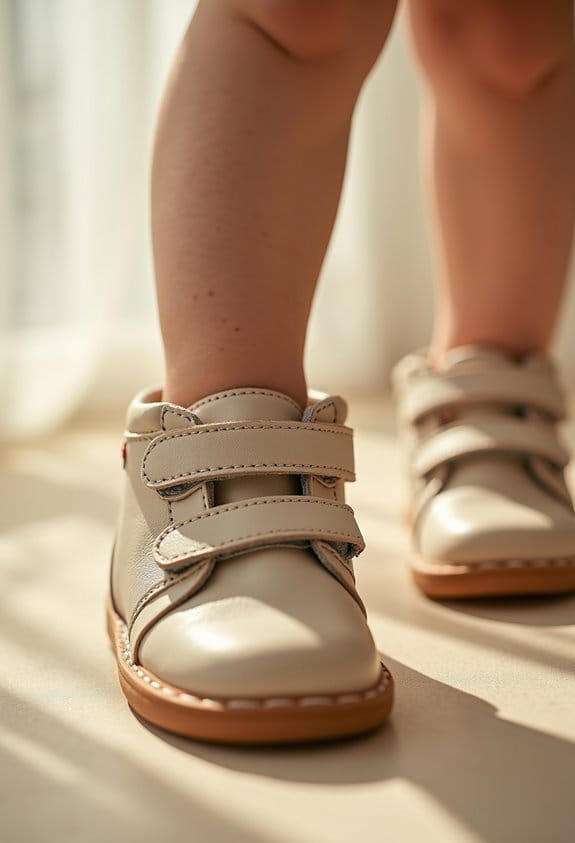
Choosing flexible and well-fitting walking shoes is essential for your precious nugget during those first steps. Flexible shoes support natural foot movement, allowing tiny toes to splay and grip the ground. This freedom encourages proper fit with enough toe space—about a thumb’s width—helping the foot develop alignment crucial to good posture development. Shoes that bend easily promote stronger foot muscles and better balance as your baby learns to walk. Research shows that stiff, tight shoes can interfere with arch growth, which is critical for steady posture. By choosing footwear that’s soft, flexible, and fits well, you give your child’s feet the best start. This encourages healthy posture development and smooth walking progress without restricting their natural motions. It is also important to consider shoes with wide toe boxes and non-slip soles to enhance comfort and safety during walking.
Connection Between Foot Comfort and Confidence
When a baby’s feet feel comfortable, they gain the confidence to explore their world more freely. Foot comfort plays a key role in how your precious nugget learns walking and builds balance. Shoes that fit well and feel natural help babies feel secure with each step. This comfort reduces fussiness and lets them stay active longer. When babies trust their footing, they are more likely to try new movements like climbing and running. Proper shoe design prevents strain, making walking more enjoyable. In turn, walking with confidence supports healthy posture development by encouraging steady, relaxed movement. You can support your child’s early adventures by choosing shoes that offer cozy foot comfort, creating a strong foundation for growing confidence during these exciting first steps. Choosing shoes with soft soles is essential to promote natural foot movement and healthy development.
Encouraging Healthy Walking Patterns Through Footwear
Supportive footwear helps guide your precious nugget toward healthy walking habits from the start. Barefoot shoes provide flexibility and allow natural foot movement, which is key for proper foot development. These shoes encourage toe splay and muscle strengthening, helping babies build the balance and coordination needed for good posture. Unlike stiff, rigid shoes, barefoot shoes don’t interfere with your child’s natural walking style. By supporting healthy walking patterns early on, they help prevent posture and alignment issues down the road. Choosing shoes that mimic barefoot conditions offers stability while letting little feet move freely. This careful choice creates a foundation for strong muscles and a confident stride, promoting upright posture as your child grows and explores the world on their own two feet. Additionally, lightweight design advantages reduce fatigue and allow for greater comfort during active play, supporting natural foot development.
Transitioning From Barefoot to Walking Shoes Safely
Although barefoot walking supports natural foot growth, your precious nugget will soon need lightweight, flexible walking shoes. Shifting typically begins around 12 to 15 months, once your baby walks independently. Choosing shoes that allow natural foot movement is key to proper foot development. The shoes should fit well, with about a thumb’s width of space at the toes, so they don’t restrict toes or cause discomfort. Start by having your baby wear shoes for short periods in safe spaces, gradually increasing the time. This helps their feet adjust while maintaining strength and balance. Since babies’ feet grow fast, check shoe fit every 6 to 8 weeks. This careful shifting supports healthy posture and coordination as your little one learns to walk confidently. Look for shoes with non-slip soles and breathable materials to enhance safety and comfort during early walking stages.
Long-Term Effects of Proper Shoe Choices on Posture
Because your precious nugget’s posture is still developing, the shoes they wear now have a lasting impact. Choosing the right footwear supports proper foot development, which is key to healthy posture over time. Shoes that are flexible and allow natural toe splay help your child build strong core stability. This stability shapes their posture as they grow. Research shows that supportive shoes create better walking patterns, reducing risks of posture problems later. On the other hand, tight or rigid shoes can cause muscle imbalances and alter gait, leading to discomfort and long-term issues. So, selecting well-fitting, minimalist shoes tailored to your baby’s foot promotes natural movement and posture. Making careful shoe choices now sets a foundation for your child’s lifelong comfort and alignment. Prioritizing flexibility and safety in baby walking shoes is essential to ensure they develop proper walking habits without risk of injury.
Frequently Asked Questions
Can Shoes Affect a Baby’s Walking Development?
Like a horse in medieval armor, restrictive shoes impede natural walking gait, affecting developmental milestones. Shoe flexibility enables proper foot mechanics, supporting balanced movement and healthier progression, thereby positively influencing a baby’s walking development during critical early stages.
Should Babies Wear Shoes When Walking?
Babies should start wearing shoes around 12-15 months after independent walking begins. Barefoot benefits include stronger foot muscles and balance. Shoe selection must prioritize flexible soles and wide toe boxes to support natural foot development effectively.
How Do Shoes Affect Posture?
Like a sculptor shaping clay, shoe flexibility molds natural movement, while sole cushioning absorbs impact and the toe box grants space for splayed toes. Together, these elements influence posture by supporting balance, alignment, and healthy foot development.
Can Baby Shoes Impact Foot Development?
Baby shoes can impact foot growth by either supporting or hindering early mobility. Proper shoe flexibility encourages natural foot development, while rigid or ill-fitted shoes may restrict movement, potentially causing long-term developmental and postural issues.