As an Amazon Associate, we earn from qualifying purchases. Some links on this site are affiliate links at no extra cost to you. Our recommendations are based on thorough research and editorial judgment.

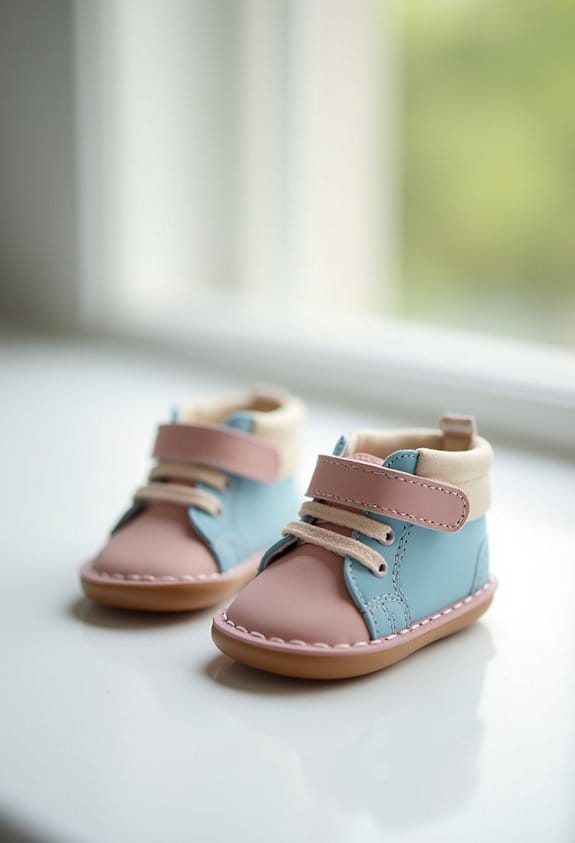
Non-Toxic Baby Shoes: What Parents Should Look For

Parents should look for non-toxic baby shoes made from natural, breathable materials like organic cotton or vegetable-tanned leather, ensuring safety for their precious nugget’s delicate skin. Check for certifications such as OEKO-TEX Standard 100 to avoid harmful chemicals like lead or phthalates. Shoes need flexible soles, good grip, and roomy toe boxes for healthy foot growth and comfort. Selecting hypoallergenic fabrics and eco-friendly production supports the child’s health and environment. More details can help guide confident choices for your little one.
Key Takeaways
- Choose baby shoes made from certified non-toxic, natural materials like organic cotton and vegetable-tanned leather to ensure safety and comfort.
- Avoid shoes containing harmful chemicals such as phthalates, lead, formaldehyde, or synthetic VOC-emitting materials.
- Look for certifications like OEKO-TEX Standard 100, GOTS, and APMA to verify safe, eco-friendly, and foot-healthy footwear.
- Prioritize shoes with breathable, hypoallergenic fabrics, flexible soles, proper ankle support, and roomy toe boxes for natural foot development.
- Research reputed brands with transparent material sourcing, customer reviews, and easy return policies emphasizing non-toxic, eco-conscious production.
Importance of Non-Toxic Materials in Baby Shoes

When you choose baby shoes, the materials matter more than you might think. Non-toxic materials are essential for keeping your precious nugget’s feet safe and comfortable. Shoes made from natural materials, like organic cotton or vegetable-tanned leather, allow the skin to breathe, reducing irritation and supporting healthy foot growth. These materials promote air circulation, which helps prevent fungal infections and keeps tiny toes happy. Non-toxic baby shoes often meet certifications such as OEKO-TEX Standard 100, ensuring they are free from harmful substances. Choosing eco-friendly, natural materials doesn’t only protect your child but also benefits the environment. Plus, these shoes provide gentle support, helping little ones move naturally as they learn to walk. In short, non-toxic materials are a smart, loving choice for your child’s delicate feet. Additionally, opting for shoes that feature breathable mesh uppers can further enhance comfort by improving airflow and reducing moisture buildup.
Common Harmful Chemicals to Avoid in Kids’ Footwear

Protecting your precious nugget means knowing what harmful chemicals to avoid in kids’ footwear. Many baby shoes contain phthalates, which can disrupt young children’s hormonal systems. Lead is another dangerous chemical often found in dyes and materials, posing serious developmental risks. Formaldehyde, used during production, may irritate sensitive skin and lungs. Perfluorinated compounds (PFCs), added for stain resistance, can affect immune health and persist in the environment. Synthetic materials like polyester and nylon tend to off-gas harmful volatile organic compounds (VOCs), which may cause allergic reactions. Choosing shoes made from natural rubber can help reduce exposure to these chemicals. Ensuring shoes meet safety certifications helps guarantee they are free from harmful substances that could affect your baby’s health.
Key Certifications to Verify Safety and Non-Toxicity

A key step in choosing safe baby shoes is checking for trusted certifications. The OEKO-TEX Standard 100 certification is essential, as it guarantees that materials are free from harmful substances, making non-toxic shoes a safer choice for your precious nugget’s delicate skin. Look also for the Global Organic Textile Standard (GOTS), which assures that fabrics, like organic cotton, meet strict ecological and social criteria. Shoes carrying the American Podiatric Medical Association (APMA) Seal promote healthy foot development, vital for growing feet. While packaging certifications like the Forest Stewardship Council (FSC) underline environmental care, your focus should remain on materials directly touching your little one. These certifications help you confidently select baby shoes that protect your child’s health and comfort every step of the way. Additionally, selecting shoes with wide toe boxes is crucial to promote natural toe movement and accommodate growth safely.
Selecting Breathable and Hypoallergenic Fabrics

Breathable and hypoallergenic fabrics play an important role in keeping your precious nugget’s feet healthy and happy. Breathable fabrics like organic cotton and hemp help air flow around little feet, keeping them dry and comfy. This reduces the chance of moisture problems, such as fungal infections. Hypoallergenic materials are gentle and lower the risk of skin irritations or allergies, which is great for babies with sensitive skin. Choosing shoes with natural rubber soles also matters. These soles offer flexibility and support while allowing more airflow than synthetic ones, helping to keep feet cozy. Finally, look for fabrics with minimal chemical treatments and certifications like OEKO-TEX Standard 100 to confirm safety. These choices help protect your baby’s delicate skin without sacrificing comfort or support. Additionally, non-toxic materials undergo multiple safety tests to ensure skin compatibility and overall safety for early walkers.
Proper Fit and Comfort Considerations for Baby Shoes

Choosing baby shoes that fit properly is key to keeping your precious nugget’s feet comfortable and healthy. A proper fit prevents tightness that can cause friction, irritation, and chafing, which might harm delicate feet. Avoid loose shoes too, as they can rub against sensitive skin and cause discomfort or even injuries from extra movement. Shoes made with non-toxic materials add extra peace of mind by protecting your baby’s sensitive skin from harmful chemicals. Look for ergonomic designs that support natural foot movement and leave plenty of toe room for growing feet. Non-slip soles also help keep your little one stable as they take early steps. Prioritizing fit and comfort guarantees your precious nugget’s feet stay happy while developing strong and healthy. Additionally, features like cushioned foam footbeds and rounded edges can enhance stability and comfort during these crucial early walking stages.
Benefits of Natural and Organic Shoe Materials
When you want to keep your precious nugget’s feet safe and comfy, natural and organic shoe materials offer many important benefits. Non-toxic baby shoes made from organic materials like cotton, leather, and natural rubber reduce the risk of skin irritation and allergic reactions. These materials are hypoallergenic and often dyed using natural dyes, avoiding harsh chemicals. Shoes crafted from vegetable-tanned leather and other organic fabrics avoid toxins like formaldehyde and phthalates, making them safer for delicate baby skin. Besides protecting your baby, these choices support the planet by reducing chemical waste and pollution. Natural materials also prevent harmful off-gassing that can affect indoor air quality as your baby crawls and walks. Choosing non-toxic baby shoes made with organic materials is a thoughtful step toward healthier, happier feet and a safer environment. Additionally, many sustainable shoes come with certifications covering key health to ensure safety and quality.
Features to Support Healthy Foot Development
Although it might be tempting to pick cute shoes first, the features inside baby shoes matter most for healthy foot growth. When choosing footwear for your precious nugget, opt for natural, breathable materials like organic cotton or natural leather. These help keep little feet dry and fresh, reducing infection risks. Shoes should offer natural flexibility to support developing foot muscles and promote proper gait patterns. Providing proper arch support is important to maintain your child’s natural foot structure as they grow. Make sure there is ample toe room to allow toes to move and grow without pinching. Lightweight, cushioned soles offer comfort and absorb shock, encouraging balance and coordination. Focusing on these features helps you support your child’s healthy foot development every step of the way. Additionally, selecting shoes with flexible, non-slip soles can enhance stability and prevent falls during early walking stages.
Non-Slip Soles and Safety Features for Toddlers
Since toddlers are just learning to walk, shoes with non-slip soles are essential to keep your precious nugget safe. Non-slip soles made from textured rubber offer good grip on different surfaces, helping to prevent slips and falls. These soles also stay flexible to allow natural foot movement, which supports healthy walking. Besides grip, safety features include cushioned insoles for comfort and shock absorption, protecting delicate feet and joints. Proper ankle support is key too, promoting balance without limiting motion. Choosing shoes made from non-toxic materials guarantees your toddler avoids harmful chemicals while enjoying breathability and comfort. Together, these thoughtful safety features create a secure, cozy pair of shoes that encourage confident first steps and active exploration in your little one. Additionally, selecting shoes with roomy toe boxes allows for natural foot development and comfort during early walking stages.
Eco-Friendly Production Methods in Kids’ Footwear
As you choose shoes for your precious nugget, understanding eco-friendly production can help support a healthier planet and safer footwear. Eco-friendly materials like plant-based leathers and recycled plastics reduce reliance on harmful synthetic fabrics and chemicals. Brands focusing on sustainable production techniques often use water-based adhesives and dyes. This lowers toxic off-gassing, making shoes gentler for little ones. Some factories earn LEED certification by following energy-efficient, waste-reducing practices, ensuring a greener footprint. These methods consider the shoe’s full lifecycle, promoting a circular economy that minimizes waste. Choosing kids’ footwear made with these approaches means supporting cruelty-free, non-toxic options. This thoughtful selection helps protect your child and the environment from early steps onward. Additionally, prioritizing sustainable materials in production not only minimizes environmental impact but also enhances the durability and safety of the shoes for toddlers.
How to Shop Confidently for Non-Toxic Baby Shoes Online
When shopping online for your precious nugget’s first shoes, careful research is key to finding non-toxic options. Focus on brands that use non-toxic materials, such as those certified by OEKO-TEX or made from organic fibers free of harmful chemicals. When shopping for kids shoes, read customer reviews to learn about safety, comfort, and how well they suit sensitive skin. Check product descriptions for breathable, hypoallergenic fabrics and flexible soles that allow natural foot movement. Adequate toe room is crucial to prevent irritation as your baby explores. Finally, verify the online store offers a generous return policy, making exchanges easy if the fit isn’t perfect. Taking these steps can help you shop confidently and protect your little one’s delicate skin and developing feet. Additionally, prioritize shoes with non-slip soles to enhance safety and stability during early walking stages.
Recommended Brands Known for Non-Toxic Baby Shoes
Finding the right non-toxic baby shoes becomes easier when you know which brands focus on safe, eco-friendly materials and ethical practices. ONYC offers shoes made with non-toxic, hypoallergenic water-based colors, great for sensitive skin. Native Shoes creates a vegan line using natural and recycled materials, perfect for little ones who love to play. Rothys designs baby shoes with durable threads from recycled plastic and marine waste, making cleaning easier. Veja Kids uses chromium-free leather and sustainable parts, supporting fair trade and child safety. Teva’s baby footwear includes recycled REPREVE® polyester, made for comfort and active outdoor use. These brands avoid harmful chemical finishes, putting your precious nugget’s wellbeing first while caring for the planet too. Choosing any of these makes the journey smoother for you and your growing baby.
Frequently Asked Questions
What Shoes Do Pediatric Podiatrists Recommend?
As the saying goes, “A stitch in time saves nine,” pediatric podiatrists recommend adherence to pediatric footwear guidelines emphasizing flexible, breathable shoe material recommendations like organic cotton, ensuring proper fit, supporting natural foot development advice for growing infants and toddlers.
What Are the Best First Shoes for a Baby?
The best first shoes for a baby feature flexible first walker designs crafted from safe infant shoe materials like organic cotton. Proper shoe fit importance guarantees comfort, allowing natural movement and healthy foot development during early walking stages.
What Is the Healthiest Type of Shoe?
The healthiest type of shoe is crafted from healthy materials like organic cotton and natural rubber, promoting proper foot development. It emphasizes shoe flexibility to allow natural movement, preventing discomfort and supporting the baby’s growing feet effectively and safely.
Why Are Shoes Not Recommended for Babies?
Shoes are not recommended for babies because they can impede soft foot development, restrict natural crawling movements, and hinder balance improvement. Barefoot activity supports muscle strengthening and coordination essential for healthy foot growth and motor skills.