As an Amazon Associate, we earn from qualifying purchases. Some links on this site are affiliate links at no extra cost to you. Our recommendations are based on thorough research and editorial judgment.


What Does “Orthopedic Design” Mean for Baby Shoes?

Orthopedic design in baby shoes means creating footwear that supports your precious nugget’s growing feet with comfort and healthy movement. These shoes have wide toe boxes for natural toe spreading, flexible soles for balance, and cushioned insoles to absorb shock. They provide gentle arch and ankle support without restricting growth, helping stability as your baby learns to walk. Choosing well-fitted, breathable shoes protects foot health during early milestones. Keep exploring to better understand what features matter most.
Key Takeaways
- Orthopedic design in baby shoes supports natural foot growth with a wide toe box and flexible, supportive materials.
- These shoes provide arch and ankle support to promote stability and proper alignment during early walking.
- Cushioned, shock-absorbing soles protect developing joints and encourage natural gait and balance.
- Lightweight, breathable, and non-toxic materials ensure comfort and safety for delicate baby feet.
- Orthopedic shoes help prevent foot deformities by allowing natural movement and proper toe spreading.
Understanding Orthopedic Design Principles

When choosing shoes for your precious nugget, understanding orthopedic design principles is key. These principles focus on protecting your baby’s foot health by supporting natural growth and movement. Design innovation in orthopedic baby shoes includes features like a wide toe box, which gives tiny toes room to grow and avoids issues like bunions. The shoes use flexible yet supportive materials that bend as your baby’s feet move, encouraging natural steps. Lightweight construction guarantees the shoes do not strain developing muscles and joints. Cushioned insoles and shock-absorbing soles enhance comfort and help prevent injury during early walking stages. Altogether, these thoughtful design elements support healthy foot development, making orthopedic shoes a smart choice as your baby takes those first precious steps. Additionally, non-slip soles provide essential stability to prevent falls during these early walking attempts.
Key Features of Orthopedic Baby Shoes

Orthopedic baby shoes include specific features designed to support your precious nugget’s growing feet. These shoes use carefully chosen shoe materials like breathable fabrics and cushioned insoles to keep little feet comfortable and free from irritation. Flexible soles mimic natural foot movement, helping babies gain better balance as they learn to walk. Arch support, a vital feature, evenly distributes weight and helps prevent common foot problems down the road. Current design trends focus on combining function with softness, ensuring shoes are lightweight yet supportive. Parents will notice thoughtful touches that promote healthy foot development without restricting motion. This thoughtful blend of materials and design supports your baby’s feet during essential early stages, encouraging strong, stable steps every time they explore the world around them. Additionally, prioritizing non-toxic materials in baby shoes is essential to ensure safety and align with growing parental preferences for healthy, eco-friendly products.
Importance of a Wide Toe Box
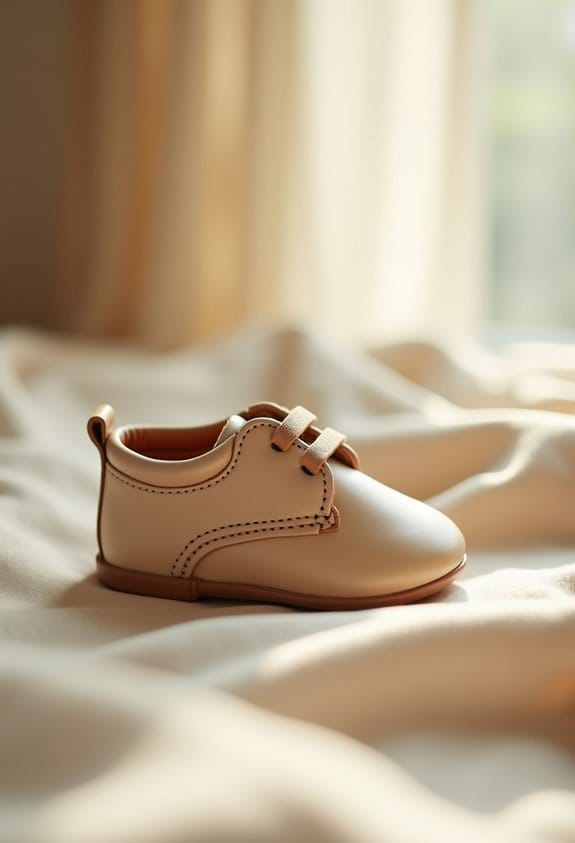
Because your precious nugget’s feet are still growing and changing shape, shoes with a wide toe box are very important. This roomy design allows the toes to spread naturally, which supports proper foot development. Experts, including the American Podiatric Medical Association, recommend baby shoes that mimic the natural shape of little feet. Proper toe box measurements guarantee there’s enough space for growing toes, reducing the risk of discomfort and deformities. When selecting baby shoe materials, look for soft, flexible options that won’t restrict movement. A well-measured wide toe box also helps improve balance and stability as your child starts walking. Choosing shoes that respect the foot’s natural shape supports your baby’s comfort and healthy foot posture, making every step safer and more secure for your precious nugget. It is also important to choose shoes with flexible non-slip soles to encourage safe, natural movement and prevent slipping during early walking stages.
Role of Arch Support in Infant Footwear

Arch support plays a key role in infant footwear by helping your precious nugget’s feet grow strong and healthy. Proper arch support in baby shoes encourages natural foot development without limiting movement. It helps distribute weight evenly across tiny feet, which reduces discomfort and prevents future foot problems. Pediatricians advise selecting infant footwear with flexible soles that still provide this crucial support. Well-designed arch support improves balance and coordination as babies start crawling and taking their first steps. For parents, choosing shoes that fit well and include built-in arch support is essential. This thoughtful design supports healthy arches early on, setting the foundation for your little one’s overall foot health as they grow and explore the world on their feet. Shoes with firm arch support and deep heel cups provide stability and ease foot pain during early development.
Benefits of Cushioned Soles for Babies
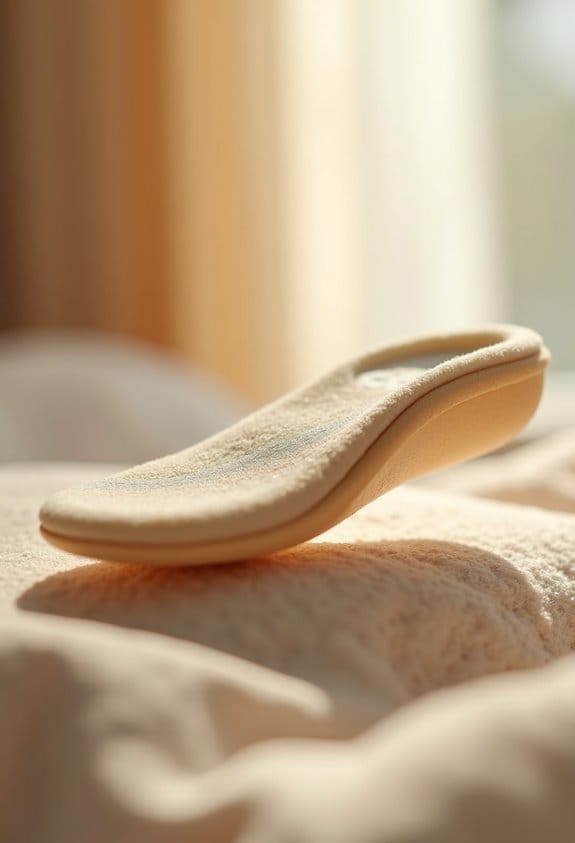
Along with arch support, cushioned soles in baby shoes play an important role during early walking stages. These soles deliver essential cushioning benefits by providing shock absorption, which helps protect your precious nugget’s developing joints from impact. This support encourages proper foot alignment and stability as your baby learns to balance and coordinate steps. Studies show babies wearing cushioned soles display a more natural gait, supporting healthy foot development. Additionally, the softness creates a comfy experience, inviting your little one to explore more and stay active longer. Cushioned soles also reduce foot fatigue, so playtime lasts happily without tired feet slowing your baby down. Choosing shoes with the right cushioning guarantees both comfort and protection while your baby takes those first adventurous steps. For best results, look for shoes with flexible soles that support natural foot movement during this critical stage.
How Orthopedic Shoes Support Natural Foot Development
Many orthopedic baby shoes include features designed to support natural foot development during those first steps. They offer proper arch support that helps your precious nugget’s feet grow strong and healthy. Flexible soles allow natural foot mechanics, letting little feet bend and move as they learn balance. A wider toe box gives room for tiny toes to spread, reducing the risk of deformities like bunions. These design elements are especially important during developmental milestones, such as standing and early walking, when foot muscles and bones change rapidly. Orthopedic shoes also use breathable materials to keep those busy feet comfortable all day. By encouraging correct foot function early, these shoes support your child’s long-term foot health and help guide their natural growth with gentle care. Additionally, zero drop soles enhance balance and encourage proper posture, which is crucial for toddlers mastering their first movements.
Comparing Orthopedic Shoes to Regular Baby Shoes
While regular baby shoes may look cute, they often lack the support needed for your precious nugget’s growing feet. Comparing material types, orthopedic shoes use breathable, flexible fabrics that encourage healthy foot movement. Regular shoes often focus on style, using stiffer, less supportive materials. Orthopedic designs include features like arch support and a wider toe box, helping prevent flat feet and improper gait. Evaluating price differences, orthopedic shoes usually cost more upfront. However, investing in them can reduce foot problems later, making the extra expense worthwhile. Meanwhile, regular shoes are more affordable but may not provide the structure babies need as they start walking. Choosing between the two means balancing style, comfort, and long-term foot health for your little one’s best start. It’s important to consider sole flexibility and grip to support natural movement and prevent slips during early walking stages.
When to Introduce Orthopedic Shoes to Your Child
Knowing when to introduce orthopedic shoes for your little one can make a big difference in their foot health. The appropriate age to evaluate these shoes is often between 1 and 3 years, around important walking milestones like first steps. This period is critical because your precious nugget’s foot structure is still developing. Pediatricians may recommend orthopedic shoes if your child shows signs of discomfort or unusual foot growth. These shoes provide needed arch support and stability without restricting growth. It’s best to discuss this with your child’s doctor during regular check-ups to determine the right time. Orthopedic shoes should fit well, offering room for growing feet while supporting healthy walking patterns. Introducing them at the right time can gently guide your child toward strong, happy feet. Selecting shoes with ankle support is especially important to aid stability and proper foot alignment during early walking stages.
Signs Your Baby May Need Orthopedic Footwear
How can you tell if your precious nugget might need orthopedic footwear? Recognizing symptoms early helps avoid common misconceptions, like thinking all baby shoe troubles will go away with time. Frequent tripping, stumbling, or trouble walking can signal the need for better support. Excessive crying during or after walks might show foot pain or discomfort. Uneven wear on shoes could mean improper foot alignment. If your baby struggles standing or walking on uneven surfaces, orthopedic shoes may improve stability. Also, flat feet or high arches often require pediatrician advice to decide if orthopedic footwear is needed. Watching for these signs supports healthy foot development and comfort for your little one, helping you choose the right care without worry. Additionally, opting for ankle support in footwear is vital to ensure stability and promote proper walking habits.
Selecting the Right Size and Fit for Orthopedic Baby Shoes
Finding the right size and fit for orthopedic baby shoes is key to your precious nugget’s comfort and foot health. Following proper fitting guidelines starts with accurate measuring techniques. There should be about a thumb’s width of space between the longest toe and the shoe’s end, allowing for natural growth. The shoe’s width must fit snugly without pinching, as many brands offer various widths to match your baby’s foot. Choose shoes made from flexible, breathable materials that support foot development and provide gentle arch support. Make sure the heel has a slight lift but doesn’t slip during movement, ensuring stability. Since baby feet grow fast, regularly check the fit and be prepared to replace shoes every few months to maintain the best support. Additionally, look for shoes with non-slip rubber soles to provide stability and slip resistance during early walking stages.
Expert Recommendations for Choosing Orthopedic Baby Shoes
While choosing orthopedic baby shoes, it helps to listen to expert advice to support your precious nugget’s healthy foot growth. Experts recommend selecting shoes made from breathable shoe materials to keep your baby’s feet dry and comfortable. Look for soft, flexible soles that let little feet move naturally while offering good traction. Regular pediatric assessments are vital; these check your baby’s foot development and catch any early walking issues. Your pediatrician or podiatrist can suggest the best shoe styles and guarantee proper fit as your baby grows. Remember, a well-fitted shoe protects against blisters and discomfort. Taking guidance from experts and choosing quality materials will help you provide your precious nugget with the best start toward strong, healthy feet.
Frequently Asked Questions
Do Babies Need Orthopedic Shoes?
Do all babies need orthopedic shoes? Typically not, as natural baby foot development benefits from soft, flexible shoes. However, recognizing the proper footwear importance becomes essential when specific conditions arise, necessitating expert guidance for ideal foot health.
What Does Orthopedic Shoe Mean?
Orthopedic shoes provide proper arch support to promote healthy baby foot development. They are specially designed to accommodate foot shape, ensuring alignment and comfort, thereby aiding in preventing deformities and supporting natural growth during early stages.
What’s the Difference Between Orthopedic Shoes and Regular Shoes?
Orthopedic shoes differ from regular shoes in shoe construction, emphasizing enhanced support and stability to aid proper foot development. They incorporate specialized features like arch support and wider toe boxes, promoting healthy growth and preventing deformities, unlike regular footwear.
What Type of Shoes Should My Baby Wear?
Contrary to common belief, rigid shoes aren’t necessary; babies benefit most from soft sole benefits, allowing natural foot movement. Such shoes support early walking by providing flexibility, comfort, and non-restrictive support essential for healthy development.