As an Amazon Associate, we earn from qualifying purchases. Some links on this site are affiliate links at no extra cost to you. Our recommendations are based on thorough research and editorial judgment.


Why Foot Muscle Development Matters Before Walking

Foot muscle development matters because it builds the balance and strength your precious nugget needs to stand and walk confidently. Before walking, strong foot muscles support proper joint alignment and stability, helping your toddler move safely. Keeping little feet barefoot until about 12–15 months lets muscles grow naturally and develop healthy arches. Strengthened feet prepare them for jumping and exploring. If you want to learn how to support this vital growth and introduce shoes wisely, there’s more helpful guidance ahead.
Key Takeaways
- Strong foot muscles provide essential balance and stability needed for safe and confident walking.
- Developing foot muscles supports proper joint alignment during early walking stages.
- Muscle strength in the arch is crucial for advancing to skills like hopping and skipping.
- Barefoot time before walking stimulates intrinsic foot muscles and sensory receptors for better proprioception.
- Early foot muscle development builds a foundation that reduces injury risks and promotes healthy foot growth.
Understanding the Role of Foot Muscles in Early Motor Development
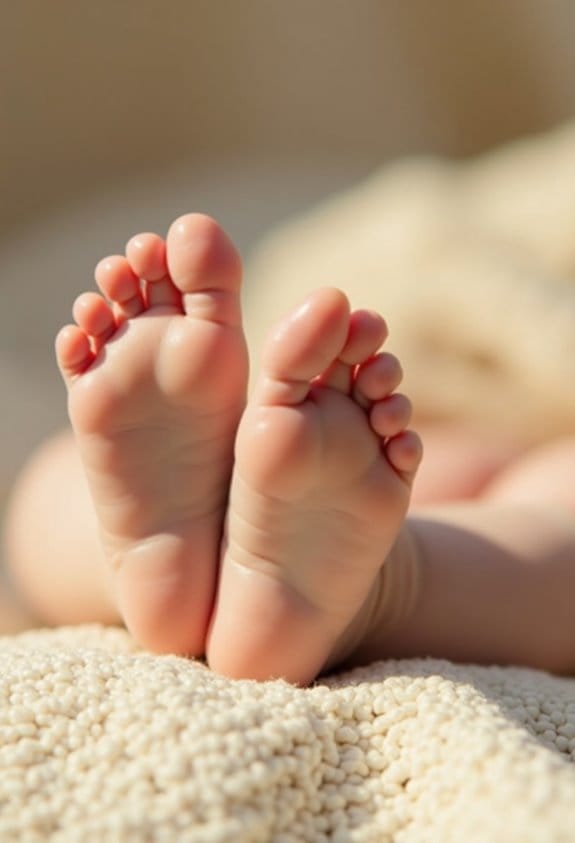
Foot muscles are an essential part of your precious nugget’s early growth and movement. These muscles provide the foundation for balance and stability, which supports healthy child development. Strong foot muscles, especially in the arch, help maintain proper joint alignment during walking. This arch support is critical before your child starts taking independent steps. Muscle development in the feet also enables advanced skills like hopping and skipping later on. Physical therapy sometimes uses balance exercises on uneven surfaces to build foot strength and coordination. Allowing your child’s feet to develop naturally, without early shoe restrictions, promotes healthy feet and aids injury prevention. Strengthening foot muscles early creates a solid base for better movement and overall wellbeing throughout childhood and beyond. Choosing shoes with flexible soles encourages natural foot movement and development during this crucial time.
How Barefoot Time Supports Natural Foot Growth

Three important advantages come from allowing your precious nugget to spend time walking barefoot during early development. Barefoot walking helps foot development by allowing the intrinsic foot muscles to engage fully. This natural movement strengthens the muscles, building strong arches and improving stability. Without shoes, sensory receptors in the feet activate better, enhancing proprioception and overall motor skills. This heightened awareness lets your child sense foot position, which supports healthy walking patterns. Studies show that barefoot walking encourages foot muscles to develop more robustly than early shoe use. As a result, intrinsic foot muscles build the foundation needed for balance and coordination. Giving your child time barefoot promotes natural foot growth, helping them walk with confidence and reducing long-term foot problems. When shoes are needed, choosing ones with flexible soles and adjustable straps supports continued foot muscle development while protecting growing feet.
Key Benefits of Strong Foot Muscles for Toddlers

When toddlers develop strong muscles in their feet, they gain important stability for standing and walking. Strong feet support proper foot alignment and improve ankle strength, which is essential for your child’s balance and coordination. Foot exercises like single-leg stands and walking on soft surfaces help strengthen their foot muscles and arches. This development builds a solid foundation for gross motor skills—think running, hopping, and skipping. By encouraging your precious nugget’s foot health early on, you reduce injury risks and support natural movement patterns. Proper foot development guarantees toddlers are better equipped to explore confidently and safely. You’ll see how these strong little feet make a big difference in your child’s growth and everyday adventures, helping them develop the strength needed for every step they take. Choosing shoes with a wide toe box promotes natural toe splay and balance, further aiding muscle development in young children.
When and How to Introduce Shoes for New Walkers

Although it may seem tempting to put shoes on a little one early, it’s best to wait until they are confidently walking on their own. Typically, this occurs around 12 to 15 months. Before this, keeping your precious nugget barefoot or in socks helps strengthen foot muscles and supports natural balance. When your child starts walking steadily, introduce high-quality footwear designed with soft, flexible soles and a wide toe box. These features encourage healthy foot muscle development and physical comfort. Make sure shoes are lightweight and breathable to avoid restricting your child’s foot growth. Regularly check the fit, replacing shoes every 8 to 12 weeks, since tiny feet grow fast. Choosing the right shoes at the right time helps your child’s walking journey feel strong and steady. Additionally, shoes with non-slip rubber soles provide critical traction and stability during early walking stages.
Simple Exercises to Strengthen Your Child’s Feet
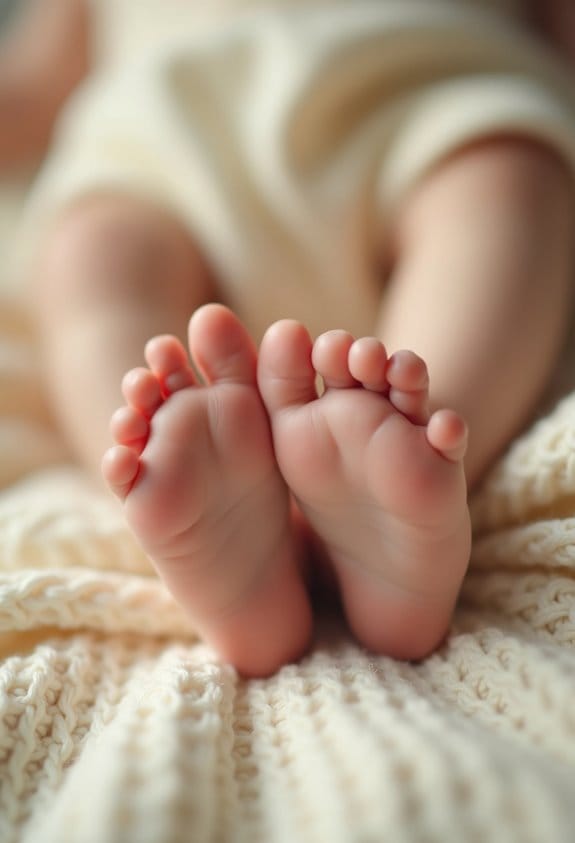
Encourage your little one’s foot strength with simple exercises that can be done at home. These exercises help develop the intrinsic foot muscles, which are key for balance and walking. A physical therapist might suggest activities like toe scrunches or heel raises to strengthen foot muscles and improve foot stability. Walking on uneven surfaces or practicing single-leg balance are fun ways to challenge your child’s feet, building coordination and muscle control. These gentle movements support your precious nugget as they prepare to take confident steps. While these exercises are simple, they play an essential role in developing strong feet and good balance, setting a solid foundation for your child’s early walking skills and overall foot health. Incorporating adjustable height baby walkers can further enhance foot muscle development by providing supportive and safe environments for practice.
Preventing Common Foot Problems Through Early Muscle Development
Because early foot muscle development builds stability and coordination, it plays a key role in preventing common problems like plantar fasciitis and ankle sprains. You can help your precious nugget by encouraging Strengthening Exercises that focus on the foot and ankle. These exercises promote building strong arches, which support better posture and reduce the chance of flat feet. Early muscle development improves stability, helping proper foot alignment and weight distribution as your child grows. This support lowers the risk of misalignment and abnormal gait patterns that often cause pain later on. Understanding the importance of foot health means you can take small, consistent steps to prevent common foot problems. Starting early is key—your little one’s strong, stable foundation sets the stage for healthy walking years ahead. Choosing shoes with a flexible sole design supports this development by allowing natural foot movement and promoting muscle strength.
Encouraging Balance and Coordination From the Ground up
Building strong foot muscles does more than prevent problems—it also helps your precious nugget develop balance and coordination. Early development of these muscles boosts strength and stability, essential for confident walking. Activities like toe curls, towel scrunches, and standing on one leg encourage muscle growth while improving balance. Barefoot play on varied surfaces enhances proprioception, helping little ones understand their body’s position and movement better. This sensory feedback is key to developing coordination from the ground up. Strengthening foot muscles now supports injury prevention by reducing falls and balance issues as your child begins to walk. Promoting these simple exercises and barefoot experiences prepares your child to walk with greater confidence and control, laying a solid foundation for healthy movement and exploration. Wearing shoes with non-slip outsoles can further enhance stability and safety as your child transitions to walking.
Frequently Asked Questions
Does Walking Build Muscle in the Feet?
Walking contributes minimally to foot strength and muscle balance. Effective foot muscle development requires foot exercises, flexibility training, proper footwear, and neuromuscular control to improve arch support, movement patterns, balance improvement, and injury prevention.
Why Is Toe Walking a Red Flag?
Toe walking is a red flag indicating potential sensory issues, muscle imbalance, or developmental concerns. Gait abnormalities warrant pediatric evaluation and early intervention. Corrective measures and therapeutic exercises address underlying problems, promoting healthier motor development.
Do Your Feet Get Stronger the More You Walk?
Like a tree’s roots grow deeper with every storm, feet strengthen through regular walking, enhancing foot health, muscle coordination, arch support, balance improvement, endurance building, flexibility training, injury prevention, gait analysis, and strength progression via targeted foot exercises.
How Important Are Foot Muscles?
Foot muscles are essential for foot strength, balance stability, and muscular coordination. They enhance sensory feedback, posture alignment, and foot arches support, aiding injury prevention. Flexibility training and low impact exercises improve athletic performance and overall mobility.


