As an Amazon Associate, we earn from qualifying purchases. Some links on this site are affiliate links at no extra cost to you. Our recommendations are based on thorough research and editorial judgment.


Baby Shoe Size Chart: Converting Months to Sizes

Baby shoe sizes typically range from 0-1 for newborns to size 5-6 by 18-24 months, reflecting rapid growth in the first year. To find the right fit, measure your precious nugget’s foot from heel to longest toe, adding about 1 cm for comfort. Shoe sizes often change 2-3 times in a year, so regular checks are key. Understanding these sizes helps guarantee the best fit, support, and comfort for every step. More helpful tips and charts follow here.
Key Takeaways
- Baby shoe sizes range from 0-1 for 0-3 months and increase to 5-6 for 18-24 months.
- Sizes typically range from 0 to 4 during the first year, corresponding to shoe lengths 17 to 19 cm.
- Baby feet grow rapidly, increasing 2-3 sizes in the first year, requiring size updates 2-3 times annually.
- Measure foot length from heel to longest toe and add 1 cm for comfort and growth allowance.
- Use the larger foot measurement to select the shoe size, ensuring a thumb’s width space for proper fit.
Understanding Baby Shoe Sizes by Age
How do baby shoe sizes match up with your little one’s age? Generally, baby shoe sizes range from 0-1 for 0-3 months to 5-6 for 18-24 months. This gives a rough idea of what size your precious nugget might need. In the first year, a child’s foot grows quickly—from about size 17 to 19—so frequent checks are really important. Since every baby is unique, it’s best to use a baby shoe size chart or shoe size conversion chart instead of relying only on age. To find the best fit, you measure the distance from the heel to the longest toe, then match it to the chart. This helps guarantee comfort and supports healthy foot growth as your little one explores the world. Choosing shoes with adjustable designs can also help accommodate your baby’s rapidly growing feet and ensure a snug, comfortable fit.
How to Measure Your Baby’s Foot Accurately
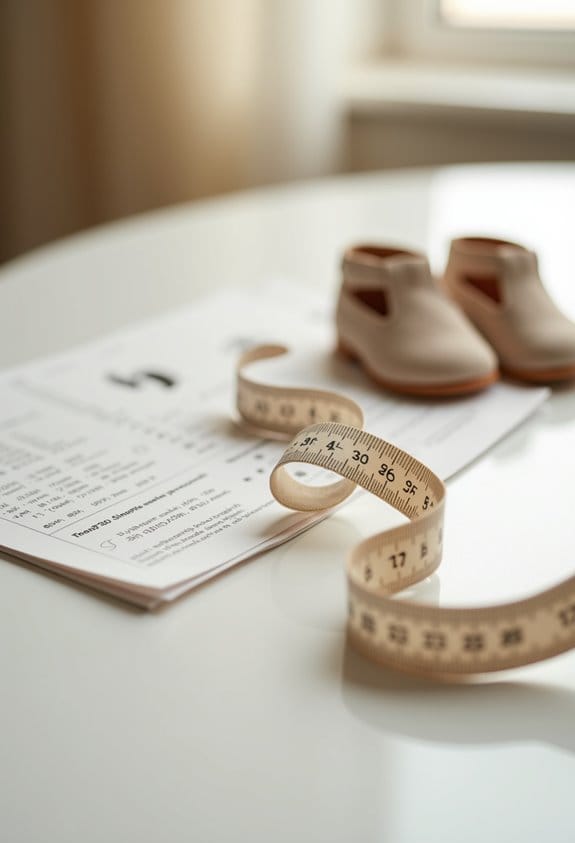
Why is measuring your baby’s foot accurately so important? It guarantees the right fit, supporting your precious nugget’s healthy foot development. To measure your baby’s foot, place their foot flat against a wall on a blank Din A4 sheet. Mark the heel and the longest toe’s end, then measure the distance in centimeters. This foot size tells you where to start with shoe size conversion. Use a size chart to find the right shoe size, and always allow at least 1 cm of extra space for growing toes. Since your child’s foot grows fast, measure your baby’s foot every few months to keep up. A proper fit avoids discomfort and promotes safe, happy steps as they explore their world. Choosing shoes with adjustable fit features is crucial to accommodate growing feet comfortably.
Recommended Products
The elegant design of gemstone jewelry provides luxury at an affordable price. Gemstone necklace, gemstone jewelry, and gemstone earrings are the current trend for jewellry. Also, mothers jewelry or mothers rings for mothers day jewelry. This is simulated birthstones and looks like alexandrite, peridot, amethyst, sapphire, emeralds, garnet, ruby, rubies, tourmaline, citrine, blue zircon, aquamarine, and diamonds. You can see the birthstones of the months for this necklace.

Upright Support for Safer Walking – Designed to encourage natural posture, this upright rollator helps reduce strain on the back, shoulders, and wrists while supporting confident, eye-level mobility.

Safety tested for stability to help reduce tip-over accidents
Baby Foot Size Growth Patterns in the First Year
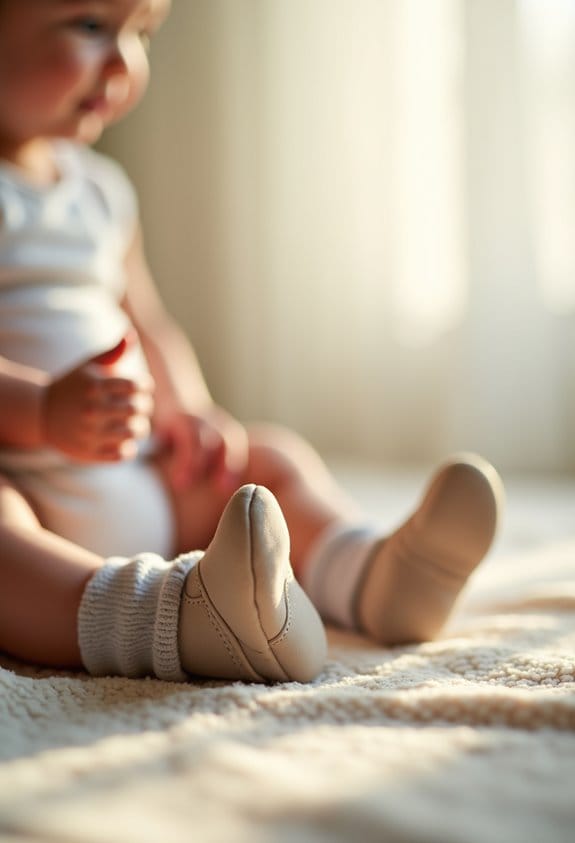
Because baby feet grow quickly in the first year, parents should check shoe sizes often to keep up with their precious nugget’s development. Typically, a baby’s foot size increases from about 17 to 19 in those first 12 months. This means you’ll see shoe sizing changes about two to three times a year. The rapid growth of your child’s feet means new shoes should fit frequently, and using a size chart can help you pick the right fit. Remember, the first shoes should support safety with non-slip soles and be breathable and waterproof. Keeping an eye on shoe sizes guarantees comfort and helps your baby move safely as they explore their world and take those precious first steps. Ensuring a proper fit with roomy designs is essential to promote healthy foot development and avoid discomfort.
Infant Shoe Size Chart Explained
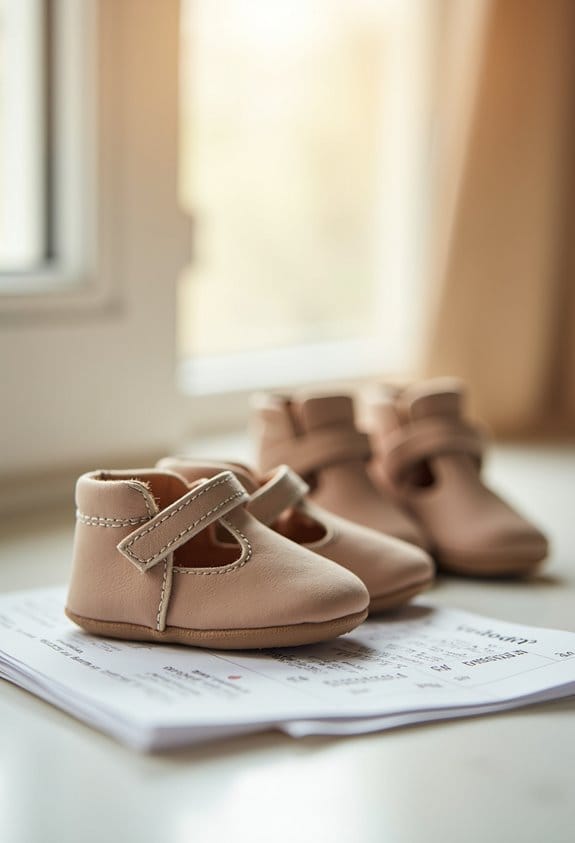
When choosing shoes for your precious nugget, understanding the infant shoe size chart can make the process much easier. This chart links foot lengths from newborn to 12 months with sizes usually ranging from 0 to 4. Babies typically grow 2 to 3 sizes in their first year. To find the right fit, measuring your baby’s feet accurately is key—use a printed sizing chart or trace the foot. Since feet can differ, measure both and pick the larger size. Keep in mind, sizing standards vary by brand, so shoe size conversion charts help prevent mistakes. For early walkers, shoes should fit comfortably, allow growth, and have non-slip soles. The infant shoe size chart offers a clear guide to support your baby’s developing feet. When selecting footwear, consider material safety to protect your baby’s delicate skin with breathable, non-toxic fabrics.
Converting Baby Shoe Sizes Across Different Regions
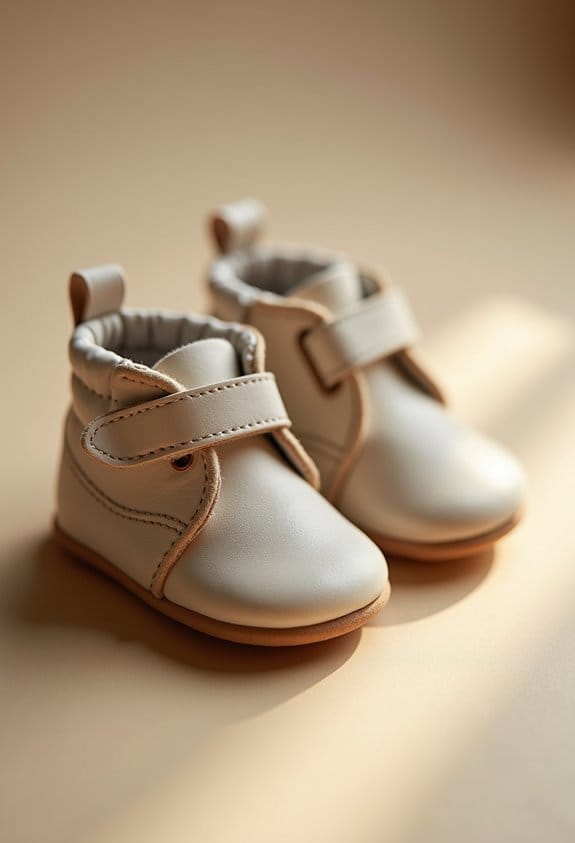
Although baby shoe sizes vary widely across different regions, understanding these differences is crucial for choosing the right fit for your precious nugget. The US and UK sizes use different numbering systems; for example, a US size 3 roughly equals a UK size 2.5. European sizes rely on foot length measured in centimeters, making it critical to check a size chart for accurate conversion. US to EU size conversion often adds about 15-17 sizes, like a US size 6 converting to an EU size 22. Japan’s shoe sizes align closely with foot length in centimeters, so a size 13 in Japan approximates a US size 4. Always use a reliable shoe size conversion chart to guarantee comfort and proper fit across these regions. Additionally, ensuring a fit with adjustable features helps accommodate growing feet and supports healthy development.
Choosing the Right Shoe Type for Each Development Stage
As your precious nugget grows, choosing the right shoe type becomes a key part of supporting healthy foot development. For a newborn’s delicate baby’s foot, soft sole shoes like moccasins offer comfort and flexibility. When your little one starts crawling or taking their first steps, flexible shoes with non-slip soles provide the needed stability. As walking gains confidence, shoes with harder soles offer important shock absorption and traction. For toddlers, breathable materials and enough room for growing feet are essential, with durable soles for protection. Using a reliable size guide helps track changes, as your child’s foot can grow two to three sizes annually. Pay close attention to toddlers shoe size conversion to keep footwear a perfect, supportive fit. It is also important to regularly check that the shoes provide a proper fit to avoid discomfort and support natural foot development.
Recommended Products

17 MULTI-FUNCTIONAL POCKETS: Itzy Ritzy's baby backpack diaper bag features 17 multi-functional pockets. From 10 internal pockets to 7 external ones, including 2 insulated bottle pockets, this bag has you covered. Measuring 12.5"L x 10"W x 18"H, this spacious backpack diaper bag provides ample room for all your baby essentials.

Ultimate Comfortable and Relaxation towards Your Walking Experience: bionic foot-shaped design with a wide-toe capacity intends to free your feet from fatigue caused by a long-distance walk.
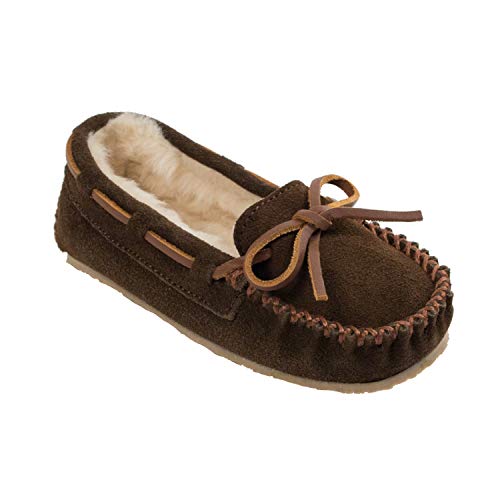
TIMELESS STYLE: Minnetonka boasts a rich heritage that includes a tradition of careful craftsmanship since 1946, delivering excellent quality footwear using only the finest materials to provide comfort, durability, and timeless style with every step
Signs Your Baby’s Shoes Need Replacing
Keeping an eye on your baby’s shoe fit is a helpful habit for protecting their growing feet. One key sign that your little one’s shoes need replacing is if they frequently kick them off, signaling discomfort or poor fit. Check for adequate space around the largest toe; if their toes touch the shoe’s front, it’s time for a new size. Examining shoes for signs of wear is also important. Cracks in soles or a loss of support can impact your baby’s stability and safety. Shoes should remain flexible and comfortable, as stiff shoes can hinder natural movement. Since your precious nugget’s foot grows fast, often shifting two to three sizes a year, regular measurement guarantees their shoes always fit just right. Choosing shoes with flexible rubber outsoles can enhance your baby’s stability and prevent slipping during their early steps.
Recommended Products

Premium construction delivers comfort and iconic appeal.

Flexible, lightweight and non-slip sole

Non-slip and durable outsole
Tips for Ensuring a Comfortable Shoe Fit
One key to keeping your baby’s feet comfy is finding the right shoe fit. When choosing an infants shoe, allow at least 1 cm of space beyond the longest toe to give room for growth and comfort. Regularly checking sizing is crucial because your precious nugget’s child’s foot can grow two to three sizes a year. Use the two-finger rule by slipping a finger between the heel and back of the shoe; this helps confirm the right fit. Also, gently pinch the shoe’s widest part to verify it isn’t too tight. Visual checks are helpful too—if the shoe leaves marks on the child’s foot, it likely fits poorly. These simple habits make certain your baby’s feet stay snug and happy as they grow. Additionally, ensuring shoes have a wide toe box allows for natural toe splay, which supports healthy foot development.
Recommended Products

Lead your kiddo into the heart of sneaker culture with these scaled-down J's. Legendary design elements and durable materials amplify your little baller's everyday game.

❤ Conforms to the safety requirements of ASTM F963 and EN71 for ages 3+.No SHOES INCLUDE!!! PICUTRES SHOES NOT INCLUDE!!! No SHOES INCLUDE!!!No SHOES INCLUDE!!!No SHOES INCLUDE!!!
❤ Conforms to the safety requirements of ASTM F963 and EN71 for ages 3+.No SHOES INCLUDE!!! PICUTRES SHOES NOT INCLUDE!!! No SHOES INCLUDE!!!No SHOES INCLUDE!!!No SHOES INCLUDE!!!
Common Mistakes When Sizing Baby Shoes
Finding the perfect shoe fit isn’t always straightforward, and many parents make common sizing mistakes without realizing it. One frequent error is relying only on age guidelines, which don’t reflect how fast your baby’s foot grows. It’s important to measure both feet, since one might be bigger than the other. Another mistake is forgetting to convert shoe size as your precious nugget grows—regular checks every few months help find the right fit. Using hand-me-down shoes without checking can cause poor fit due to wear. Parents also often skip the toe test; leaving space between the longest toe and shoe front avoids discomfort and tripping. Avoiding these common mistakes helps your little one stay comfy and safe on every step. Also, prioritizing shoes with flexible soles supports healthy foot development and reduces the risk of trips and falls.
Recommended Products

Great aesthetic appeal with its modern and sleek surface and now available in earth tone colors

AMERICAN MADE with USA and globally sourced components by the skilled craftsmen and women at Thorogood’s US plants

Frequently Asked Questions
What Month Is 4C in Baby Shoes?
4C in baby shoes typically fits infants around 12 to 18 months. Baby shoe fitting requires size conversion tips to address common size discrepancies, ensuring correct size selection for varying infant shoe styles and comfortable foot development.
What Size Is 6 to 9 Months in Baby Shoes?
Tiny feet measuring about 11.4 cm fit baby shoe size 18 for 6 to 9 months. During baby shoe shopping, sizing tips highlight foot measurement’s role in matching developmental stages, ensuring suitable toddler footwear comfort and growth.
What Does 2C Mean in Baby Shoes?
2C in baby shoes indicates a standard toddler size with appropriate width, emphasizing comfortable footwear choices. Accurate measuring baby feet guides fit, considering baby walking stages, baby shoe materials, and seasonal shoe options to guarantee ideal comfort and support.
What Size Is a 9 to 12 Month Old?
A 9 to 12-month-old typically fits baby shoe sizes 19 to 21. Accurate size conversion requires regular shoe measurement, considering infant growth. Fitting tips include prioritizing comfort, non-slip soles, and accommodating unique foot shapes during selection.