As an Amazon Associate, we earn from qualifying purchases. Some links on this site are affiliate links at no extra cost to you. Our recommendations are based on thorough research and editorial judgment.


Why Baby Shoe Sizing Isn’t Standardized (And What to Do)

Baby shoe sizing isn’t standardized because brands use different measurements, age ranges, and regional systems like U.S., European, and U.K. sizes. Each precious nugget grows fast and unequally, so feet need measuring often, ideally tracing both feet in the afternoon for accuracy. Ill-fitting shoes can affect foot development and walking skills, so choosing flexible yet supportive shoes with a half-inch growth allowance helps. Staying aware of these details can guide you toward the best fit for your little one.
Key Takeaways
- Baby shoe sizes vary between brands and regions due to differing measurement standards and cultural sizing systems (U.S., European, U.K.).
- Rapid infant foot growth causes frequent size changes, making consistent sizing impractical across manufacturers.
- Shoe size charts differ widely, with brands using age ranges instead of precise foot measurements, leading to inconsistencies.
- Measuring both feet accurately and considering the larger foot prevents fit issues from asymmetric growth.
- Use brand-specific size charts, allow growth space, and utilize digital fitting tools or apps for the best shoe fit.
Factors Contributing to Baby Shoe Size Variability

Although baby shoe sizing may seem straightforward, several factors cause sizes to vary widely between brands and regions. Each brand often uses its own shoe size chart, which means your precious nugget’s fit can differ from one pair to another. Baby shoe sizing usually groups by age, but little feet grow at their own pace, so two babies of the same age might need very different sizes. Additionally, cultural differences matter: U.S., European, and U.K. standards vary, causing more confusion. Regularly measuring those tiny toes helps guarantee a great fit, supporting healthy foot development. This care prevents discomfort and supports growing feet’s strength, so you can choose shoes that truly fit and protect your child’s developing steps. It is also important to consider sole flexibility and grip to ensure shoes promote natural foot movement and comfort.
Understanding Different Baby Shoe Sizing Systems
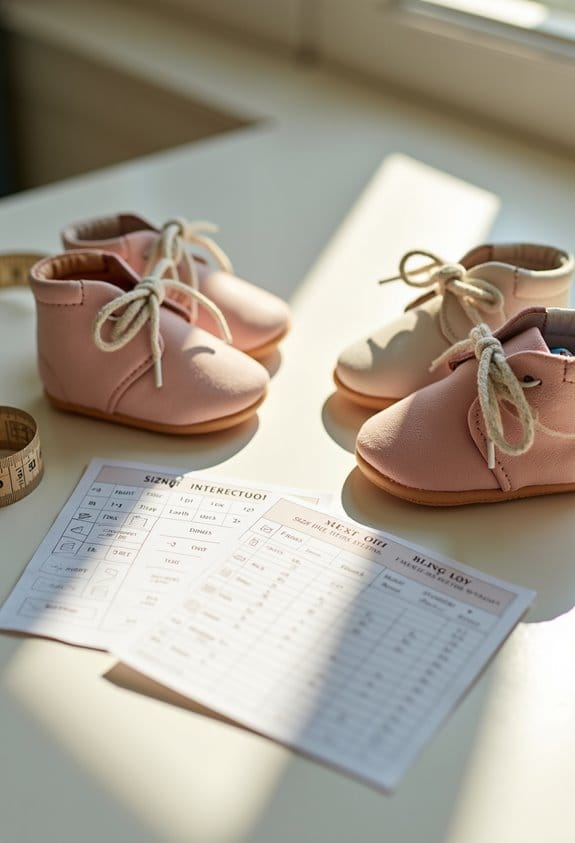
Understanding baby shoe sizes means recognizing that different countries and brands use their own systems. In the U.S., infant shoe size runs from 1 to 5, often with half sizes, but some brands skip those. The “C” label marks child sizes for toddlers, while “Y” is for youth sizes, which are older kids. Across the ocean, Europe uses sizes 16 to 20, usually without half sizes, and U.K. sizes start at 0 for newborns, often one size smaller than U.S. ones. Because shoe sizes vary so much, accurate foot measurements are key. You’ll want to measure your precious nugget’s foot carefully and always check the brand’s size chart. This helps guarantee a comfy, correct fit even when size labels don’t match up. Additionally, choosing shoes with a wide toe box ensures proper foot development and comfort despite sizing differences.
How Growth Rates Affect Shoe Size Consistency

Because babies grow at different speeds, shoe size can feel like a moving target for you and your precious nugget. Foot growth varies widely, with some infants needing new infant shoes every few months. This rapid growth interferes with consistent shoe sizing across brands, as sizes may not align with actual foot length. Genetic factors and how babies develop—especially when they start walking—also change foot shape and size, adding to the challenge. Many kids outgrow shoes by about half a size in just a few months. Different manufacturers measure feet differently, so sizing isn’t one-size-fits-all. Understanding that growth rates influence shoe sizing helps you expect frequent adjustments, making it easier to find comfortable, well-fitting infant shoes as your little one grows. Additionally, familiarizing yourself with international baby shoe size variations can help navigate the discrepancies in sizing across different regions and brands.
The Importance of Measuring Your Baby’s Feet Correctly

How can you be sure your baby’s shoes fit just right? Measuring your precious nugget’s feet correctly is key. Start by measuring both feet because one might be bigger. Have your baby stand on a flat surface and trace the foot on paper, marking the heel and longest toe. It’s best to measure in the afternoon when feet are naturally a bit swollen, which gives a more accurate size. Convert the tracing to inches or centimeters and compare it to specific brand size charts for the best fit. Remember, babies grow fast, so check their feet every few months. Measuring carefully helps you pick shoes that fit comfortably and protect those tiny feet properly. This simple step prevents discomfort and supports healthy foot development. Additionally, choosing shoes with non-slip soles can enhance safety as your baby learns to walk.
Recommended Products

The foot measurement device Applicable to Man Woman and Youth,US Size,and accurate way to keep track of your child's foot size.

Children grow incredibly fast, making it a constant struggle to keep up with their changing shoe sizes. Squatchi is a versatile, at-home children's shoe sizer that ensures an accurate measurement every single time, eliminating the guesswork from shoe shopping.

【Foot Measurement Devices】The foot measurement device for kids and adults is applicable to Man Woman and Youth, Kids, Baby, buying your child’s shoes online from the comfort of your own home.
Comparing U.S. and International Baby Shoe Sizes
When shopping for your baby’s shoes from different countries, it helps to know that sizing systems can vary a lot. In the U.S., baby shoe sizes generally run from 1 to 5, sometimes including half sizes. European sizes focus on measurements in centimeters, ranging from 16 to 20, usually without half sizes. U.K. sizing starts at 0 for newborns and goes up to 4, often about one size smaller than U.S. sizes. International sizing differences mean comparing each country’s size chart is key to finding a proper fit for your precious nugget. Understanding these variations helps you avoid common pitfalls and guarantees your baby’s shoes fit comfortably. Being mindful of these distinctions makes choosing the right baby shoe sizes easier and more reliable for your child’s happy steps. Additionally, considering features like flexible soles and wide toe boxes can ensure your baby’s feet develop naturally and comfortably.
Why Brand-Specific Size Charts Matter
Many parents find that a single shoe size cannot assure the perfect fit for every brand. That’s why brand-specific size charts matter so much when choosing size shoes for your little precious nugget. Different brands often have variations in shoe sizing, even if the labeled size looks the same. Within one brand, sizes may also differ between infants and toddlers, meaning you can’t assume fit across age groups. Brand-specific size charts provide measurements in inches and centimeters, helping you pick the right shoe length for your child’s unique feet. By checking these charts, you avoid guesswork and assure the best comfort and support. Using brand-specific size charts regularly makes finding the perfect shoes easier, keeping your baby happy and cozy as they grow. It is also important to consider the accurate fit and sizing to promote healthy foot development and comfort.
How to Identify the Right Length and Width for Baby Shoes
What makes a baby shoe fit just right? To find the perfect length and width, measure both of your precious nugget’s feet, choosing the longer length for sizing. Make sure the fit allows about a pinkie finger’s space between the heel and shoe to avoid tightness or slippage. For width, trace the widest part of your child’s feet on paper and compare it with the shoe’s inside width. Most infant shoes use soft materials that gently conform, but a snug fit is best to support growing feet. Remember, children’s feet grow fast, so check sizes every 6-8 weeks. Always use brand-specific size charts since sizing varies a lot. These steps help you make sure the fit is just right for your child’s feet. Additionally, considering non-slip soles can improve safety and stability as your baby learns to walk.
Recommended Products

Breathable & Comfortable:These unisex baby socks shoes with non slip rubber soft Sole, knitted with soft breathable combed cotton. The insole is a memory insole, which fits the shape of the baby's feet, fit snugly and comfortably, adapting to your toddler’s natural foot movements. Super flexible , lightweight and comfortable fit all seasons.

Breathable & Comfortable:These unisex baby socks shoes with non slip rubber soft Sole, knitted with soft breathable combed cotton. The insole is a memory insole, which fits the shape of the baby's feet, fit snugly and comfortably, adapting to your toddler’s natural foot movements. Super flexible , lightweight and comfortable fit all seasons.

Breathable Upper & Non-slip Sole:The sock shoes feature a breathable, skin-friendly combed cotton upper to keep your child's feet comfort and dry.Otherwise, soft and lightweight rubber sole,lightweight cushioned design, preventing your baby from slipping, a safe and cute sock sneakers for baby boys baby girls.
Common Mistakes Parents Make When Buying Baby Shoes
Five common mistakes often cause parents to choose the wrong baby shoes for their precious nugget. Many parents mistakenly buy hand-me-downs, which may not allow shoes fit properly and can cause discomfort. Another error is measuring only one foot, ignoring that a child’s feet often differ in size, leading to an inaccurate fit. Parents sometimes assume shoe sizes match a child’s age, overlooking that growth rates vary widely. Regularly checking the baby’s foot size every few months is crucial, but often skipped, resulting in shoes that are too tight. Finally, focusing solely on length while ignoring shoe width can cause issues. Paying attention to these details guarantees shoes fit comfortably and support healthy growth of the baby’s foot. Additionally, choosing shoes with breathable materials helps keep babies’ feet cool and dry for improved comfort and foot health.
How Ill-Fitting Shoes Impact Baby’s Foot Development
Choosing the right shoe size for your precious nugget goes beyond comfort—it directly affects how their feet grow and develop. During infancy, feet are mostly cartilage, making proper fit crucial for healthy foot development. Ill-fitting shoes can interfere with this process, causing red marks and discomfort that limit your baby’s natural movement. Shoes that are too large disrupt walking patterns, often leading to wider stances or waddling, which may last into childhood. Over time, these problems can alter muscle growth and cause structural issues. Since children’s feet grow quickly, even small fitting errors can affect their motor skills and confidence. Ensuring a proper fit means regularly measuring your baby’s feet and choosing shoes that support healthy foot development right from the start. Choosing shoes with adjustable closures allows for a secure fit that accommodates growing feet while preventing slipping off.
Tips for Choosing Shoes for Each Developmental Stage
How can parents best support each stage of their baby’s foot growth with the right shoes? For newborns, soft moccasins like Ginger moccs keep little feet cozy without limiting movement—perfect for that precious nugget in the early weeks. As your infant grows and starts crawling or cruising, shoes like Seashell moccs offer flexibility and style for active days. When those first steps arrive, pick shoes with hard soles to provide the support and stability your baby needs to walk safely. Across all stages, shoes should be flexible yet supportive to match a developing foot’s needs. Remember, regular size checks every few months matter because your baby’s feet grow quickly. Choosing shoes thoughtfully helps keep your baby happy and comfortable as they explore their world. Additionally, selecting shoes with non-slip soles helps ensure that early walkers maintain stability and reduce the risk of falls.
Recommended Products

Wide Round Toe: The unique design of the toe can make the baby's feet free movement, body balance is not afraid of falling, anti-collision to help crawling

FEETCITY Baby First Walking Shoes Boys Girls Toddler Sneakers Anti-Slip Newborn Crib Shoes Dark Grey
Upper:Knitted Mesh Upper offers comfort and air permeability,has excellent breathability,moisture wicking function,and keep baby's feet dry and odorless.Super Soft,Breathable and Comfortable fit all the year

[ Wide Toe Box for Chubby Feet ]: Designed specifically for toddler feet, our wide toe box prevents squeezing and discomfort. It allows little toes to splay and grip naturally, promoting healthy arch development and better balance during their crucial first steps
Simple Methods to Check Shoe Fit at Home
A reliable way to check your baby’s shoe fit at home begins with measuring their feet accurately. Start by having your little one stand on a piece of paper. Trace around each foot and measure the length from heel to the longest toe. Since one foot may be bigger, always use the larger size when choosing a pair of baby shoes. Remember to add a growth allowance of about half an inch to keep those sweet toes comfortable as they grow. To double-check fit, slide your pinkie finger between the heel and the shoe—it should fit snugly, not tight. Finally, look for any pinching or marks after your precious nugget walks around. These simple checks help guarantee the perfect fit, making everyday steps comfy and secure.
Recommended Products
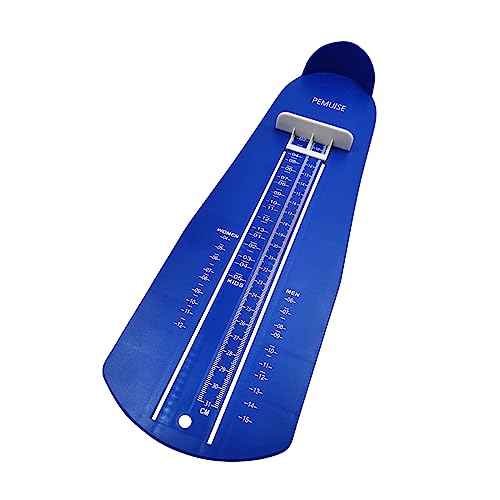
【Foot Measurement Devices】The foot measurement device for kids and adults is applicable to Man Woman and Youth, Kids, Baby, buying your child’s shoes online from the comfort of your own home.

【Accurate Foot Measurement】The Foot Measurement Device for Kids features a clear scale and smooth measuring board, ensuring precise foot length measurements for your child. This essential tool helps you choose the right shoe size every time, providing comfort for growing feet.

Children grow incredibly fast, making it a constant struggle to keep up with their changing shoe sizes. Squatchi is a versatile, at-home children's shoe sizer that ensures an accurate measurement every single time, eliminating the guesswork from shoe shopping.
Using Technology and Tools to Ensure Accurate Sizing
While measuring your baby’s feet at home is helpful, technology now makes getting an accurate shoe size even easier. Many shoe retailers offer digital size charts and mobile apps that let you scan your precious nugget’s feet to reduce guesswork. These tools aid accurately sizing by converting foot length and width into specific size recommendations. Some brands add augmented reality (AR) features, letting you simulate shoe fits right from your phone, so you feel confident without a physical try-on. To measure a child’s feet properly, online guides provide simple steps using rulers or templates. Plus, engaging with parenting forums can give you tips from other parents who’ve found the best tools and methods to guarantee your little one’s shoes fit just right.
Recommended Products

SIZE: 10.4 x 51 inch/ 26.5 x 130 cm ( L x W ) Height Chart for Kids, measurement in centimeters and feet

Shoe Measuring Device for Family: High-quality foot measuring devices for adults and children,foot measurement device crafted from durable, lightweight ABS plastic. Our shoe sizers are designed to withstand daily use while providing accurate measurements for men, women, youth, toddlers, and babies.

【US STANDARD SHOE SIZE】: our feet length measuring rulers are designed with clear US size printed, come with the corresponding centimeter scale, suitable for women and men, adults and children, give a good visibility, easy and quick to be read in a short time, can bring you an accurate result.
Frequently Asked Questions
Are Baby Shoe Sizes Standardized?
Baby shoe sizes are not standardized, causing variations in infant footwear styles. Accurate baby shoe measurement is essential, and consulting toddler size charts specific to each brand helps guarantee a proper fit despite inconsistent sizing methods across manufacturers.
Why Is Shoe Sizing so Inconsistent?
Shoe size confusion blooms like a tangled garden, stemming from brand variations and inconsistent foot measurement methods. Each manufacturer’s unique approach creates a patchwork of sizing standards, leaving parents maneuvering a maze to find the perfect fit.
Is It Better to Size up or Down for Baby Shoes?
Sizing strategies favor sizing up for baby shoes to accommodate rapid growth patterns, ensuring comfort factors such as room for movement and reducing pressure. However, balance is essential to prevent instability from excessively large shoes.
How Do I Determine My Baby’s Shoe Size?
To determine a baby’s shoe size accurately, measuring techniques involve tracing both feet while standing, accounting for baby foot growth. Shoe fit tips emphasize sizing up for comfort and regularly checking size due to rapid foot changes.