As an Amazon Associate, we earn from qualifying purchases. Some links on this site are affiliate links at no extra cost to you. Our recommendations are based on thorough research and editorial judgment.

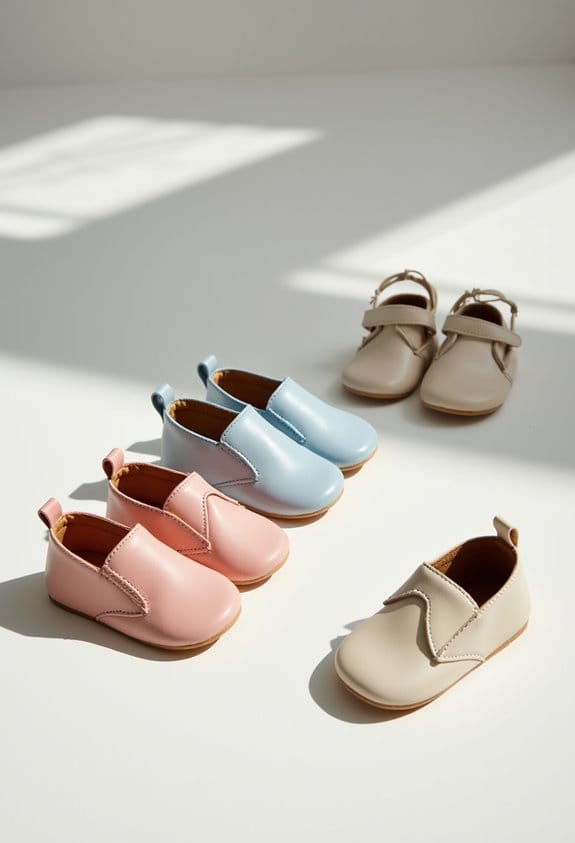
Should Baby Shoes Have Growing Room? Expert Advice

Baby shoes should have a little growing room to keep your precious nugget’s feet comfortable and healthy. Experts recommend between 0.5 and 1.5 cm of extra space, with smaller amounts for new walkers and sandals. This space helps avoid blisters, allows natural foot movement, and supports proper walking development. Measuring feet every two months guarantees a good fit as your baby grows fast. Explore further to find the best shoes that balance fit and foot freedom.
Key Takeaways
- Baby shoes should have 0.5 to 1.5 cm of growing room to ensure foot comfort and healthy development.
- Growing room prevents blisters, foot inflammation, and supports natural movement in infants.
- Properly fitting shoes with growing room help maintain foot alignment and promote walking skills.
- Measure babies’ feet regularly, approximately every two months, to adjust shoe size for rapid growth.
- Choose shoes with a wide toe box and flexible material that allow toes to wiggle freely.
Importance of Growing Room in Baby Shoes

Growing room in baby shoes is a small, simple feature that plays a big role in your little one’s foot health. Ensuring a comfortable fit with proper growing room helps protect your child’s feet from foot problems like blisters and inflammation. For infants, shoe fitting should allow about 0.5 cm of space, enough for movement without tightness. When your child stands or walks, you can measure their feet to check if shoes still fit properly. Remember, babies’ feet grow rapidly—sometimes half a size every two months—so regular measuring prevents discomfort and supports healthy development. Properly fitting shoes with the right growing room also encourage natural sensory input, helping muscles and bones strengthen in your precious nugget’s feet. This simple step you take now can make a lasting difference in foot health. It is also important to use a ruler to measure foot width regularly to ensure the shoes accommodate healthy foot development.
Recommended Growing Room Measurements for Different Footwear
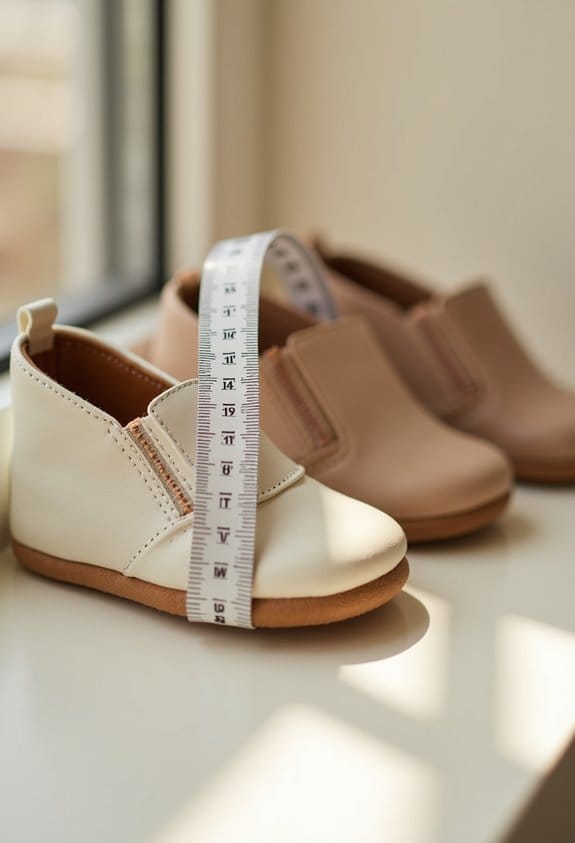
After understanding how important growing room is for your precious nugget’s foot health, it helps to know the right measurements for different types of baby footwear. For new shoes, a growing room of 0.5 to 1.5 cm is crucial to give adequate space for their feet to grow comfortably. Sandals need a smaller growing room, about 0.5 to 0.8 cm, keeping feet cool while allowing movement. Boots require more space, ideally 1.0 to 1.5 cm, to fit thicker socks during colder months. Smaller feet or new walkers should have 0.5 to 0.8 cm of growing room for confidence in each step. Older children benefit from 1.0 to 1.2 cm. By regularly measuring their feet and selecting proper shoes, you guarantee children’s shoes fit well with the right growing room for healthy development. Choosing shoes with a wide toe box also supports natural toe movement and comfortable growth.
Recommended Products
CONVERTIBILITY OPTIONS: The Violet/Piper 4-in-1 Convertible Mini Crib keeps pace with your growing child. Starting as a mini crib, you can convert it into a mini daybed and twin-size bed (bed rails sold separately)

✅【Spacious Storage Space】 With a large capacity, there are 10 separate foldable drawers, including 3 different sizes, to meet your classified storage needs. The large drawers can bear 10 pounds, and the small and medium-sized drawers can bear 5 pounds. Used to organize underwear, socks, and other small items to meet your classified storage needs for clothes, shoes, toys, cosmetics, jewelry, and more

WALLY YOUTH: Ideal for all his daily adventures, The Wally Youth collection introduces our iconic low-top moc for him; A soft, breathable, cotton-blend upper for total comfort, all 'play' long; Finished off on a lightweight outsole with elastic laces that keep these 'lil dudes securely on and a cushioned ankle collar for extra comfort and support; The low-top slip-on style is both fun and functional, making getting 'em dressed easy and quick
How to Measure and Check Growing Room in Baby Shoes

Ensuring the perfect fit for your precious nugget’s shoes means knowing how to measure and check growing room carefully. To measure their feet accurately, place a removable shoe liner on a flat surface and have your child stand on it. This method shows the actual length of their child’s foot and helps check if the shoe has enough space in the toe and toe box. Growing room should be between 0.5 cm and 1.5 cm to allow toes to wiggle without being jammed. Make sure the shoe is properly designed to support children’s feet and fits with the right size for comfort. Since little feet grow fast, you should measure their feet and check the fit every few months to keep up with their changing size. Additionally, choosing shoes with a wide toe box provides the necessary space for natural foot movement and proper development.
Recommended Products

FuelCell foam delivers a propulsive feel to help drive you forward


Generous toe box and instep to support first-walkers' needs
Effects of Improper Fitting Shoes on Infant Foot Development

When baby shoes don’t fit well, it can cause more than just discomfort for your precious nugget’s feet. Shoes that are too small can lead to blisters and bruises, which restrict natural movement and cause fussiness. Since babies’ feet are still soft and growing, it’s essential you measure their feet regularly to find the right shoe size with enough room to grow. Ill-fitting shoes can affect foot alignment, making it harder for your child to walk properly. Around 30% of children wear shoes that don’t fit well, risking long-term issues like inflammation or muscle problems. Choosing shoes with enough space supports healthy foot development and keeps your little one’s growing feet happy and comfortable. Proper fit means a happier, more confident first step! Shoes with wide toe boxes are particularly beneficial because they allow natural toe movement and promote proper foot posture.
Tips for Selecting the Right Size and Fit for Growing Feet

How much room should you leave in baby shoes for growing feet? Experts recommend a growing room between 0.5 cm and 1.5 cm. For little feet and new walkers, aim for 0.5 to 0.8 cm to balance growth and a perfect fit. Make it a habit to measure their feet every two months, because foot size changes quickly in the first two years. When you choose shoes, look for flexible, lightweight materials that support natural movement. Proper fitting means toes can wiggle freely without pressure or jamming at the front. Leaving the right amount of room lets your precious nugget explore comfortably while protecting tender feet. This careful attention guarantees shoes grow alongside your child and keeps their feet happy and healthy. Additionally, choosing shoes with breathable materials helps maintain comfort and prevent irritation as their feet grow.
Recommended Products

Extendable Design: When the trundle is pulled apart, the sofa bed can be extended from single bed size to king size. It is the best choice for twin families or visiting guests. In addition, flexible wheels make movement quieter and smoother, Achieve free expansion and contraction design to maximize the use of space

OUTTER LAYER - Teflon DWR coated polyester creates waterproof, durable, breathable, lightweight and abrasion-resistant shell

AMERICAN MADE with USA and globally sourced components by the skilled craftsmen and women at Thorogood’s US plants
Frequently Asked Questions
Is It Better to Size up or Down for Baby Shoes?
Sizing slightly up safeguards shoe fitting, supporting foot development and comfort levels, balancing brand differences, material quality, and style preferences. Considering age appropriateness, walking patterns, seasonal choices, and price range guarantees ideal baby shoe selection without sacrificing stability or snugness.
What Shoes Do Pediatric Podiatrists Recommend?
Pediatric shoe recommendations emphasize lightweight, flexible designs with breathable materials, proper arch support, and accurate shoe fitting techniques. Foot development insights highlight infant comfort factors and walking patterns analysis, avoiding common fitting mistakes. Stylish baby options also align with pediatric foot health standards.
How Much Growing Room Should Kids Shoes Have?
Experts recommend 0.8 to 1 cm growing space in kids’ shoes for ideal toe length and shoe fit, considering brand differences, material, activity type, seasonal changes, and age appropriateness. Regular measurement tips support healthy foot development.
Is It Better to Buy a Shoe That Is Slightly Larger or Tight?
Buying a slightly larger shoe fit supports proper arch and foot development, accommodates foot growth, and guarantees walking comfort. Pediatric guidelines emphasize material flexibility and size increments for safety factors, balancing style choices and protecting natural foot function.