As an Amazon Associate, we earn from qualifying purchases. Some links on this site are affiliate links at no extra cost to you. Our recommendations are based on thorough research and editorial judgment.

The Importance of Non-Slip Soles for Early Walkers

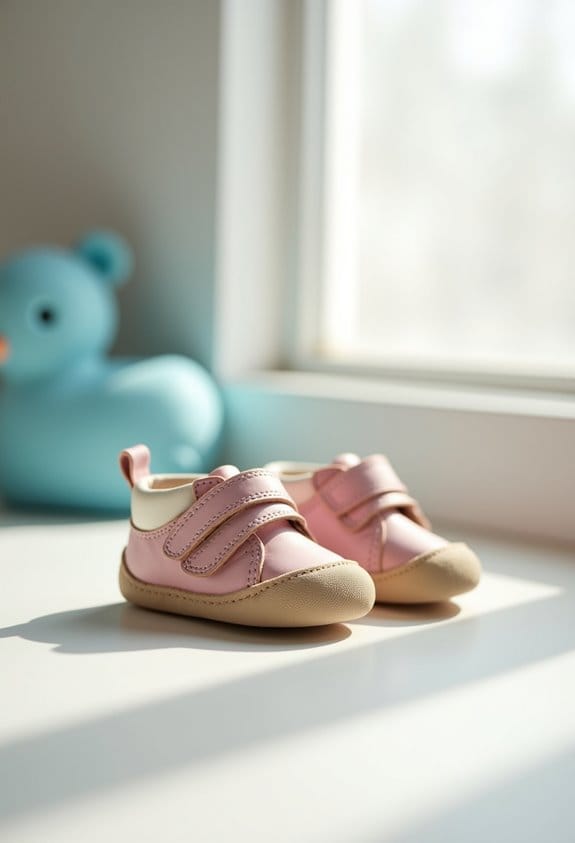
Non-slip soles are essential for early walkers, typically between 9 and 18 months, offering steady grip on smooth and uneven floors. This helps prevent slips and falls, giving your precious nugget safe footing to explore confidently. These soles also support natural foot movement and healthy development during critical walking stages. Choosing shoes with flexible, rubber soles and good traction boosts balance and motor skills. Understanding these benefits will prepare you to pick the best footwear options for your toddler’s journey.
Key Takeaways
- Non-slip soles prevent slips and falls by providing excellent traction on smooth and uneven surfaces for early walkers.
- They enhance toddlers’ balance and confidence, supporting safe exploration and motor skill development.
- Rubber, flexible soles encourage natural foot movement and promote healthy foot growth during early walking stages.
- Consistent use of non-slip shoes fosters agility and helps prevent injuries during play and daily activities.
- Well-designed non-slip footwear offers stability, comfort, and protection critical for early walkers’ safety and development.
The Role of Non-Slip Soles in Toddler Safety
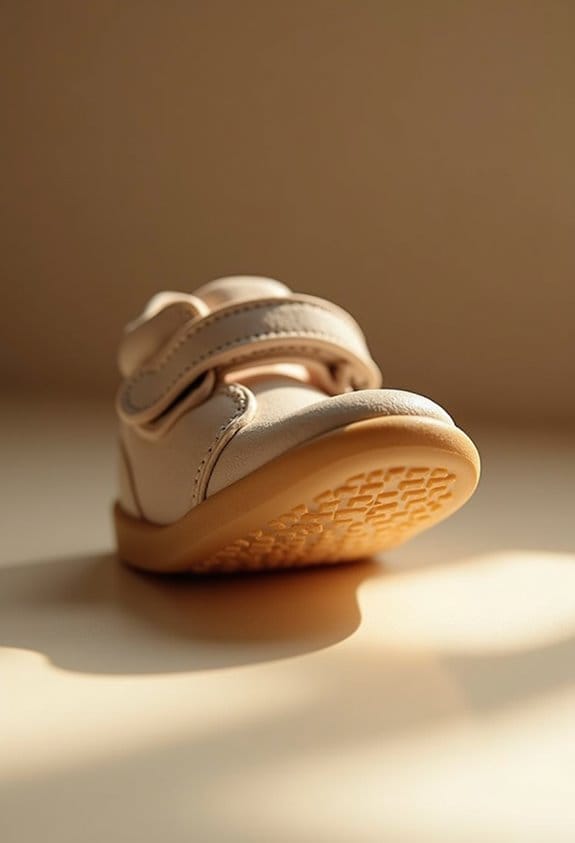
When your precious nugget starts taking those first steps, non-slip soles play a key role in keeping them safe. These specially designed soles provide excellent grip on smooth floors like wood and tile, which helps prevent slips and falls. Toddler safety is enhanced because non-slip soles allow little ones to explore confidently without constant fear of injury. This grip supports better balance, helping toddlers stay steady as they learn to walk. Shoes with non-slip soles also contribute to proper foot development by encouraging healthy walking habits. You can feel more at ease knowing these shoes protect your child during daily play, family outings, and playground adventures. Choosing footwear with non-slip soles is a smart step to protect your precious nugget while supporting their early mobility. The grooved designs in soles help prevent slipping on various surfaces, making them essential for both indoor and outdoor use.
How Non-Slip Soles Support Healthy Foot Development

Three key benefits of non-slip soles make them essential for healthy foot development in early walkers. First, non-slip soles provide steady grip, helping your precious nugget avoid falls on smooth or uneven floors. This grip supports proper walking patterns, a foundation for healthy foot development and strong posture. Second, shoes with these soles encourage toddlers to move confidently and safely, nurturing confidence in walking as they practice exploring their world. Finally, non-slip soles address various developmental needs by allowing your child to safely engage in different activities and environments. This versatile support promotes natural foot movement, helping prevent future foot problems. Choosing shoes with reliable traction isn’t just about safety—it’s a key step in supporting your toddler’s growing, healthy feet every step of the way. Additionally, features like cushioned insoles enhance comfort and ensure a secure fit, which is vital for early walkers.
Enhancing Toddler Confidence Through Reliable Traction

Because toddlers are still mastering their balance and coordination, having shoes with reliable traction is vital for their confidence. Non-slip soles give your precious nugget the grip they need to move around safely. When shoes provide reliable traction, toddlers feel steady on their feet. This steady grip encourages them to explore freely and gain better motor skills. As your child takes more steps with confidence, their physical growth benefits too. They become keen to try new movements without fear of slipping. Non-slip soles not only protect from falls but also support your toddler’s enthusiasm to walk and play. By choosing footwear with dependable traction, you’re helping build toddler confidence and encouraging healthy physical development during this pivotal early walking stage. Features like deep grooves in the sole enhance grip and stability for those first wobbly steps.
Adapting to Different Surfaces With Non-Slip Footwear

As toddlers explore different surfaces like smooth tiles, hardwood floors, and uneven outdoor paths, their little feet need shoes that keep them steady. Non-slip soles offer essential grip, enhancing balance and stability on each new terrain. These soles are significant for slip prevention, especially on slick indoor floors where your precious nugget might otherwise lose footing. Reliable traction helps toddlers confidently try new movements, supporting motor skill development through safer exploration. With non-slip footwear, your child can focus on play and discovery without hesitation. This steady support not only nurtures growing independence but also eases parental worry about slips and falls. By adapting effortlessly to varied surfaces, non-slip soles pave the way for healthy walking habits during these critical early stages. Choosing shoes with non-slip rubber outsoles is crucial for providing the necessary safety on various surfaces.
Choosing the Best Shoes With Non-Slip Features for Toddlers

Choosing the best shoes with non-slip features means looking beyond just good grip. When picking shoes for your toddler, focus on non-slip soles that offer reliable traction on slippery floors like wood or tile. The best shoes provide flexible soles, supporting your precious nugget’s natural walking patterns and proper development of balance and coordination. Look for soles with clear traction patterns to boost stability during their early adventures. Shoes made with non-slip technology not only keep toddlers safe but also help maintain proper foot alignment and posture. Brands like Aretto offer stylish options with non-slip soles designed for both boys and girls. Selecting these shoes helps build confidence while protecting tiny feet on every step of your little one’s exciting journey. Additionally, cushioned insoles and roomy toe boxes promote comfort and accommodate growth, making the walking experience more enjoyable for toddlers.
Comparing Barefoot Walking and Non-Slip Sock Benefits
While barefoot walking offers early walkers valuable sensory feedback, non-slip socks provide important safety benefits without sacrificing natural foot movement. Barefoot walking helps your precious nugget explore textures and improves balance vital for natural foot development. Still, non-slip socks mirror this tactile feedback and add grip to prevent slips on slippery surfaces like tile or hardwood. Both barefoot walking and non-slip socks encourage strong foot muscles and proper walking patterns, indispensable for toddlers learning to move freely. Barefoot is excellent indoors for sensory growth, but non-slip socks let early walkers safely explore various settings, protecting feet from cold floors or sharp objects. Using both methods supports your child’s motor skills, combining sensory learning and safety to nurture confident, independent steps. Additionally, choosing shoes with flexible soles enhances natural movement while providing the right amount of protection for early walkers.
The Connection Between Proprioception and Non-Slip Soles
Non-slip soles play an important role in helping your precious nugget develop a keen sense of body awareness called proprioception. These soles provide steady traction, which helps toddlers feel more balanced as they move. This increased grip stimulates the nerve endings in their feet, improving the feedback their brain receives about foot placement and movement. As a result, your little one gains better control and confidence in walking. The development of proprioception through wearing non-slip soles means your toddler can safely explore different surfaces and adapt their balance accordingly. By encouraging natural foot movement while preventing slips, these soles support steady progress in walking skills and overall coordination during this significant stage of growth and discovery. Choosing shoes with soft, flexible soles made of EVA or rubber helps support natural foot movement while enhancing this sensory development.
Signs Your Toddler Needs Non-Slip Shoes Earlier
How can you tell if your precious nugget needs non-slip shoes sooner than expected? If your toddler frequently slips or wobbles on smooth floors like hardwood or tile, it’s a sign that non-slip shoes may be needed for better stability and safety. Watch for hesitation or fear when your child walks on slippery or uneven surfaces. This discomfort shows their developing foot could use extra support. Also, if your toddler struggles to keep balance during outdoor play or seems uneasy during daycare activities, non-slip shoes can help meet those toddler needs. Introducing these shoes early can protect your child from falls and boost confidence, encouraging safer, more active exploring—and supporting their developing walking skills in these vital early stages. Choosing shoes with non-slip outsoles enhances stability and grip on various surfaces, which is crucial for early walkers.
Design Elements That Make Shoes Safe and Effective
Because toddlers are still mastering their balance, the right shoe design plays a big role in keeping your precious nugget safe. Shoes for early walkers should feature non-slip soles made from rubber or similar materials. These soles provide excellent grip on both indoor and outdoor surfaces, helping to prevent slips and falls. A well-designed non-slip sole includes a patterned tread that enhances traction, allowing your little one to explore confidently. This design supports stability and encourages safe movement, reducing the chance of injury during essential walking stages. When choosing shoes, look for soles that offer a secure grip without being too stiff, as this balance helps early walkers develop their skills comfortably and safely. Proper design means safer, more effective shoes for your toddler’s first steps. Additionally, non-slip TPR outsoles enhance traction during movement, providing protection on various surfaces.
The Impact of Footwear on Early Motor Skill Development
Footwear plays a bigger role than many realize when your little one starts exploring on two feet. For early walkers, shoes with non-slip soles are key to developing motor skills safely. These soles reduce the risk of falls, giving your precious nugget confidence as they move independently. Proper footwear supports natural foot development and helps toddlers build balance and coordination by enhancing their sense of where their feet are. Stable footing also encourages trying more advanced skills like jumping and running. When early walkers wear non-slip shoes consistently, they explore different surfaces with ease, boosting agility and overall physical growth. Choosing the right shoes is a foundational step in supporting healthy foot development and robust progress in motor skills during these critical toddler years. Additionally, selecting shoes with breathable materials can ensure comfort while promoting healthy foot temperature regulation during active movement.
Practical Tips for Parents Selecting Non-Slip Shoes
When selecting non-slip shoes for your precious nugget, several key features matter most to keep early walkers safe and comfortable. Look for rubber soles that provide excellent traction on smooth or slippery surfaces. A wide toe box is vital, allowing tiny toes to spread naturally and support balance as they learn to walk. Choose supportive shoes with firm heel cups to maintain proper alignment and protect developing ankles. Flexibility in the front helps their feet bend naturally, encouraging healthy gait patterns. Also, pick lightweight materials to avoid tiring your toddler’s feet. These practical tips guarantee non-slip shoes not only prevent slips but also help your child move freely and confidently during this pivotal stage.
Frequently Asked Questions
What Is the Old Wives Tale About Shoes?
Contrary to shoes myths, the old wives’ tale claims baby footwear prevents stunted growth or misalignment. Experts counter that barefoot walking better supports foot development and walking safety, emphasizing flexible shoes only once toddlers confidently walk outdoors.
Why Are Non-Slip Shoes Important?
Non-slip shoes address safety concerns by preventing falls, while carefully selected shoe materials enhance comfort levels. They support proper foot development, ensuring stability and reducing risks during early walking phases, which is critical for toddlers’ overall growth.
What Shoes Should Babies Wear When They Start Walking?
Approximately 75% of toddlers benefit from flexible baby shoe types prioritizing function over style. Shoe material considerations like soft leather support foot development importance, ensuring shoes fit snugly yet allow natural movement, balancing comfort with durability.
Why Would Non-Slip Socks or Shoes Be Needed for Walking With a Patient?
Non-slip socks or shoes enhance patient mobility by providing essential safety features that prevent slipping. They support walking aids, promote foot health, and guarantee stability, reducing falls and fostering confidence during movement in various environments.