As an Amazon Associate, we earn from qualifying purchases. Some links on this site are affiliate links at no extra cost to you. Our recommendations are based on thorough research and editorial judgment.

Common Fitting Mistakes Parents Make With First Walkers

Parents often miss regular foot measurements every 1-2 months for their precious nugget, risking tight or loose shoes. Many pick trendy shoes over ones with proper support and flexibility, which affects comfort and healthy foot growth. Overlooking enough toe space, shoe width, and traction can cause blisters, slips, or poor balance. Some delay replacing outgrown shoes or use hand-me-downs without checking fit first. Keep watching for discomfort signs to guarantee your child’s feet stay happy and healthy. More helpful tips are ahead.
Key Takeaways
- Waiting too long to replace shoes, causing cramped toes and heel slippage that hinder walking comfort and development.
- Choosing shoes based solely on style, neglecting proper support, cushioning, and breathable materials.
- Selecting shoes that are too stiff, restricting natural foot movement and increasing risk of slips and discomfort.
- Ignoring proper fit allowance, failing to leave 1 to 1.5 cm space for toe growth and comfortable movement.
- Overlooking regular measurements of both foot length and width, leading to poorly fitting shoes that cause blisters and pressure points.
Neglecting Regular Foot Measurements

How often should you check your little one’s shoe size? For your precious nugget, it’s best to measure their child’s feet every two months, especially during early growth stages. Neglecting regular foot measurements can cause you to buy shoes that don’t fit well. Shoes that are too small can squish tiny toes and cause discomfort or even foot problems. On the other hand, shoes that are too big may lead to unstable steps and possible falls. Remember, it’s not just length but also width that matters when checking shoe size, letting toes wiggle freely. About 30% of children wear the wrong size, so regular checks help guarantee their shoes support healthy walking and growing feet. Don’t skip this simple step—it helps your little one move confidently. Additionally, selecting shoes with a wide toe box ensures natural toe relaxation and promotes balanced landing for your toddler.
Choosing Shoes Based on Style Over Support
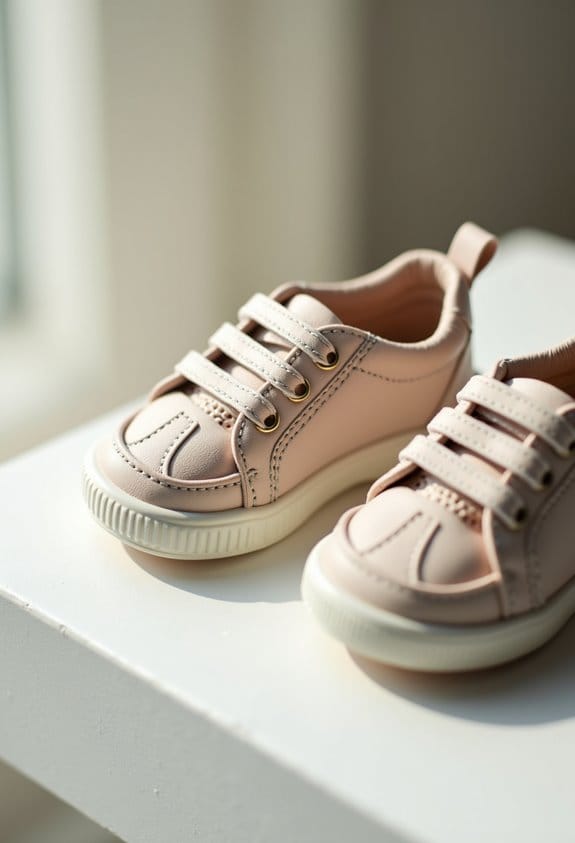
Often, parents are drawn to cute, trendy shoes for their little walkers, focusing on style more than support. This common mistake can affect your precious nugget’s foot development and overall stability. Shoes bought mainly for looks may lack important support features like proper cushioning and breathable materials. Without flexible soles and anti-slip outsoles, little feet don’t move naturally or grip well, which can lead to slips and discomfort. The College of Podiatry notes 30% of children face foot problems from poorly fitted shoes chosen for fashion. Prioritizing style over support risks long-term issues like foot pain, inflammation, and walking instability. When picking shoes, it’s wise to think about your child’s comfort and safety alongside their cuteness, ensuring support is never left behind. Choosing shoes with non-slip soles and breathability is essential for preventing falls and keeping little feet comfortable.
Ignoring Proper Shoe Flexibility
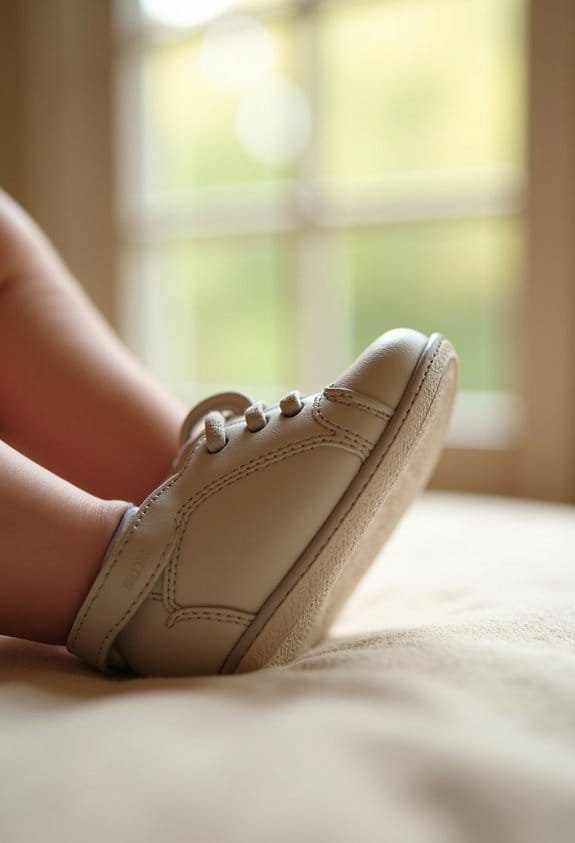
Choosing shoes that look cute is common, but forgetting about how flexible those shoes are can slow your precious nugget’s progress. First walking shoes need flexible soles to let little feet move naturally. Soft soles allow muscle activation and proper foot motion, which help develop solid walking patterns. Shoes that are too stiff block the natural bend at the ball of the foot, making it harder for your child to adjust their steps. This also limits the sensory feedback from the ground, which is important for balance and coordination. Experts say shoes should mimic the barefoot experience as closely as possible, supporting your child’s early movements. So, when picking first walking shoes, look for flexibility first. This simple step helps boost confident walking and healthy foot development. Additionally, flexible soles allow better foot movement, aiding balance development as your toddler takes their first steps.
Overlooking Toe Space and Width Needs

Since your precious nugget’s feet grow quickly in the first years, it’s important to leave 1 to 1.5 centimeters of space between the longest toe and the front of the shoe. This toe space lets your child’s feet move comfortably and grow without restriction. Parents often overlook the width fit, which is just as vital. Shoes that are too narrow can pinch, cause blisters, and limit natural foot movement. To guarantee a good width fit, check that the shoe feels snug but not tight around the widest part of your child’s feet. Measuring both length and width every 1-2 months helps you keep up with their fast changes. Proper toe space and width support healthy foot development and prevent long-term issues like misalignment and pain. Choosing shoes with a wide toe box helps promote natural foot movement and prevents pinching.
Failing to Check for Signs of Discomfort

A watchful eye on your precious nugget’s comfort is key when selecting first walking shoes. Failing to check for signs of discomfort can hinder healthy foot development. Look for blisters, redness, or pressure marks, which often signal a poor shoe fit. If your little one suddenly prefers crawling over walking or shows less activity, their shoes might be causing pain. Pay attention to frequent complaints about foot or joint aches. Regularly examine the snugness around the widest part of the foot to guarantee shoes aren’t pinching. Encourage your child to walk, jump, or dance during fittings; these activities help reveal discomfort early. Noticing these signs promptly lets you adjust shoe fit to protect your child’s foot health as they take confident first steps. Additionally, choosing shoes with breathable materials can significantly enhance comfort and reduce irritation for early walkers.
Buying Shoes Without Trying Them On First
Why is it so important to try on shoes before buying them for your precious nugget? Buying shoes without trying them on can lead to an improper fit, which affects your child’s first steps. Feet change shape when standing, so always have your child stand while trying shoes. This helps you assess fit better, guaranteeing there’s a thumb’s width of space in the toe area and a snug heel. Also, measure both feet, as they might be different sizes. Let your little one walk around in the shoes before buying; discomfort might not show during a quick try-on. A poor fit can cause blisters, misalignment, and even wobbliness while walking. Taking the time to try shoes on guarantees comfort and better walking development for your precious nugget. Additionally, choosing shoes with non-slip soles ensures safety and stability during those first wobbly steps.
Selecting Shoes Without Adequate Traction
Traction plays an essential role in the safety and confidence of first walkers. When selecting shoes for your precious nugget, you want to prioritize soles with good traction. Shoes lacking adequate grip can lead to slips and falls, as toddlers are still mastering balance and coordination between 9 to 18 months. Look for textured, non-slip rubber outsoles, which provide better contact with different surfaces. This feature helps prevent accidents and supports your child’s stability as they explore. While it’s tempting to choose fashionable shoes, remember that traction is key for early walking safety. Shoes without proper grip compromise your little one’s confidence and safety, so always check the bottoms carefully. Prioritizing traction guarantees your first walker stays steady and secure during this exciting stage. Additionally, ensuring proper safety features in walking aids can further enhance your child’s stability and reduce fall risks.
Using Hand-Me-Down Shoes Without Assessment
Hand-me-down shoes might seem like a convenient choice, but they often don’t fit your precious nugget as well as you’d hope. Shoes mold to the previous wearer’s feet, so they might not support your child’s feet properly. Wearing hand-me-down shoes without a thorough assessment can cause misalignment or discomfort. Also, the shoes may show wear that affects their shape and function. Every child’s feet are unique, so fit adjustments are important for healthy growth. Your little one’s feet grow rapidly, and relying solely on hand-me-downs can lead to ill-fitting shoes. It’s best to measure and assess each time to guarantee a proper fit. New shoes made for your own child’s shape and needs help protect those developing feet well. Additionally, choosing shoes with adjustable closures ensures a proper fit as your child’s feet change size.
Waiting Too Long to Replace Outgrown Shoes
Since children’s feet grow quickly—about half a size every two to three months—it’s important to check your precious nugget’s shoes often. Waiting too long to replace outgrown shoes is a common mistake parents make when buying for first walkers. Shoes that are too tight can cause discomfort and affect how a child stands and walks. Look for signs like cramped toes or heel slippage. Measuring feet every one to two months helps spot when a new pair is needed. Wearing outgrown shoes not only hurts your child’s comfort but may lead to blisters or even longer-term foot problems. Staying on top of shoe sizes supports healthy foot development as your little one learns to stand and explore confidently. In addition, choosing shoes with proper fit ensures comfort and promotes natural foot growth during these critical early stages.
Frequently Asked Questions
What Is the Most Common Mistake Parents Make?
The most common mistake resembles planting seeds in the wrong soil: neglecting foot size awareness. Overlooking this essential detail undermines walker safety concerns, while shoe selection tips emphasize proper fit to nurture confident, comfortable first steps and healthy development.
Can Shoes Affect a Baby’s Walking Development?
Footwear types greatly influence walking patterns and developmental stages in babies. Properly designed shoes with flexible soles support natural movement and muscle development, while inappropriate footwear can hinder motor skills, coordination, and overall walking progression in early childhood.
What Do First Time Parents Struggle With the Most?
First-time parents struggle the most with steering through milestones, choosing toys appropriate for development, and managing expectations. Balancing excitement and uncertainty often complicates their ability to support their child’s growth effectively during early stages.
How Should a Baby Fit in a Walker?
A baby should find a cozy space within the walker, allowing about 1–1.5 cm between toes and front for growth. Proper baby walker size and fitting adjustments promote safe walker use and ankle stability during exploration.