As an Amazon Associate, we earn from qualifying purchases. Some links on this site are affiliate links at no extra cost to you. Our recommendations are based on thorough research and editorial judgment.


Understanding Wide Toe Box Design in Baby Shoes

Wide toe box baby shoes give your precious nugget’s toes plenty of room to move and grow naturally. This design supports healthy foot development, helping prevent issues like bunions and improving balance and muscle strength. Look for shoes that are lightweight, flexible, and offer adjustable fits with enough space beyond the longest toe. Starting with short wear times aids comfort, encouraging natural movement. Knowing how to measure your baby’s feet and pick the right features guarantees a safe shift to these healthy shoes—more helpful details follow.
Key Takeaways
- Wide toe boxes allow natural toe splay, supporting healthy foot development and preventing deformities like bunions and hammertoes.
- They provide ample space for growing toes, ensuring comfort and reducing pressure on delicate bones during infancy.
- Flexible soles and zero-drop designs complement wide toe boxes by promoting barefoot-like movement and proper posture.
- Adjustable features in baby shoes accommodate foot growth while maintaining a secure, comfortable fit.
- Proper measurement includes ensuring thumb’s width of extra space beyond the longest toe for optimal comfort and growth allowance.
Why Wide Toe Boxes Are Essential for Baby Foot Health

Healthy foot development is a key part of your precious nugget’s early growth. A wide toe box plays an important role in supporting baby foot health by allowing toes to spread naturally. This spacious toe box encourages proper circulation and foot muscle engagement, which are vital for healthy development. When babies’ feet have enough room to move, it helps prevent common foot issues like bunions and hammertoes. Shoes with a wide toe box also support balance and stability, helping your little one learn to walk confidently. Since babies experience rapid growth, a roomy toe box guarantees their feet aren’t squeezed, encouraging natural foot growth. Choosing shoes that prioritize a wide toe box helps protect delicate, flexible bones and fosters strong, healthy feet for your precious nugget’s future steps. Additionally, pairing wide toe boxes with zero drop soles enhances balance and promotes proper walking posture in toddlers.
How Wide Toe Boxes Support Natural Foot Growth

A wide toe box in baby shoes offers the essential space your precious nugget’s toes need to grow naturally. This design encourages toe splay, which boosts balance and stability as your little one starts exploring. By letting toes spread, a wide toe box supports healthy foot development and proper circulation, both critical for natural foot growth. It also helps foot muscles engage more fully, building strength and coordination like barefoot movement does. The flexibility in these shoes mimics being barefoot, guiding your baby’s gait and reducing the risk of future mobility issues. Shoes without enough toe room can cause pressure and deformities, but wide toe boxes avoid this problem. Giving your child’s feet the room they deserve means supporting their lifelong foot health and comfort from the very first steps. Additionally, choosing shoes with breathable materials helps maintain dryness and prevents discomfort during extended playtimes.
Identifying Proper Wide Toe Box Features in Baby Shoes
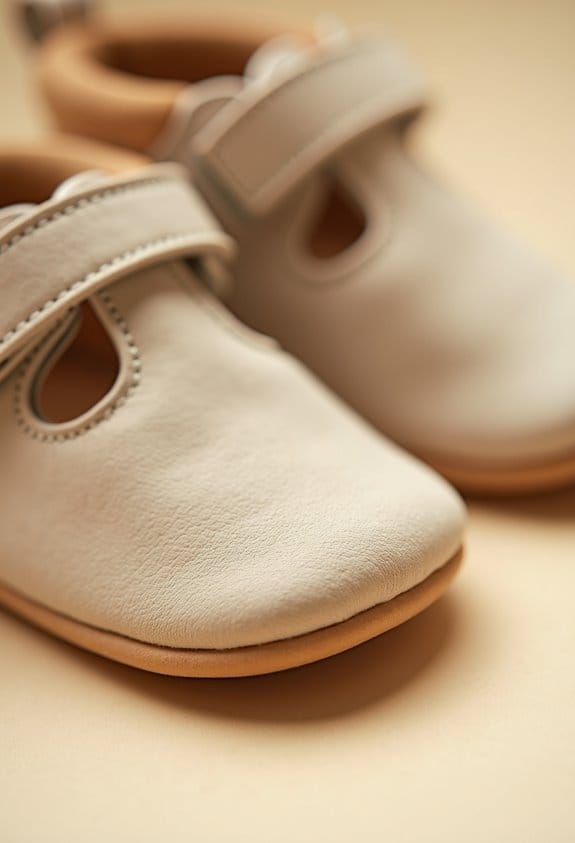
Several key features distinguish quality wide toe box baby shoes from less suitable options. A proper wide toe box offers ample space, allowing your precious nugget’s natural toe to splay freely. This helps avoid foot problems like bunions. Look for a flexible sole that supports healthy foot growth by mimicking barefoot movement. A zero-drop design guarantees the heel and toe stay level, promoting good posture during vital development. Lightweight materials allow unrestricted movement, so your baby explores comfortably. Adjustable features like Velcro or elastic closures offer a secure fit, accommodating rapid foot changes. When choosing baby shoes, these elements work together to support your child’s tiny feet with care, making every step safe and natural. Additionally, shock-absorbing soles help protect your toddler’s knees and reduce slip risks during active play.
Measuring Your Baby’s Feet for the Right Wide Toe Box Fit

Three simple steps can help guarantee your baby’s shoes fit just right, especially when choosing a wide toe box design. First, start by measuring your baby’s feet on a flat surface, placing the heel against a straight edge. Trace the outline carefully. Second, use a ruler to measure both the length and width of each foot, since sizes may vary. This helps find the best wide toe box fit for your little one’s unique shape. Finally, check shoe size charts from the brand, as sizing may differ. Remember to leave about a thumb’s width of space beyond your baby’s longest toe for comfort and growth. Regularly watch for signs of discomfort like redness or cramping to verify the shoes fit well as your precious nugget grows. It’s also important to prioritize shoes with wide toe boxes to promote healthy foot development and comfort.
Transitioning Babies to Wide Toe Box Footwear Safely

How can you help your precious nugget adjust smoothly to wide toe box shoes? Start by letting babies wear them for short periods daily. This gentle adjustment supports healthy foot development and comfort. Encourage barefoot shoes and barefoot play too, which let tiny toes strengthen naturally and improve flexibility. Choose lightweight, flexible wide toe box footwear that mimics the barefoot experience, supporting the natural shape of the foot. Monitor your baby for signs of discomfort; brief fussiness is normal, but persistent issues need attention. Always guarantee there is enough room for growth—shoes should fit snugly but leave about a thumb’s width of space at the front. This careful approach helps babies move safely through this important change while honoring their natural growth and development. Selecting shoes with zero-drop soles further encourages proper walking posture and balance during this transition.
Frequently Asked Questions
How to Tell if a Toe Box Is Wide Enough?
The toe box is wide enough when proper sizing allows toe freedom, supporting foot growth and movement development. A width measurement ensuring baby comfort, shoe flexibility, arch support, and circulation health indicates successful shoe fitting without restricting toes.
What Is a 2C in Baby Shoes?
A 2C in baby shoe sizes denotes a narrow width aimed at infants, ensuring proper fit that supports foot development, prevents discomfort, and promotes healthy walking posture. Size conversion varies by brand and shoe materials affect toe spacing and comfort.
How to Tell if Baby Needs Wide Shoes?
Indicators a baby needs wide shoes include signs of discomfort and altered walking patterns. A shoe fitting guide advising suitable materials guarantees proper baby foot development, preventing common foot issues and promoting long-term health amid toddler shoe trends valuing flexibility.
What Is the Science Behind Wide Toe Box Shoes?
The science behind wide toe box shoes integrates toe box anatomy and footwear flexibility to enhance baby foot health, improve toe comfort, maintain arch support, guarantee shoe stability, and promote proper walking posture, aligning with pediatric recommendations and ideal shoe materials.