As an Amazon Associate, we earn from qualifying purchases. Some links on this site are affiliate links at no extra cost to you. Our recommendations are based on thorough research and editorial judgment.


When Do Babies Actually Need Their First Walking Shoes?

Babies usually need their first walking shoes about six weeks after they start walking confidently, often between 9 and 18 months. Before this, barefoot time helps strengthen your precious nugget’s foot muscles and balance. Early shoes should be flexible, with wide toe boxes and non-slip soles to support natural movement. Avoid hard soles or tight fits that limit foot motion. If you want to make sure your baby’s shoes are just right, there’s more to discover about choosing and fitting them.
Key Takeaways
- Babies need their first walking shoes about six weeks after they start walking confidently without support.
- Early shoe use is not recommended; barefoot walking strengthens foot muscles and develops natural balance.
- Shoes should be introduced when the baby regularly walks outdoors or on hard, unsafe surfaces.
- First shoes must be flexible, lightweight, with a wide toe box and non-slip soles to mimic barefoot walking.
- Consulting pediatricians or physiotherapists can guide proper timing and choice of first walking shoes.
Understanding Baby Walking Milestones
Babies often reach significant walking milestones between 9 and 18 months. Around this time, your precious nugget may start walking by pulling up to stand, cruising along furniture, or even standing briefly without support. These steps lead to your baby’s first independent moves. Before they start walking well, crawling and cruising teach balance and coordination. Foot development is essential during this phase because your little one’s muscles and nerves need to grow strong. New walkers benefit most from spending plenty of time barefoot, allowing natural foot strength to build. Shoes should only make their first appearance when your baby ventures into rough outdoor spaces. This approach helps guarantee your child’s feet develop properly while they enjoy exploring their exciting world on wobbly legs. When selecting footwear, it is important to focus on non-slip soles to ensure safety as your baby takes their first steps indoors and outdoors.
Benefits of Barefoot Walking for Babies
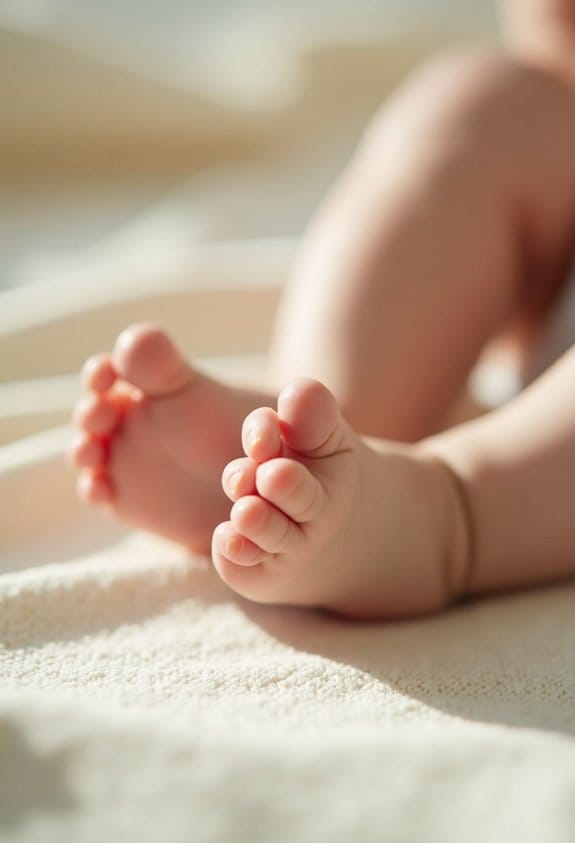
Once your precious nugget begins exploring on those wobbly legs, letting them walk barefoot can be a great gift. Walking barefoot helps babies develop a better sense of balance because their feet feel different textures and the surface beneath them. This sensory input is key for learning to move confidently. Barefoot walking also strengthens their foot muscles and tendons, encouraging natural foot motion. As a result, babies who go barefoot often develop better posture and walking patterns. When allowed to walk barefoot in safe spaces, they gain stability and confidence. Additionally, barefoot walking supports the natural development of foot arches since babies’ feet start flat and need this freedom. So, letting your little one explore barefoot is a gentle way to support healthy foot growth and walking skills. However, once shoes are needed, choosing footwear with a wide toe box and zero-drop sole is important to maintain natural foot development.
Signs Your Baby Is Ready for Shoes
A precious nugget’s first steps mark a big milestone and often signal when shoes may become necessary. Babies typically start walking independently between 8 to 18 months. Key signs that your little one might need shoes include pulling up to stand, cruising along furniture, and taking independent first steps. Watching your baby’s growing feet and movement helps you know the right time. Before this, it’s best for babies to spend time barefoot to strengthen muscles and support natural foot development. After your baby starts walking on their own, waiting about six weeks before introducing hard-soled shoes is ideal. This approach balances comfort and protection, helping those precious growing feet develop properly while still preparing for new adventures on foot. Choosing shoes with flexible soles and breathable materials ensures comfort and supports healthy foot development during this important stage.
Recommended Products

Breathable & Comfortable:These unisex baby socks shoes with non slip rubber soft Sole, knitted with soft breathable combed cotton. The insole is a memory insole, which fits the shape of the baby's feet, fit snugly and comfortably, adapting to your toddler’s natural foot movements. Super flexible , lightweight and comfortable fit all seasons.

Wide Round Toe: The unique design of the toe can make the baby's feet free movement, body balance is not afraid of falling, anti-collision to help crawling

Breathable & Comfortable:These unisex baby socks shoes with non slip rubber soft Sole, knitted with soft breathable combed cotton. The insole is a memory insole, which fits the shape of the baby's feet, fit snugly and comfortably, adapting to your toddler’s natural foot movements. Super flexible , lightweight and comfortable fit all seasons.
Risks of Putting Shoes on Babies Too Early

The timing of introducing shoes to a precious nugget’s feet can impact their early walking skills and comfort. Wearing shoes too early may limit a baby’s natural foot movement, hindering balance and strength development. Babies need room to flex their toes and improve muscle control, which hard soles on early shoes can restrict. Experts like the American Academy of Pediatrics advise delaying shoes until babies walk independently to support healthy foot growth. Shoes that don’t fit well may cause discomfort or toe curling, affecting confidence and walking progress. Allowing your baby to spend time barefoot during early stages is essential for building strong muscles and tendons. When you do choose shoes, picking soft, flexible ones helps protect delicate feet without restricting movement. Additionally, selecting shoes with flexible, non-slip rubber soles ensures natural foot movement and enhances traction for safer walking experiences.
When to Transition From Socks to Shoes

How can you tell when it’s time to switch your precious nugget from socks to shoes? Typically, babies don’t need baby shoes until they start walking on their own, usually between 9 to 18 months. Before walking, socks or footed clothing keep a child’s foot warm while allowing natural growth. The change happens when your little one begins to pull up, cruise, or walk outside. At this stage, flexible shoes can protect their feet on rough or uneven surfaces. Indoors, barefoot time is still best to promote proper foot development. Look for shoes with flexible soles and a good fit, supporting your child’s foot movement. If you’re unsure about timing, consulting a pediatrician or physiotherapist can provide valuable guidance for this important step. It is also important to choose shoes with non-slip soles to ensure safety as your baby starts exploring.
Characteristics of the Ideal First Walking Shoes
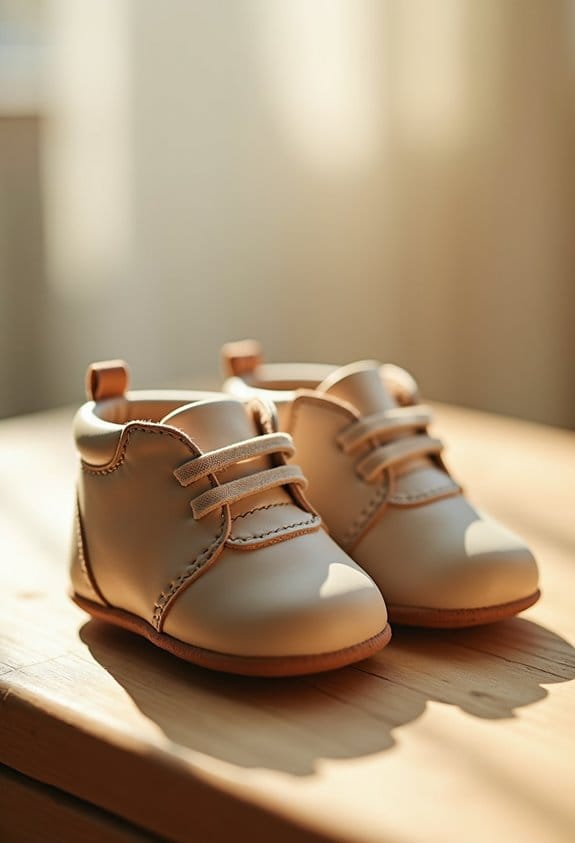
When choosing first walking shoes for a precious nugget, it’s important to focus on flexibility and fit. Ideal shoes have flexible soles that support natural foot movement, mimicking barefoot walking. A wide toe box is key, allowing little toes to spread freely and develop healthily. Look for breathable materials that keep feet cool and reduce sweat, helping your child stay comfortable. Good ankle support is necessary for balance, with adjustable straps like Velcro to keep shoes secure yet easy to put on. A stable heel cup prevents slipping and adds extra support as your child gains confidence. These combined features help guarantee safe, comfortable steps for your precious nugget’s first adventures on their feet. Additionally, choosing shoes made from non-toxic materials ensures the safety and health of your child’s developing feet.
Recommended Products

FEETCITY Baby First Walking Shoes Boys Girls Toddler Sneakers Anti-Slip Newborn Crib Shoes Dark Grey
Upper:Knitted Mesh Upper offers comfort and air permeability,has excellent breathability,moisture wicking function,and keep baby's feet dry and odorless.Super Soft,Breathable and Comfortable fit all the year

[Breathable & Soft Cotton]:These toddler socks shoes are crafted with soft, breathable cotton, offering all-day comfort for your little one’s delicate feet. Perfect for all seasons, these infant non-slip breathable slippers keep feet cool in the summer and warm in the winter. Whether your child is indoors or outdoors, the breathable fabric ensures there’s no moisture buildup, keeping feet dry and cozy all day long.

Non-slip Soles:Preventing your baby from slipping,soft, lightweight sole,a safe and cute sock sneakers for baby boys baby girls.
Soft Sole vs. Hard Sole Shoes: What Parents Should Know
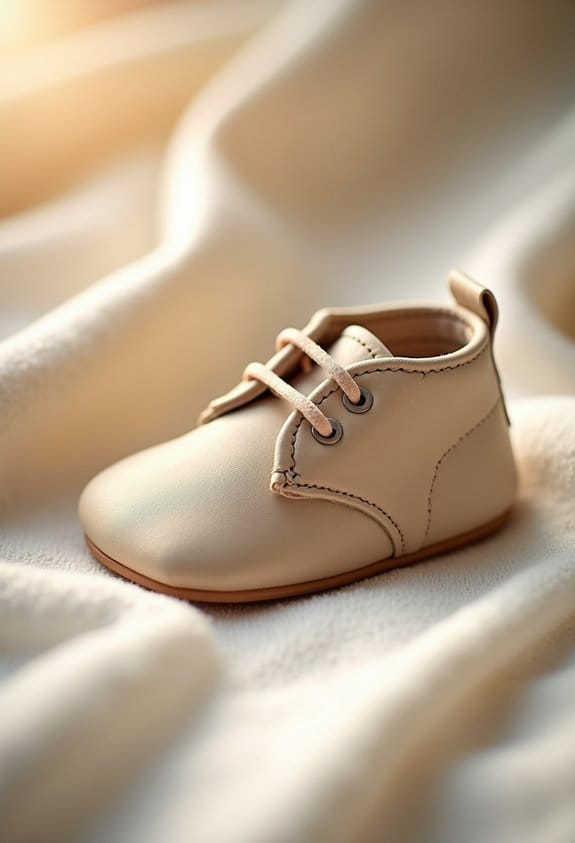
Many parents wonder whether soft sole or hard sole shoes suit their precious nugget’s first steps best. Soft sole shoes offer flexible soles that let your baby’s growing feet move naturally, just like being barefoot. This movement helps muscles and tendons develop properly. Soft soles work great indoors, giving your baby good sensory feedback for balance and stability. Hard sole shoes, on the other hand, protect tiny feet from rough and uneven ground. They are better for outdoor adventures once your little one walks confidently. Both types benefit from flexible soles that encourage natural foot motion. Choosing shoes with flexible soles tailored to your child’s current activity helps support healthy foot growth and movement during these exciting first walking stages. Additionally, selecting shoes with adjustable closures ensures a snug and comfortable fit as your baby transitions between walking environments.
Recommended Products

Lace-Free Design:The baby shoes have convenient elastic lace-free design for easy on and off,fits snugly on baby's feet.Suit for crawling,walking,running,playing and won't fall off

〓 Comfy Baby Barefoot Sneakers: Crafted with soft mesh uppers and honeycomb insoles, these sneakers ensure 360°airflow to keep tiny feet dry and odorless during play. The ideal pair for all seasons
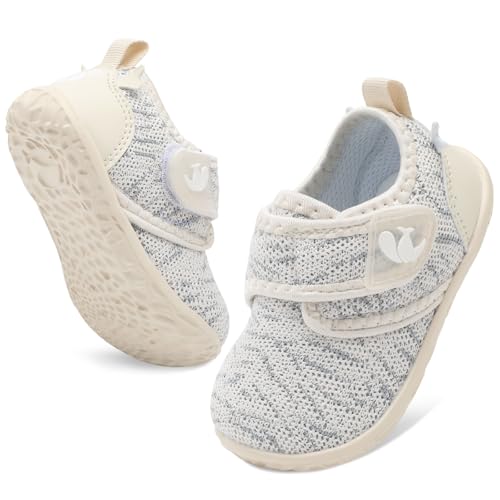
Knitted Upper: Baby shoes uppers offers comfort and air permeability, has excellent breathability, moisture wicking function,and keep baby's feet dry and odorless.Super soft, breathable and comfortable fit all the year
How to Ensure Proper Shoe Fit for Your Baby
Choosing the right type of sole is just one part of keeping your precious nugget’s feet healthy. When buying shoes, make sure there is about a thumb’s width of space between their toes and the shoe tip. This space lets little feet move and grow comfortably. Check your baby’s shoe fit every 2 to 6 months because their feet grow fast in the first two years. Choose shoes with flexible soles that bend near the toes and a wider front than heel to allow natural splaying and comfort. A firm heel cup adds stability while keeping the shoe lightweight to protect their feet without slowing them down. Following these tips helps keep your baby’s steps safe and comfortable as they learn to walk. Additionally, selecting shoes with non-slip rubber soles can help prevent falls and provide extra safety during those early steps.
Recommended Products

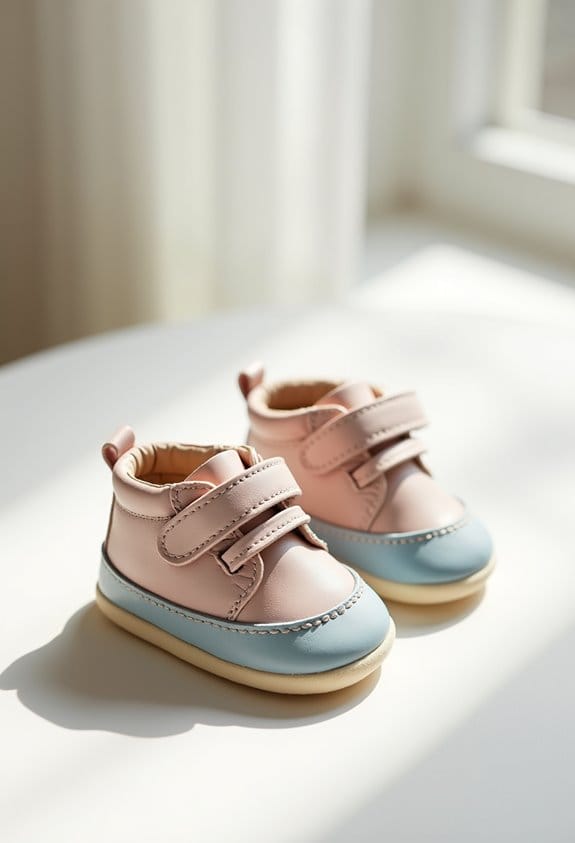
Encourage style and comfort for your little one wearing the faux-leather Stride Rite SR-Taye 2.0 hook-and-loop sneaker.

〓 Comfy Baby Barefoot Sneakers: Crafted with soft mesh uppers and honeycomb insoles, these sneakers ensure 360°airflow to keep tiny feet dry and odorless during play. The ideal pair for all seasons

Breathable & Comfortable:These unisex baby socks shoes with non slip rubber soft Sole, knitted with soft breathable combed cotton. The insole is a memory insole, which fits the shape of the baby's feet, fit snugly and comfortably, adapting to your toddler’s natural foot movements. Super flexible , lightweight and comfortable fit all seasons.
Shoes to Avoid for New Walkers
A handful of shoe styles should be avoided for new walkers to keep your precious nugget safe. It’s important to remember that shoes to avoid include flip-flop sandals, which lack support and can cause slips. Also, sneakers with worn-out Velcro fastenings don’t secure well and pose tripping risks. Loose-fitting shoes should be skipped because they might catch on objects or escalators, leading to falls. Before you need to buy walking shoes, experts often recommend letting your baby walk barefoot indoors to strengthen foot muscles. When you do buy, select shoes that fit snugly and offer good stability. This careful choice helps your baby explore confidently while minimizing accidents. Always focus on proper fit and support—it’s key for safe, happy first steps for your little one. Additionally, choosing shoes with flexible, non-slip soles enhances natural foot movement and reduces the risk of slips and falls.
Consulting Professionals on Your Baby’s Footwear Needs
How do you know when your little one really needs their first pair of walking shoes? Consulting professionals is a good step. Pediatricians and physiotherapists can assess your precious nugget’s foot development and walking readiness. Experts usually suggest waiting about six weeks after your child walks confidently before introducing hard-soled shoes. This guarantees the child’s foot has adjusted well to walking. During regular check-ups, your doctor can spot any concerns with your child’s foot or walking patterns. A physiotherapist can offer tailored advice on when you need new shoes and which styles support your baby’s unique needs. Footwear specialists also help find the right fit and flexibility. When you consult professionals, you make the best choices for your baby’s first steps and growing feet. It is important to choose shoes with non-slip soles to ensure your infant’s safety and confidence as they begin walking.
Frequently Asked Questions
When Should Babies Start Wearing Walking Shoes?
Babies should start wearing walking shoes once they walk confidently, focusing on baby shoe types with soft soles and breathable shoe materials. Ensuring appropriate sizes supports walking development and accommodates rapid foot growth effectively and safely.
How Long Should Babies Be Barefoot?
Babies should remain barefoot as long as possible to maximize barefoot benefits, support foot development, and enhance sensory experience. This practice promotes natural progression through baby milestones and strengthens muscles critical for healthy walking and posture.
Why Can’t Babies Wear Shoes Before 1 Year Old?
Like a sculpture shaping its form, early shoe use can hinder baby foot health by restricting natural movement. Shoe material importance is crucial, as soft, flexible soles support developmental milestones and allow beneficial tactile feedback essential for growth.
Can Babies Learn to Walk Without Shoes?
Babies can learn to walk without shoes, as barefoot benefits include enhanced early walking skills, improved foot development, and promotion of natural movement. This approach supports muscle strength and coordination essential for healthy walking progression.