As an Amazon Associate, we earn from qualifying purchases. Some links on this site are affiliate links at no extra cost to you. Our recommendations are based on thorough research and editorial judgment.

Barefoot Walking Benefits for Babies: What Research Shows

Research shows barefoot walking helps babies develop strong, natural feet before age four by strengthening muscles and joints. It also boosts balance and coordination through sensory input from around 200,000 nerve endings in each foot. Walking barefoot on safe outdoor surfaces and soft indoor mats improves motor skills and brain growth. You can support this precious nugget’s exploration while ensuring hygiene and safety. Keep going to discover how to ease the shift to shoes and enhance your child’s development further.
Key Takeaways
- Barefoot walking strengthens foot muscles, joints, and natural arches essential for healthy foot development in babies.
- Sensory stimulation from barefoot walking enhances brain development through rich nerve endings in the feet.
- Walking barefoot on varied surfaces improves balance, coordination, and spatial awareness in early childhood.
- Barefoot play supports emotional regulation, concentration, and confidence, contributing to overall developmental growth.
- Transitioning to flexible, breathable shoes maintains developmental benefits while protecting babies’ delicate feet.
The Impact of Barefoot Walking on Foot Development
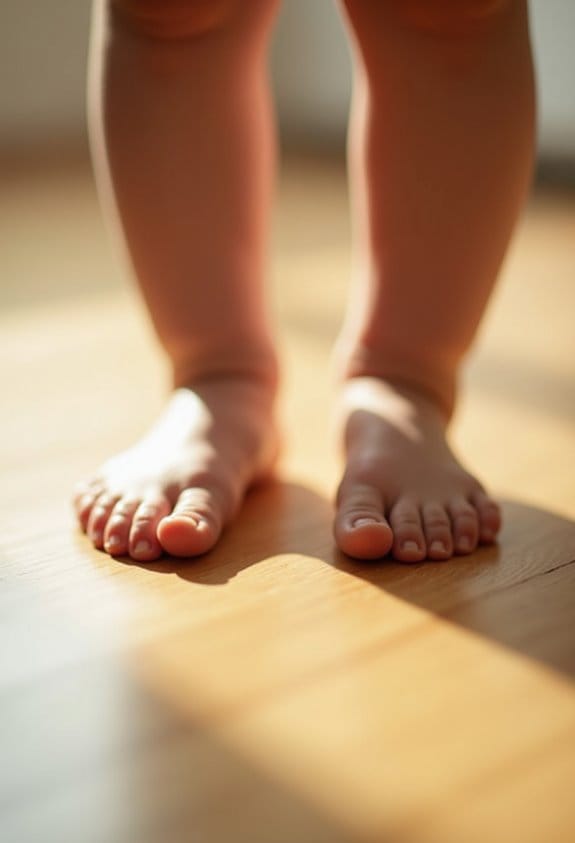
When your precious nugget begins to explore the world on tiny feet, going barefoot can play a key role in healthy foot development. During the critical growth period before age four, allowing children walking without shoes helps their natural foot shape to form properly. Barefoot walking strengthens joints, ligaments, and muscles essential for future mobility. It also enhances sensory feedback, as the feet contain around 200,000 nerve endings that support balance and coordination. This sensory input boosts cognitive development and spatial awareness, helping your child understand their surroundings better. Children walking barefoot tend to navigate various surfaces with improved foot placement and agility, reducing the risk of falls. Encouraging barefoot time during early years supports ideal foot development and lays a strong foundation for your child’s overall growth and movement. Additionally, shoes with a wide toe box complement barefoot benefits by allowing toes to spread naturally while providing needed protection.
Enhancing Motor Skills Through Barefoot Exploration
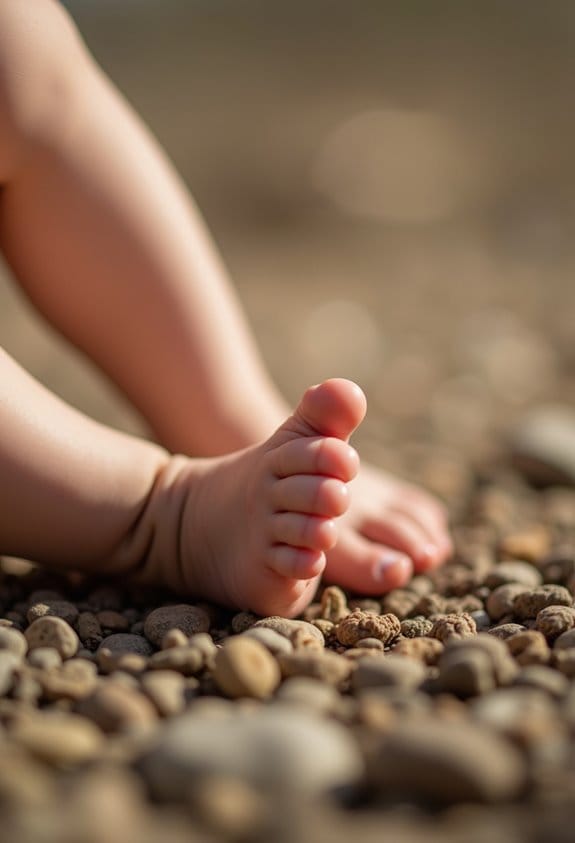
Allowing your little one to explore the world barefoot does more than support healthy foot growth. Barefoot exploration plays a key role in enhancing motor skills by encouraging natural movement and strengthening foot muscles, essential for a strong developmental gait. When your precious nugget engages in barefoot activities, their children’s physical abilities improve through balanced coordination. Moving barefoot across different surfaces helps create and refine neural pathways, critical for better control and agility. This kind of play encourages your baby to test their limits safely, boosting overall body awareness. With practice, they gain improved stability and fewer falls, as sensory feedback from bare feet grounds them and sharpens their sense of foot placement. This gentle support helps your child build strong, confident steps in their early years. Choosing shoes with a wide toe box complements barefoot benefits by allowing natural toe movement and proper foot development.
Recommended Products
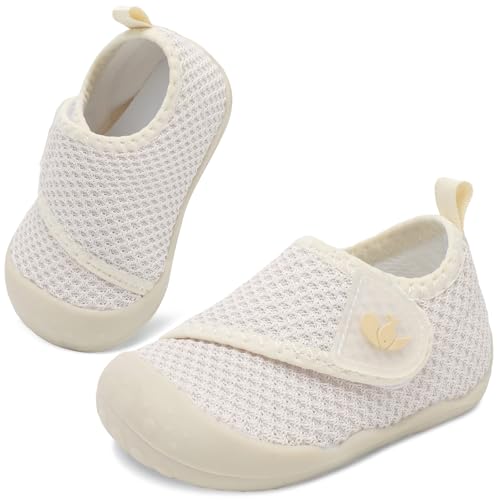
Wide Round Toe: The unique design of the toe can make the baby's feet free movement, body balance is not afraid of falling, anti-collision to help crawling Knitted Upper:...
Sensory Feedback and Brain Growth From Bare Feet
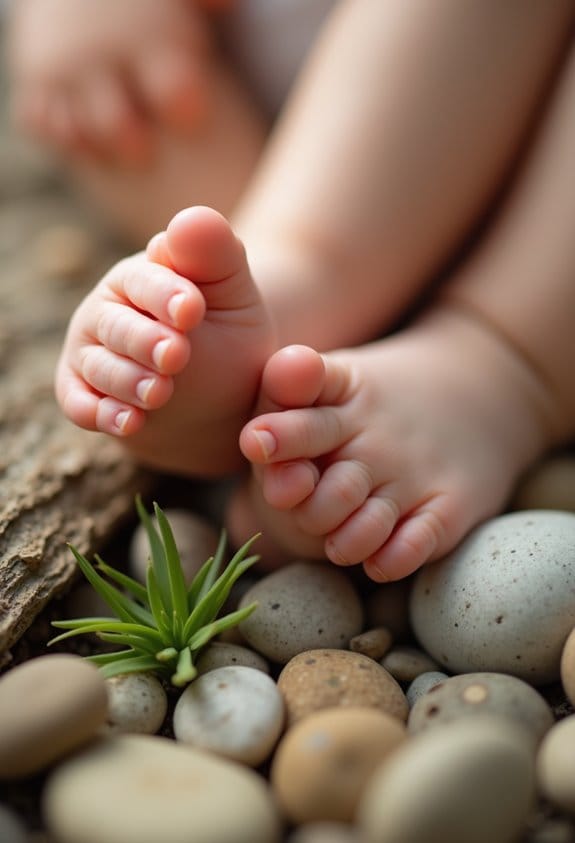
Frequently, barefoot walking provides your precious nugget with rich sensory input essential for brain growth. Children’s feet contain about 200,000 nerve endings that send important sensory feedback to the brain. This feedback supports brain development by helping your little one’s brain map different textures and surfaces. When walking barefoot, babies experience various sensations that boost cognitive function and improve motor skills. Early childhood barefoot exploration strengthens foot muscles and helps build neural pathways needed for healthy brain growth. Feeling different textures underfoot also enhances spatial awareness and coordination. These sensory experiences encourage your baby to explore safely and confidently. Encouraging walking barefoot can support not only physical development but also emotional stability, creating a strong foundation as your precious nugget begins moving through the world independently. Additionally, flexible soles in shoes mimic barefoot benefits by allowing natural foot movement and sensory input.
The Role of Nerve Endings in Early Childhood Movement

Since babies’ feet have about 200,000 nerve endings, they play a big role in early movement. These nerve endings send important messages to the brain, helping young children learn balance and coordination. When your little one plays barefoot, their feet feel different textures and surfaces, which supports motor skills and cognitive function. This barefoot play helps build strong connections between sensory input and movement in early education stages. As your precious nugget explores, their brain creates maps that guide body control and awareness. Encouraging barefoot activities supports development by sharpening these skills naturally. So, letting your baby walk or crawl on safe, bare feet isn’t just fun—it’s key for their physical and brain growth during these critical early years. For toddlers transitioning to outdoor exploration, choosing shoes with a wide toe box can closely mimic barefoot benefits while protecting their feet.
Outdoor Surfaces and Their Benefits for Barefoot Babies

When babies explore outdoor surfaces with bare feet, their small muscles and senses get a natural workout. Outdoor surfaces like grass, sand, and soil offer varied tactile experiences that stimulate about 200,000 nerve endings in your precious nugget’s feet. This sensory feedback is essential for building a neural map that supports motor skills and cognitive development. Walking barefoot on uneven ground helps babies use different muscle groups, improving coordination and balance. These adventures outdoors also boost spatial awareness, as babies learn to adjust their movements to new textures and slopes. By letting your little one feel nature underfoot, you support foundational psychomotor skills that lay the groundwork for future physical activities. Outdoor barefoot play is a gentle, effective way to nurture your baby’s growing mind and body. Choosing safe environments and appropriate gear, such as walkers with safety features, can complement these barefoot activities and promote overall developmental progress.
Recommended Products

Perfect Fit - Our playmat are 47x47 inches, which can be utilised in conjunction with a 50x50 inches baby playpen. The 0.4-inch thickness effectively cushions the damage caused by a baby falling, allowing the infant to play on the baby floor mat without restraint.

Premium Quality & Easy Setup This inflatable water mat is made of thick, baby-safe BPA-free PVC material, soft and safe toy for daily play. Simply fill it with water and air, and it’s ready within seconds. Designed to be leak-proof and long-lasting, this water mat for babies ensures safe anywhere.

Thicker, Softer, Safer - Baby's each phase is a new discovery and a shared joy. Our baby play mat for floor is 30% thicker than most other brands, made of premium padding foam and non-toxic fabric, it provides a softer, safer spot for babies learning to roll, crawl or walk. Each milestone is a cherished memory, enriching parenthood a blissful journey
Indoor Barefoot Activities That Support Development
Alongside outdoor exploration, indoor barefoot activities offer valuable ways to support a baby’s foot and overall development. Setting up textured play mats invites your precious nugget to touch different surfaces, boosting sensory feedback under tiny feet. This barefoot play encourages coordination and helps strengthen foot muscles while natural arches form during critical growth stages. As your baby practices walking indoors, barefoot environments enhance spatial awareness by sending immediate sensory signals to the brain. These physical and mental experiences develop motor skills and balance. Gentle foot stimulation from soft sensory mats improves blood circulation and eases tension, supporting ideal foot health. Creating sensory-rich indoor spaces lets your baby explore safely and confidently, nurturing both physical and cognitive growth. Indoor barefoot activities truly complement their journey toward strong, healthy feet. Experts emphasize that using flexible soles or going barefoot promotes natural foot movement crucial for walking development.
Recommended Products

Tummy Time Savior: The stand-up bear ear design helps babies practice lifting their heads during tummy time. Focusing on the bear ears while lifting the head encourages proper neck muscle engagement and development

Newborn Baby Essentials - The baby play gym is designed to develop stage-based sensory and motor skill. The soft mat provides a comfortable space for baby to rest, entertain and learn, and the hanging toys can stimulate baby's sight hearing and touch, they can effectively enhance the development of sensory perception and improve physical coordination

[8-in-1 Baby Activity Play Mat]: Designed for newborns and infants 0-6-12 months, our animal-themed 8-in-1 baby play gym supports tummy time, floor play, and early development from laying to sit-to-crawl stages. Includes 3 sensory baby toys (giraffe, tree, elephant) with sound effects, a self-discovery mirror, safe teethers, and a tummy time pillow to spark exploration, learning, and growth. Multiple play modes for every milestone. (Ocean ball not included)
When and How to Introduce Shoes for Toddlers
Before introducing shoes to a toddler, it’s important to wait until your precious nugget can walk and run confidently, usually around ages 3 to 4. At this stage, barefoot walking has supported natural foot development and provided needed sensory stimulation. When it’s time for shoes, choose pairs with flexible structures and wide toe boxes. These features let the toes spread and move naturally, which is vital for healthy child development. Shoes should offer strong ankle support but still allow front flexibility, helping your toddler stay stable while exploring. Avoid high-tops, as they limit ankle mobility, potentially affecting balance and coordination. Keep an eye on your toddler’s foot growth and talk to a pediatrician if you notice any concerns. This way, boots or sneakers aid rather than hinder early walking progress. Selecting shoes with non-slip soles can also ensure better stability and safety during active play.
Recommended Products

Breathable & Skin-friendly: Featherlight knit uppers promote airflow to keep feet dry and comfortable during active play, while the quick-dry material makes them suitable for all seasons

Flexible Barefoot Feeling Design: Featuring a zero-drop sole and flexible construction, these barefoot-inspired shoes provide a natural feel with better ground flexibility. The lightweight design allows kids to move freely while walking, playing, and exploring

Back-to-school ready with zero-drop sole for natural movement during running, PE class & playground activities
Addressing Safety and Hygiene in Barefoot Play
Once toddlers begin exploring barefoot more often, parents naturally wonder about keeping little feet safe and clean. Safety and hygiene are key when children play barefoot. Keeping play areas clean helps prevent infections, and washing precious nuggets’ feet after barefoot play is a simple, effective step. Studies show the injury risk is low because the foot’s toughened skin shields against minor scrapes. Sensory feedback from the ground enhances balance, making barefoot play beneficial despite common concerns. Supervision is essential; parents should regularly check play spaces for hazards to keep their child safe. Education about germs reassures parents, as foot contact carries less risk than hand-to-mouth behavior. You can support your child’s natural curiosity and comfort while keeping them protected during barefoot adventures. When transitioning to shoes, it is important to choose ones with flexible soles to support natural foot movement and encourage healthy balance.
Recommended Products

Thicker & Soft Premium Foam - Our baby play mats for floor is thicker than most other brand baby play mat. And it's made of premium soft padding foam and fabric top layer to ensure a soft and cushioned surface, providing a comfortable place for your little one to relax, play and work on their developing skills

Soft & Thickened Foam: Unlike traditional ones, our baby play mats are made of premium quality foam with a thickened finish for extra cushioning and comfort. BPA free, odorless, non-toxic, soft, non-slip and perfect for newborns to toddlers.

ULTRA-SOFT COMFORT: Our baby play mat is made of 100% coral velvet material and filled with high-quality 1.3in thick memory foam,eco-friendly and durable, providing a safe and comfortable play area for your babies, without worrying about them hurting themselves on hard floors.The surface of this tummy time mat is velvet cover, which is not only soft and comfortable to touch, but also has a good cushioning effect.
Long-Term Cognitive and Physical Advantages of Barefoot Walking
While babies take their first steps, barefoot walking offers more than just freedom for tiny toes. Barefoot play stimulates about 200,000 nerve endings in children’s feet, sending rich sensory feedback that supports developing cognitive function. This helps improve balance and coordination, essential for learning safe movement across different surfaces. As your precious nugget explores barefoot, they build strong foot muscles and natural arches, key physical benefits that promote healthy walking patterns. Long-term, early barefoot experiences also nurture spatial awareness, which links to problem-solving skills later on. Additionally, sensory-rich barefoot play supports emotional regulation and sharper concentration, boosting overall brain development. Encouraging barefoot time safely gives your little one a strong foundation for both mind and body, helping them grow confident and coordinated as they discover the world. When transitioning to shoes, choosing ones with breathability and cushioning can help maintain these developmental benefits while protecting delicate feet.
Frequently Asked Questions
Why Is It Important for Babies to Walk Barefoot?
Walking barefoot is important for babies as it enhances sensory exploration and motor skills, promotes natural movement, improves balance, strengthens muscles, supports foot development, aids temperature adaptation, and provides overall health benefits essential for early growth and coordination.
Is There Science Behind Walking Barefoot?
Research confirms barefoot benefits by stimulating 200,000 nerve endings, enhancing sensory development. This promotes foot strength, balance improvement, toe dexterity, natural gait, and ground connection—all essential for positive health implications in early childhood motor skills.
What Does Research Say About Barefoot Shoes?
Research indicates barefoot shoes promote developmental benefits by supporting natural movement, arch formation, and sensory stimulation. These shoes enhance foot health while balancing shoe durability. Parent recommendations emphasize flexible, lightweight designs prioritizing movement over rigid protection.
Does Covering Babies’ Feet Slow Brain Development?
Covering babies’ feet can slow brain development like a window blocking sunlight, limiting sensory exploration and proprioceptive feedback essential for foot development, muscle strength, balance enhancement, brain stimulation, cognitive growth, and temperature regulation during early stages of life.